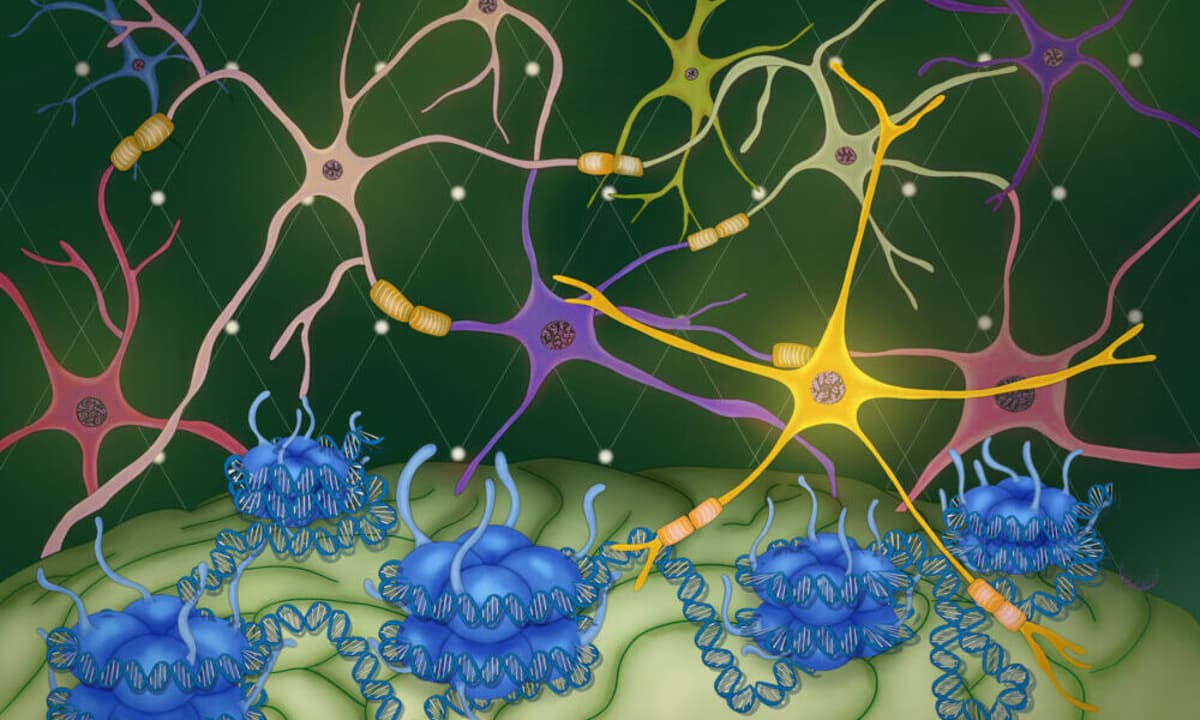
Inside the Genome: Insights From the ‘Brain (Epi)genome’ Conference
Why It Matters
Understanding the brain’s dynamic epigenome reveals mechanisms of memory, addiction, sex‑biased disease risk, and aging, opening new therapeutic targets. The convergence of genomics and neuroscience accelerates precision approaches to neurodegenerative and psychiatric disorders.
Key Takeaways
- •3D genome loops regulate neuron identity genes cell‑type specifically
- •Cocaine exposure rewires neuronal 3D chromatin, altering future drug response
- •Sex‑specific transcription factor LIN‑29A integrates multiple cues to shape synapses
- •Human astrocyte chromatin slows synaptic maturation, linking development to neurodegeneration
- •New single‑cell multi‑omic tools enable temporal epigenomic recording in brain cells
Pulse Analysis
The brain (epi)genome field is reaching a tipping point as advances in long‑read sequencing, single‑cell profiling, and 3D chromatin capture converge on a single question: how does the same DNA blueprint generate the brain’s extraordinary cellular diversity? Researchers now map looping interactions at kilobase resolution, revealing that neuronal identity genes can be tucked inside compacted chromatin yet remain active through long‑range contacts. This spatial regulation, established early in fetal development, provides a mechanistic layer that bridges classic genetics with the emerging epigenetic landscape, offering fresh insight into how subtle architectural changes can drive major phenotypic outcomes.
Beyond basic biology, the epigenomic imprint of experience is reshaping our view of neuropsychiatric risk. Studies presented at the workshop showed that a single cocaine dose can remodel chromatin loops, creating a molecular memory that biases future drug responses. Parallel work linked pre‑existing epigenetic variation to addiction vulnerability, suggesting that the epigenome functions simultaneously as a risk factor and a recorder of environmental insults. Similar mechanisms appear to underlie sex‑specific brain wiring, with transcription factors like LIN‑29A integrating developmental timing, cellular context, and hormonal cues to sculpt synaptic connections, potentially explaining gender disparities in disorders such as depression and autism.
The rapid adoption of high‑throughput, multi‑omic platforms is turning these insights into actionable data. New technologies now capture whole‑genome methylation, histone modifications, and chromatin conformation in individual neurons over time, enabling researchers to construct dynamic epigenetic atlases of the living brain. Industry players are scaling long‑read and single‑cell sequencing, lowering costs and expanding accessibility for large‑cohort studies. As these tools mature, they promise to accelerate drug discovery pipelines by pinpointing epigenetic nodes that modulate disease trajectories, ultimately translating the brain (epi)genome’s complexity into precision therapeutics.
Inside the genome: insights from the ‘Brain (epi)genome’ conference
Comments
Want to join the conversation?
Loading comments...