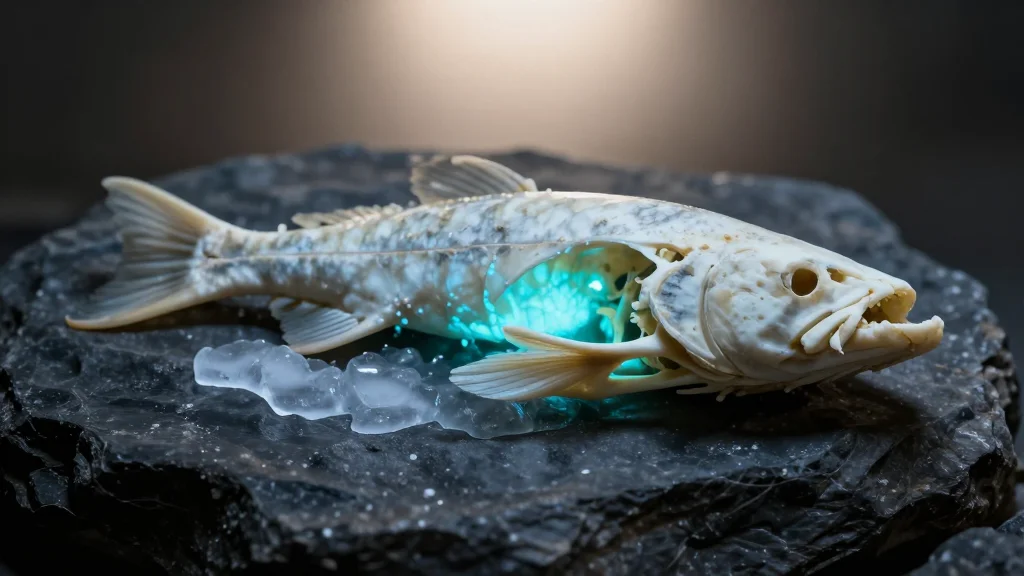
Inside the Skull of a Devonian Fish From Gondwana, Revealed by Neutron Imaging
Why It Matters
By revealing internal neuroanatomy without damaging the rare specimen, the work clarifies how early sarcopterygians adapted for terrestrial life, informing evolutionary models and Gondwanan paleobiogeography.
Key Takeaways
- •Neutron imaging reveals internal braincase of *Koharalepis jarviki*
- •Fossil shows air‑intake openings and light‑detecting organ for surface life
- •*Koharalepis* was a 1‑metre ambush predator with reduced eyes
- •Findings link Australian and Antarctic fish lineages in ancient Gondwana
- •Study advances understanding of vertebrate water‑to‑land transition
Pulse Analysis
The Devonian period, often called the "Age of Fishes," produced a suite of tetrapodomorphs that set the stage for vertebrate colonization of land. While external morphology of these fossils has been studied for decades, internal structures remained elusive due to the fragility of the specimens. Neutron tomography, a non‑destructive imaging technique that penetrates dense rock, now offers a window into the hidden anatomy of rare fossils like *Koharalepis jarviki*, enabling paleontologists to reconstruct braincase architecture with unprecedented clarity.
The new scans reveal a suite of adaptations that hint at a semi‑aquatic lifestyle. Openings atop the skull likely facilitated supplemental air intake, while a specialized organ within the brain appears tuned to ambient light, supporting circadian regulation near the water surface. Despite its modest eye size, the 1‑metre predator relied on these sensory enhancements to ambush prey, illustrating how early sarcopterygians diversified their hunting strategies. Such morphological evidence bridges the gap between fully aquatic lobe‑finned fishes and the first tetrapods that would eventually venture onto dry ground.
Beyond the anatomical insights, the research reshapes our understanding of Gondwanan biogeography. The Canowindridae family, represented in both Australia and Antarctica, underscores a once‑continuous freshwater ecosystem across the southern supercontinent. By mapping these evolutionary links, scientists can refine models of vertebrate dispersal and diversification during the Late Devonian. The study also showcases the growing role of advanced imaging in paleontology, promising further discoveries from other rare, internally preserved fossils without compromising their integrity.
Inside the skull of a Devonian fish from Gondwana, revealed by neutron imaging
Comments
Want to join the conversation?
Loading comments...