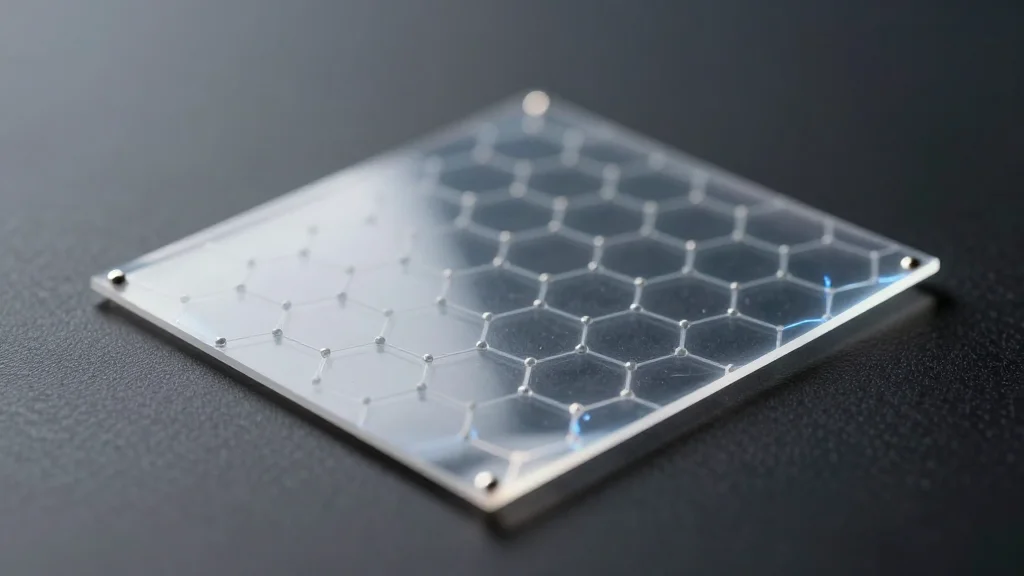
Intelligent Multimodal Sensors Based on Two‐Dimensional Materials: Fabrication, Decoupling, and Applications
Why It Matters
Multimodal 2D sensors deliver richer, simultaneous data streams, unlocking smarter IoT devices and more intuitive human‑machine interfaces while overcoming the limits of single‑modal sensors.
Key Takeaways
- •2D materials enable simultaneous detection of pressure, temperature, and chemicals
- •Decoupling combines material engineering, device design, and AI algorithms
- •Scalable fabrication remains a bottleneck for commercial deployment
- •Edge intelligence enhances real‑time multimodal data interpretation
Pulse Analysis
Two‑dimensional materials such as graphene, MXenes, and transition‑metal dichalcogenides possess extraordinary electrical conductivity, mechanical flexibility, and high surface‑to‑volume ratios. These attributes make them ideal for constructing sensors that can respond to multiple physical and chemical stimuli at once. In the rapidly expanding Internet of Things ecosystem, the ability to capture pressure, temperature, humidity, and gas signatures in a single platform reduces hardware complexity and opens new avenues for advanced robotics and immersive human‑computer interaction.
A central challenge for multimodal sensors is signal interference, where overlapping responses obscure the true magnitude of each stimulus. Researchers are tackling this through a layered decoupling approach: at the material level, heterostructures and functionalization isolate specific interactions; at the device level, innovative architectures separate transduction pathways; and at the software level, machine‑learning algorithms fuse and deconvolute data streams in real time. This hardware‑software collaboration not only improves accuracy but also enables adaptive calibration, allowing sensors to maintain performance across diverse environments.
The commercial implications are significant. Smart wearables, autonomous robots, and edge‑AI gateways can leverage 2D multimodal sensors to achieve richer situational awareness without bulky sensor arrays. However, transitioning from laboratory prototypes to mass production demands scalable fabrication techniques such as roll‑to‑roll printing and wafer‑scale synthesis. Investment in these processes, coupled with advances in edge computing, will accelerate adoption across sectors ranging from healthcare monitoring to industrial automation. Future research that expands perception dimensions and refines collaborative decoupling will cement 2D multimodal sensors as a cornerstone of next‑generation intelligent systems.
Intelligent Multimodal Sensors Based on Two‐Dimensional Materials: Fabrication, Decoupling, and Applications
Comments
Want to join the conversation?
Loading comments...