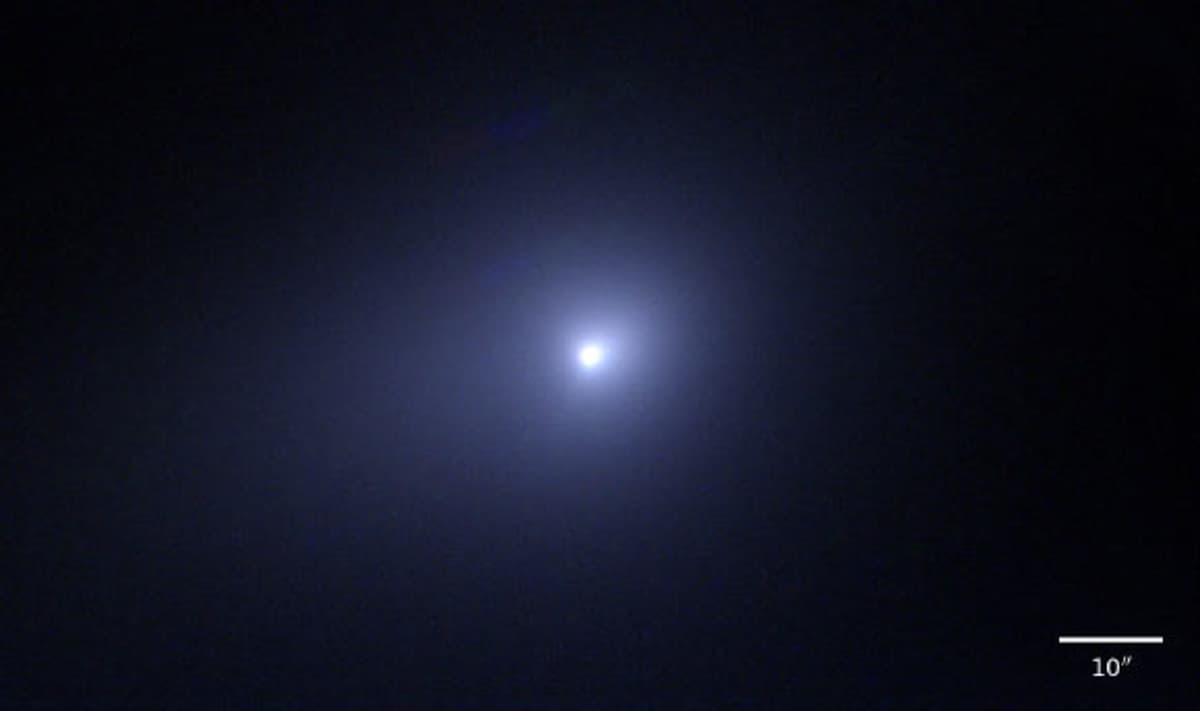
Interstellar Comet 3I/ATLAS Shows Shifting Chemistry After Perihelion
Why It Matters
The changing CO₂/H₂O ratio provides a rare glimpse into the layered structure of an interstellar nucleus, informing models of planetesimal formation beyond our Solar System. As survey telescopes detect more visitors, such compositional insights will refine theories of planetary system evolution.
Key Takeaways
- •3I/ATLAS shows lower CO2/H2O ratio post‑perihelion
- •Subaru data contradict earlier Webb and SPHEREx measurements
- •Ratio shift suggests layered nucleus composition
- •Findings enable direct comparison of interstellar and solar‑system comets
- •More interstellar objects expected as survey telescopes expand
Pulse Analysis
The detection of interstellar comet 3I/ATLAS marked the third confirmed object of its kind, offering astronomers a unique laboratory for studying material forged around other stars. Discovered by the ATLAS survey in Chile, the comet’s brightening and dust coma were tracked from July 2025 onward, culminating in a close solar approach in late October. By the time the Subaru Telescope captured its spectrum in early January 2026, the comet had receded, allowing scientists to probe the volatile gases released from its nucleus under cooler conditions.
Analysis of the Subaru data focused on forbidden [O I] emission lines, a proven proxy for estimating the CO₂/H₂O ratio in cometary comae. The resulting ratio was significantly lower than the values reported by the James Webb Space Telescope and the SPHEREx mission earlier in the comet’s orbit. This discrepancy suggests that the outer layers, rich in carbon dioxide, were exhausted near perihelion, exposing a water‑dominant interior. Such stratification mirrors findings from solar‑system comets, implying that interstellar planetesimals may share similar formation processes, despite originating in distant protoplanetary disks.
Looking ahead, the study highlights the value of coordinated ground‑based and space‑based observations for transient interstellar visitors. As next‑generation survey facilities like the Vera C. Rubin Observatory come online, the detection rate of such objects is expected to rise dramatically. Each new comet will provide comparative data points, sharpening our understanding of volatile inventories across planetary systems and refining models of how planets and their building blocks assemble throughout the galaxy.
Interstellar Comet 3I/ATLAS Shows Shifting Chemistry after Perihelion
Comments
Want to join the conversation?
Loading comments...