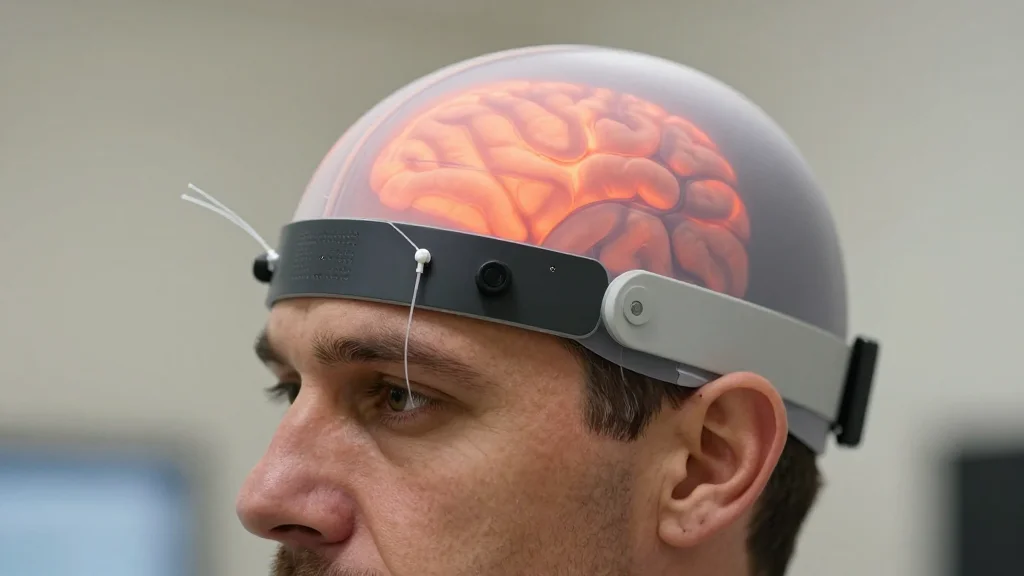
Investigating Working Memory and Brain Activation in Major Depressive Disorder with and without Insomnia: Insights From Functional Near-Infrared Spectroscopy (fNIRS)
Why It Matters
Identifying distinct neurofunctional signatures of insomnia in MDD highlights a target for personalized treatment and positions fNIRS as a practical diagnostic adjunct.
Key Takeaways
- •Insomnia worsens working memory performance in MDD patients
- •fNIRS shows reduced oxygenated hemoglobin in DLPFC during tasks
- •Bilateral mPFC activation correlates negatively with task accuracy
- •Immediate memory scores link positively to left DLPFC activation
- •fNIRS may serve as biomarker for MDD subtypes with insomnia
Pulse Analysis
Major depressive disorder and insomnia frequently co‑occur, creating a double burden that amplifies cognitive deficits. Working memory, a core executive function, is especially vulnerable, affecting daily productivity and treatment response. Clinicians have long relied on self‑report scales, but objective neuroimaging offers a clearer picture of how sleep disruption reshapes brain activity. By quantifying these effects, researchers can better stratify patients and allocate resources toward the most impaired subgroups.
In the recent fNIRS investigation, 122 participants performed graded working‑memory challenges while oxygenated hemoglobin changes were recorded across prefrontal regions. Patients with insomnia displayed a pronounced drop in oxy‑Hb concentration in the bilateral dorsolateral prefrontal cortex during medium‑load tasks and in the left DLPFC during high‑load tasks. Moreover, statistical links emerged: stronger left DLPFC and medial prefrontal activation predicted better immediate memory scores, whereas heightened medial prefrontal activity corresponded with lower task accuracy. These patterns pinpoint specific cortical circuits where sleep loss compounds depressive pathology.
The implications extend beyond academic insight. fNIRS, with its portable and cost‑effective design, could become a bedside tool for differentiating MDD phenotypes, guiding clinicians toward interventions that address both mood and sleep. Targeted neuromodulation, cognitive remediation, or pharmacologic strategies might be calibrated based on an individual’s prefrontal activation profile. As health systems prioritize precision medicine, integrating neurofunctional biomarkers promises to improve outcomes for the sizable subset of depressed patients grappling with insomnia.
Investigating Working Memory and Brain Activation in Major Depressive Disorder with and without Insomnia: Insights from Functional Near-Infrared Spectroscopy (fNIRS)
Comments
Want to join the conversation?
Loading comments...