IQ’s Link to Brain Structure, Function in Children May Be a Mirage
Why It Matters
The findings reshape how neuroscientists interpret brain‑behavior links, emphasizing that socioeconomic factors—not innate intelligence—drive major structural and functional differences, which has implications for research design and public‑policy interventions.
Key Takeaways
- •SES explains 16% variance in functional connectivity in 9‑10‑year‑olds
- •IQ predictions vanish when SES is controlled in brain‑scan models
- •Sleep and screen time also affect brain structure, but less than SES
- •Findings urge researchers to include SES as a core covariate
- •Sensory‑motor cortices, not frontoparietal, drive SES‑brain links
Pulse Analysis
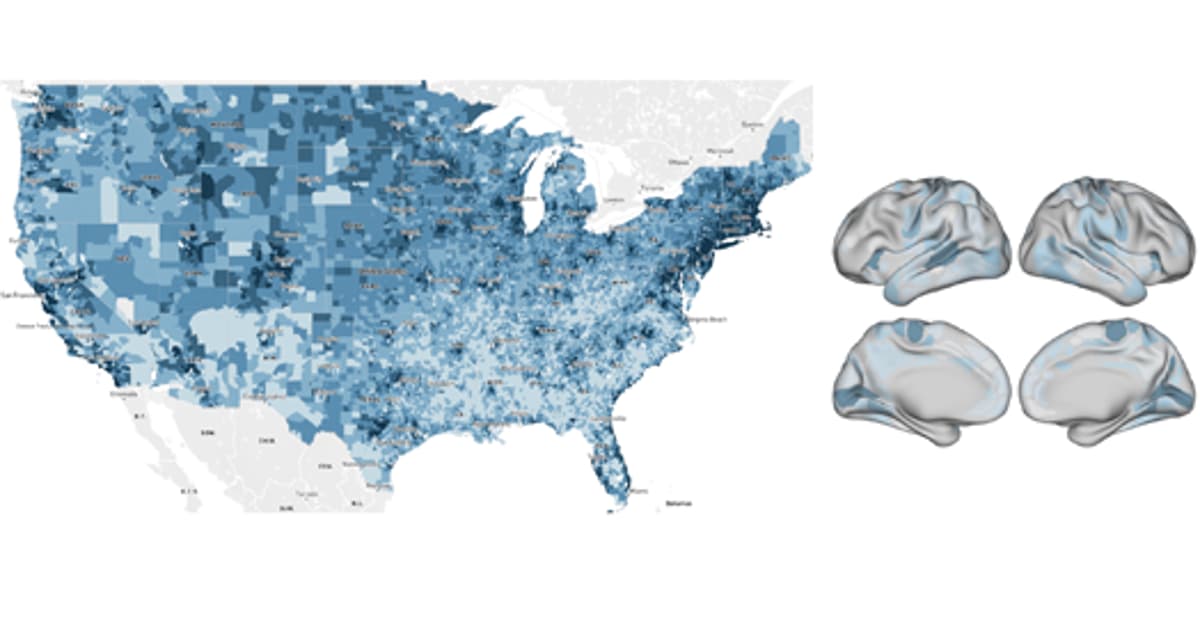
For decades, IQ has been the marquee phenotype in neuroimaging, with researchers hunting brain signatures that explain cognitive ability. The latest Science paper upends that narrative by showing that a child’s socioeconomic environment, not raw intelligence, explains the bulk of observable brain differences. By leveraging the massive Adolescent Brain Cognitive Development (ABCD) dataset, the team quantified how household income, neighborhood quality, and related factors dominate functional connectivity patterns, especially in sensory‑motor regions, while traditional frontoparietal networks associated with higher‑order cognition play a secondary role.
Methodologically, the study combined conventional statistical controls with cutting‑edge machine‑learning pipelines. Predictive models trained on the full sample could estimate IQ scores, yet the same models failed when restricted to children from high‑SES backgrounds, while performing robustly on lower‑SES participants. This asymmetry reveals that the algorithms were capturing SES‑linked neural signatures and misattributing them to intelligence. Moreover, SES accounted for 16% of functional connectivity variance—a magnitude rarely seen in brain‑behavior studies—while sleep and screen time contributed modestly, underscoring the hierarchical influence of environmental factors.
The broader implications extend beyond academia. If socioeconomic conditions shape brain architecture as early as age nine, educational and health policies must address these disparities to foster equitable cognitive development. Future research will need to disentangle transient physiological states from lasting structural changes, perhaps by longitudinally tracking children from birth. Incorporating SES as a core covariate will improve the validity of neuroimaging findings and help translate brain science into interventions that mitigate the impact of inequality on child development.
IQ’s link to brain structure, function in children may be a mirage
Comments
Want to join the conversation?
Loading comments...