Is Fully Homomorphic Encryption - Cryptography's "Holy Grail" - Inching Closer to Mainstream Use?
Companies Mentioned
Why It Matters
By dramatically reducing compute time, Heracles makes privacy‑preserving analytics feasible for cloud services, opening new revenue streams and regulatory compliance opportunities.
Key Takeaways
- •Intel's Heracles chip accelerates FHE 5,000× versus standard CPUs
- •Five‑year program focused on dedicated hardware for homomorphic encryption
- •Faster FHE could enable privacy‑preserving AI and data analytics
- •Adoption hinges on integration with existing cloud and security stacks
Pulse Analysis
Fully homomorphic encryption has long been hailed as the cryptographic holy grail because it lets organizations run calculations on encrypted data without ever exposing the raw values. The concept dates back to the 1970s, but practical implementations were stalled by massive ciphertext expansion, prohibitive latency, and the need for specialized mathematical operations. As a result, most enterprises have relied on traditional encryption models that require decryption before analysis, limiting the ability to protect sensitive information in cloud‑based analytics, machine‑learning pipelines, and multi‑party computations.
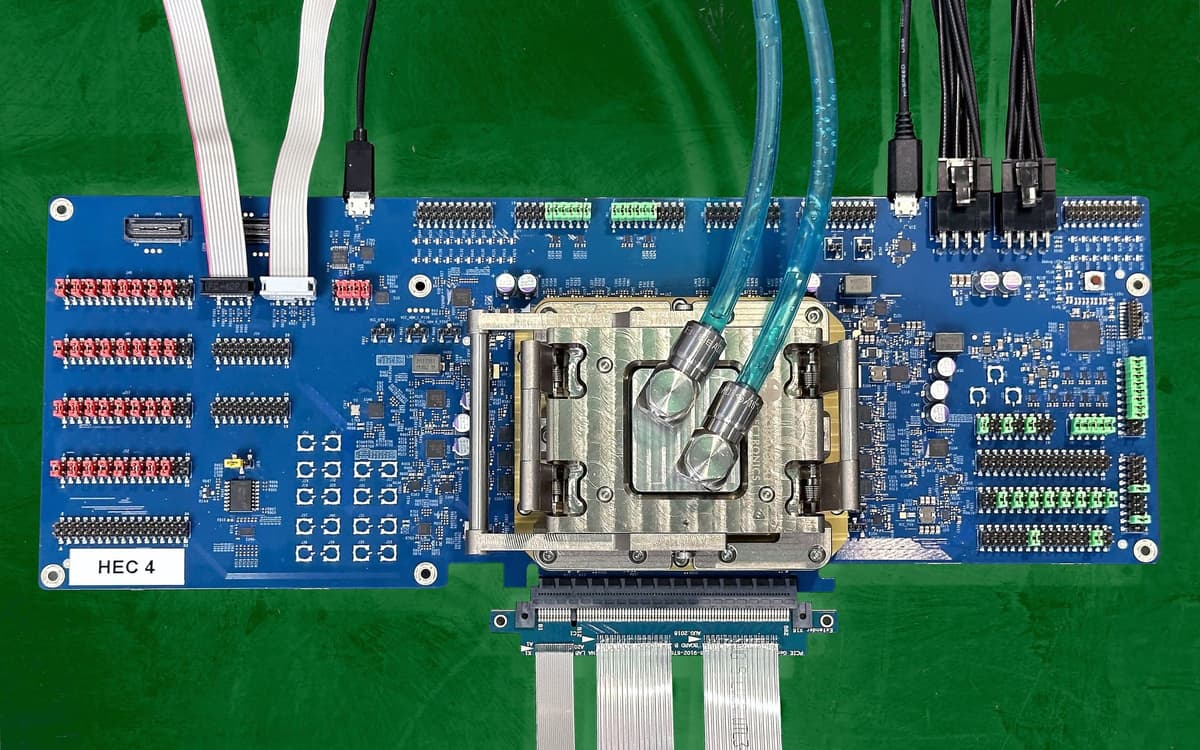
Intel’s March 2026 demonstration of the Heracles processor marks a watershed moment for the field. Built on a five‑year dedicated hardware effort, the chip delivers roughly a 5,000‑fold speed increase for common FHE workloads compared with the company’s flagship CPUs. By integrating custom arithmetic units, on‑chip key management, and optimized memory pathways, Heracles trims the latency that has historically made FHE impractical for real‑time services. The performance leap aligns with the Homomorphic Encryption Standardisation Consortium’s roadmap, suggesting the hardware can meet emerging interoperability benchmarks.
The commercial ramifications are significant. Faster, hardware‑accelerated FHE opens the door for privacy‑preserving AI, secure data sharing across regulated industries, and compliance‑first cloud offerings without sacrificing speed. Cloud providers and enterprise software vendors can now contemplate native FHE services, potentially creating new revenue streams and differentiating themselves in a privacy‑focused market. However, widespread adoption will depend on ecosystem support, including SDKs, cloud integration, and cost‑effective pricing models, as well as continued alignment with evolving standards.
Is Fully Homomorphic Encryption - cryptography's "holy grail" - inching closer to mainstream use?
Comments
Want to join the conversation?
Loading comments...