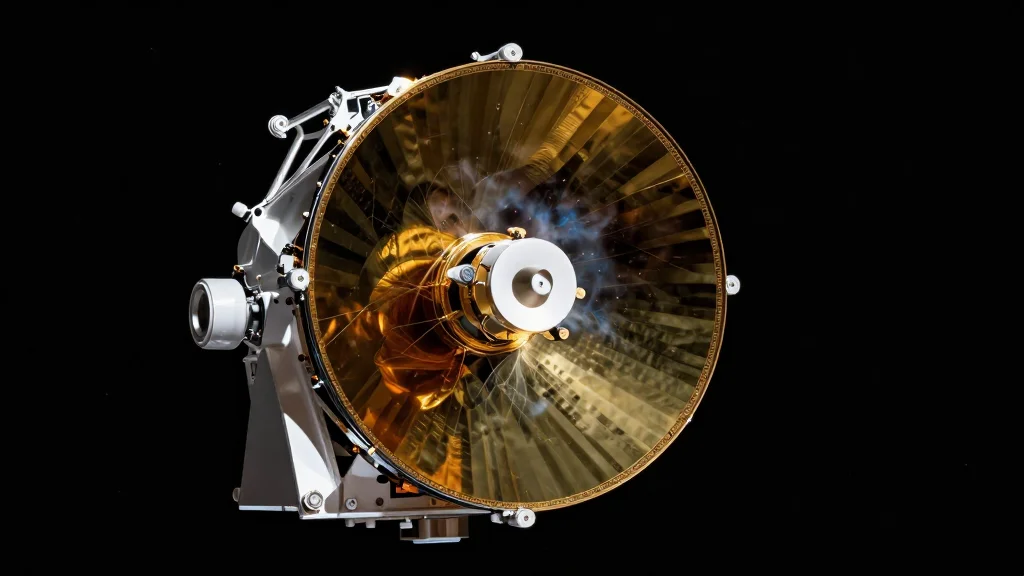
Israeli Team Uses JWST to Spot Cosmic Rays Inside Barnard 68, Revealing Star‑Birth Mechanics

Why It Matters
Detecting cosmic rays inside a dense nebula provides the first empirical anchor for theories that link high‑energy particles to star formation. By confirming that these particles can deposit energy deep within star‑forming clouds, the study reshapes our understanding of the thermal and chemical conditions that precede stellar ignition. This insight not only refines models of how stars, and consequently planetary systems, emerge, but also informs broader questions about galactic evolution, such as the distribution of heavy elements and the lifecycle of interstellar matter. Beyond pure science, the methodology showcases JWST’s versatility in probing faint infrared signatures, encouraging its use for a wider array of astrophysical investigations. The findings may also guide future mission designs that aim to map cosmic‑ray environments across the Milky Way, ultimately improving predictions of space‑weather effects that impact satellite operations and astronaut safety.
Key Takeaways
- •Technion‑Israel team directly measured cosmic‑ray particles inside Barnard 68 using JWST infrared data.
- •First peer‑reviewed detection of cosmic‑ray‑induced molecular hydrogen excitation in a star‑forming nebula.
- •Findings suggest cosmic rays significantly heat dense clouds, challenging UV‑dominant heating models.
- •Study published in Nature Astronomy; observations open a new subfield of astrophysics research.
- •Future work will target additional dark nebulae and integrate data from upcoming ground‑based telescopes.
Pulse Analysis
The JWST‑enabled detection of cosmic rays inside Barnard 68 marks a pivot point for observational astrophysics. Historically, cosmic‑ray studies relied on indirect measurements—ground‑based detectors, satellite particle counters, or gamma‑ray observations of interactions in the interstellar medium. Those approaches could infer fluxes but never pinpoint activity within the opaque interiors of star‑forming clouds. By exploiting JWST’s mid‑infrared spectroscopic precision, the Technion team turned a theoretical prediction into a measurable signal, effectively adding a new diagnostic tool to the astronomer’s kit.
From a historical perspective, the role of high‑energy particles in star formation has been debated for decades. Early models in the 1970s posited that cosmic rays could sustain ionization levels necessary for magnetic field coupling, while later simulations in the 2000s downplayed their heating impact in favor of radiative feedback from massive stars. The new empirical evidence forces a reconciliation of these views, suggesting that cosmic‑ray heating may dominate in the earliest, most shielded phases of cloud collapse. This could explain observed discrepancies in star‑formation efficiency across different galactic environments, where UV radiation fields vary widely.
Looking forward, the discovery is likely to catalyze a wave of targeted JWST proposals aimed at mapping cosmic‑ray penetration across a spectrum of nebular densities and metallicities. Coupled with next‑generation facilities like the ELT and the Square Kilometre Array, researchers will be able to cross‑validate infrared excitation signatures with radio‑frequency ionization tracers, building a multi‑wavelength portrait of particle‑driven chemistry. In the longer term, these insights may feed into refined models of planet formation, as the thermal history of a protoplanetary disk is intimately linked to the energetic environment of its natal cloud. The Technion breakthrough thus not only opens a new observational window but also sets the stage for a deeper, more integrated understanding of how the cosmos builds its most fundamental building blocks—stars and planets.
Israeli Team Uses JWST to Spot Cosmic Rays Inside Barnard 68, Revealing Star‑Birth Mechanics
Comments
Want to join the conversation?
Loading comments...