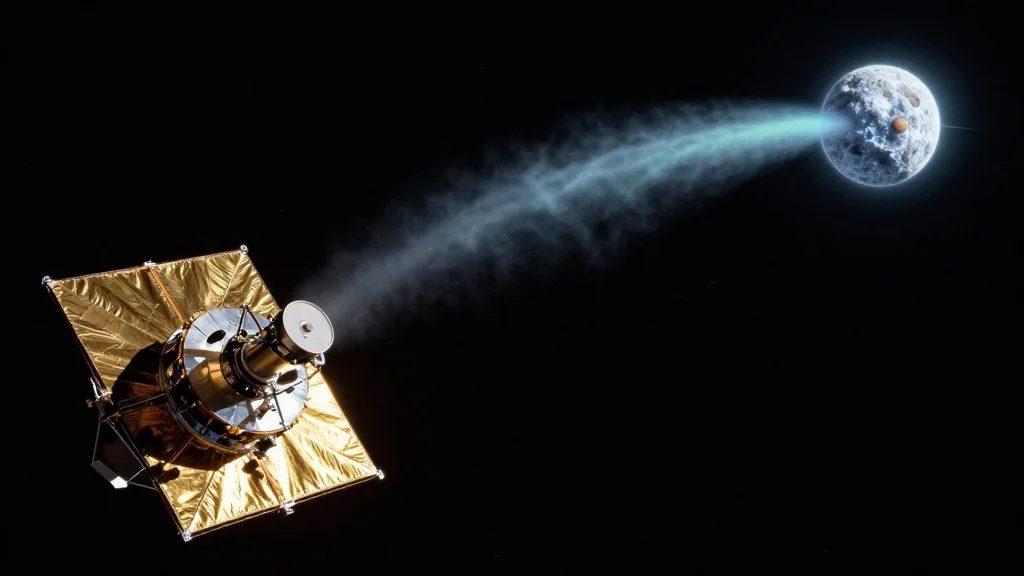
James Webb Telescope Detects Methane on Interstellar Comet 3I/ATLAS

Why It Matters
The methane detection offers the first concrete evidence that interstellar objects can retain highly volatile compounds, challenging the assumption that such materials are lost during ejection from their native systems. This insight reshapes theories of how planetary systems distribute and preserve organic building blocks, with implications for the prevalence of prebiotic chemistry across the galaxy. Beyond pure science, the findings guide the design of future telescopic surveys and potential spacecraft missions. Knowing that ISOs may harbor rich volatile inventories informs instrument selection and observation strategies, ensuring that the next generation of observatories can capture similar signatures before these fleeting visitors disappear into interstellar space.
Key Takeaways
- •Webb’s MIRI instrument directly detected methane on comet 3I/ATLAS – first such detection on an interstellar object.
- •Observations were made on Dec. 15‑16 and Dec. 27, 2025 when the comet was 205–236 million miles from the Sun.
- •Methane appears in higher proportion to water than in typical solar‑system comets, suggesting deep‑buried volatiles.
- •Carbon dioxide outgassing is also unusually high, reinforcing a distinct formation environment.
- •Results contrast with previous interstellar objects, highlighting compositional diversity among ISOs.
Pulse Analysis
The Webb methane detection is a watershed for comparative planetology. Historically, comet chemistry has been inferred from solar‑system samples and remote sensing of a handful of objects. By finally obtaining a mid‑infrared spectrum of an ISO, astronomers can calibrate models of volatile retention against a real, external benchmark. This will likely prompt a re‑evaluation of the thermal histories assumed for planetesimals in other systems, especially regarding how quickly they lose light gases during ejection.
From a strategic standpoint, the discovery validates the investment in space‑based infrared spectroscopy for transient phenomena. Ground‑based facilities struggle with the faint, fast‑moving signatures of ISOs, but Webb’s sensitivity and integral‑field capability proved decisive. Future missions—such as the proposed Interstellar Probe or a dedicated ISO interceptor—can now justify designs that prioritize mid‑infrared spectrometers, knowing that key volatiles like methane are observable at distances beyond 300 million kilometers.
Looking ahead, the community faces a choice: treat each ISO as a unique case study, or develop a statistical framework that treats them as a population. The current data set is too small for the latter, but the rapid detection of methane suggests that upcoming surveys (e.g., LSST) will uncover more ISOs, allowing a shift from anecdotal to statistical science. If subsequent objects also show methane‑rich compositions, the implication could be profound: the building blocks of life‑bearing chemistry may be more common across the galaxy than previously thought.
James Webb Telescope Detects Methane on Interstellar Comet 3I/ATLAS
Comments
Want to join the conversation?
Loading comments...