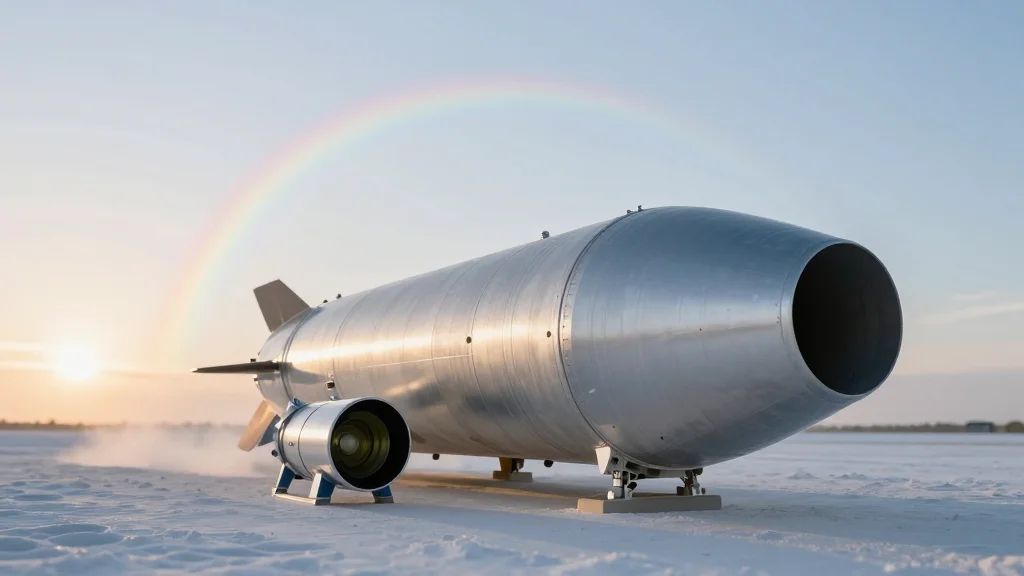
Japan Delivers Its Sharpest X-Ray Telescope for FOXSI, a US–Japan Rocket Program to Observe the Sun
Why It Matters
The enhanced telescope will deepen scientific insight into solar flare dynamics, informing space‑weather forecasting and bolstering the strategic US‑Japan partnership in high‑tech aerospace research.
Key Takeaways
- •Sub‑arcsecond X‑ray imaging, three‑times sharper than prior FOXSI versions
- •Joint NASA‑JAXA funding of ~US$5 million accelerates development
- •Launch slated for early 2027 from White Sands Missile Range
- •Enables detailed study of solar particle‑acceleration mechanisms
- •Strengthens US‑Japan collaboration in next‑gen space instrumentation
Pulse Analysis
The latest FOXSI payload marks a milestone in solar observation technology. By integrating Nagoya University’s newly fabricated grazing‑incidence mirrors, the instrument achieves sub‑arcsecond angular resolution—a leap from the 2‑arcsecond benchmarks of earlier flights. This precision allows scientists to isolate hard X‑ray sources within solar flares, pinpointing where electrons are accelerated to near‑relativistic speeds. The telescope’s 0.5‑10 keV energy range captures the most energetic photons emitted during flare onset, delivering data that ground‑based observatories cannot obtain.
Beyond pure science, the mission underscores the growing interdependence of U.S. and Japanese space agencies. NASA’s Small Explorer program and JAXA’s strategic research funds have pooled roughly $5 million to fast‑track development, sharing expertise in mirror polishing, detector fabrication, and launch operations. The collaboration not only spreads risk but also creates a pipeline for commercial spin‑offs, such as high‑resolution X‑ray optics for medical imaging and semiconductor inspection. By demonstrating a cost‑effective, high‑performance payload on a sounding rocket, the partnership paves the way for larger, satellite‑based solar observatories.
The implications for the broader space‑weather ecosystem are significant. Accurate, high‑resolution imaging of flare energetics improves predictive models of coronal mass ejections, which can disrupt satellite communications and power grids on Earth. As the solar cycle approaches its peak, data from FOXSI’s 2027 launch will feed directly into forecasting tools used by utilities and defense agencies. In essence, this sharpened X‑ray telescope not only advances astrophysical knowledge but also delivers tangible economic and security benefits, reinforcing the strategic value of international cooperation in space science.
Japan Delivers Its Sharpest X-Ray Telescope for FOXSI, a US–Japan Rocket Program to Observe the Sun
Comments
Want to join the conversation?
Loading comments...