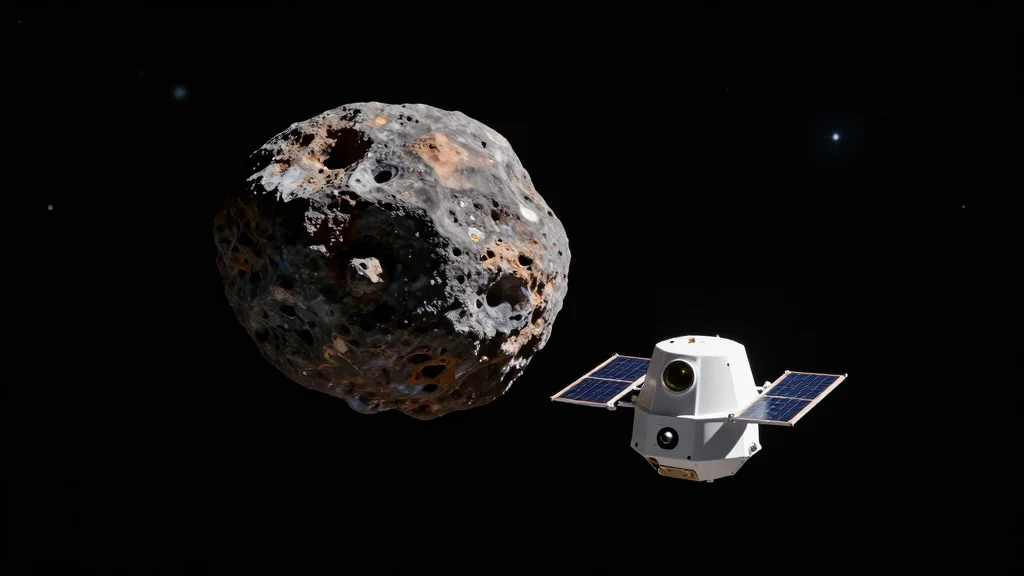
Japan's Hayabusa2 Targets 1998 KY26, a Potential Soviet Spacecraft Relic

Why It Matters
The potential identification of 1998 KY26 as the missing Phobos 1 probe adds a cultural‑heritage dimension to a scientific mission, raising questions about how space agencies handle artifacts from the early era of space exploration. Moreover, the technical challenges of sampling a sub‑20‑meter body will push the limits of autonomous navigation and sample‑capture technology, informing the design of future missions to small asteroids that could threaten Earth. If Hayabusa2 confirms the object's artificial origin, it could trigger discussions on the legal framework governing extraterrestrial heritage, similar to debates surrounding lunar landing sites. The mission thus sits at the intersection of planetary science, engineering, and space law, making its outcome relevant beyond the immediate scientific community.
Key Takeaways
- •Hayabusa2 will rendezvous with 1998 KY26 in 2031 for a sample‑return mission.
- •A new paper suggests 1998 KY26 may be the lost Soviet probe Phobos 1.
- •The object is about 11 meters in size, spins rapidly, and has an unusual reflectivity.
- •Confirmation will come from close‑up imaging and telemetry during the mission.
- •The mission could set precedents for handling space heritage and sampling tiny bodies.
Pulse Analysis
Hayabusa2’s upcoming encounter with 1998 KY26 illustrates how planetary‑science missions can evolve into multidisciplinary investigations. Historically, sample‑return missions have focused on natural bodies to answer questions about solar system formation. This mission, however, may also become a de‑facto archaeology project, offering a tangible link to the Soviet space program’s early missteps. The dual nature of the target could encourage agencies to embed heritage experts alongside scientists in future mission planning.
From a technical standpoint, navigating to and sampling an object only a few meters across pushes the envelope of current spacecraft autonomy. The success of Hayabusa2’s earlier Ryugu mission demonstrated the feasibility of delicate touch‑and‑go operations, but 1998 KY26’s rapid spin and irregular shape present new hurdles. Overcoming these will likely yield advances in guidance, navigation, and control (GNC) systems that could be repurposed for planetary‑defence missions targeting potentially hazardous small asteroids.
Finally, the geopolitical context cannot be ignored. Recovering a piece of Cold‑War hardware could spark renewed interest in the preservation of space artifacts, prompting the development of international guidelines. As more nations launch small‑body missions, the line between scientific inquiry and cultural stewardship will become increasingly blurred, and Hayabusa2’s findings may serve as a catalyst for policy development in this emerging domain.
Japan's Hayabusa2 Targets 1998 KY26, a Potential Soviet Spacecraft Relic
Comments
Want to join the conversation?
Loading comments...