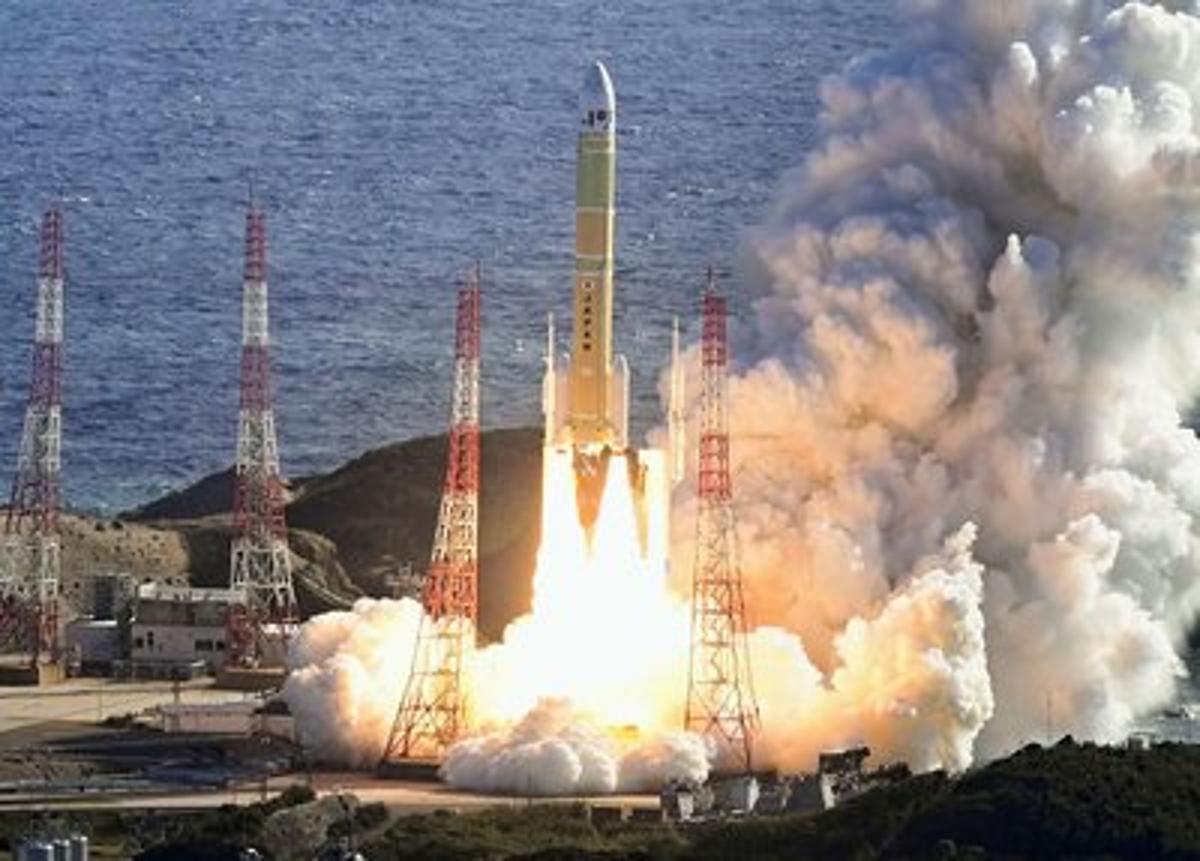
JAXA Mulls Launching H3 Test Rocket in June After Last Year's Failure
Why It Matters
The H3 is Japan’s flagship launch vehicle; its success determines the timeline for a domestic high‑precision positioning system and safeguards the nation’s strategic independence from foreign GNSS services. Reliable performance also positions JAXA to compete in the global commercial launch market.
Key Takeaways
- •JAXA targets June 10 for H3 test flight after December failure.
- •Failure traced to adhesion issue in satellite‑mounting structure.
- •Fixed components will be validated with dummy payload.
- •Successful test critical for Japan’s seven‑satellite geolocation network.
- •H3 reliability impacts domestic satellite market and global launch competition.
Pulse Analysis
Japan’s H3 launch vehicle was conceived as a cost‑effective successor to the H‑IIA series, aiming to capture a share of the burgeoning commercial launch market while supporting national space missions. Developed with a modular design and a focus on rapid turnaround, the H3 promised lower per‑kilogram prices than its competitors. However, the program has faced schedule slips, and the December 22 mishap underscored the challenges of scaling new hardware under tight timelines.
The December failure was traced to an adhesion deficiency in the satellite‑mounting structure, causing the payload interface to separate under launch loads. JAXA engineers identified the flaw across multiple units and implemented revised bonding processes and material selections to restore structural integrity. The planned June 10 test flight will mount a non‑functional dummy satellite, allowing telemetry and vibration data to confirm that the corrective actions hold up under real‑world conditions before any revenue‑generating payloads return to the launch pad.
A successful H3 test is pivotal for Japan’s ambition to field a seven‑satellite geolocation system that can deliver centimeter‑level positioning without reliance on U.S., European, or Chinese GNSS constellations. Beyond national security, the H3’s reliability will influence Japan’s competitiveness against SpaceX’s Falcon 9, Arianespace’s Ariane 6, and emerging Asian launch providers. Demonstrating a dependable, low‑cost launch option could attract regional satellite operators, stimulate domestic supply chains, and reinforce Japan’s role in the increasingly crowded low‑Earth‑orbit arena.
JAXA mulls launching H3 test rocket in June after last year's failure
Comments
Want to join the conversation?
Loading comments...