Companies Mentioned

NASA
Why It Matters
Parker’s discoveries underpin today’s space‑weather forecasting, protecting satellites, communications, and emerging commercial space activities. His legacy drives investment in heliophysics research and mission development.
Key Takeaways
- •Solar wind theory revolutionized space‑weather science
- •Mariner II confirmed Parker’s predictions in 1962
- •Parker Solar Probe named after a living scientist
- •His work enables modern satellite and communication resilience
Pulse Analysis
Eugene Parker’s 1958 solar‑wind hypothesis transformed astrophysics from a static view of the Sun to a dynamic, plasma‑driven system. By describing a continuous stream of charged particles, Parker laid the groundwork for space‑weather science, a field now critical for safeguarding satellite constellations, GPS navigation, and power‑grid stability. The confirmation by Mariner II in 1962 validated a theory that today informs predictive models used by both government agencies and private operators to mitigate geomagnetic storms.
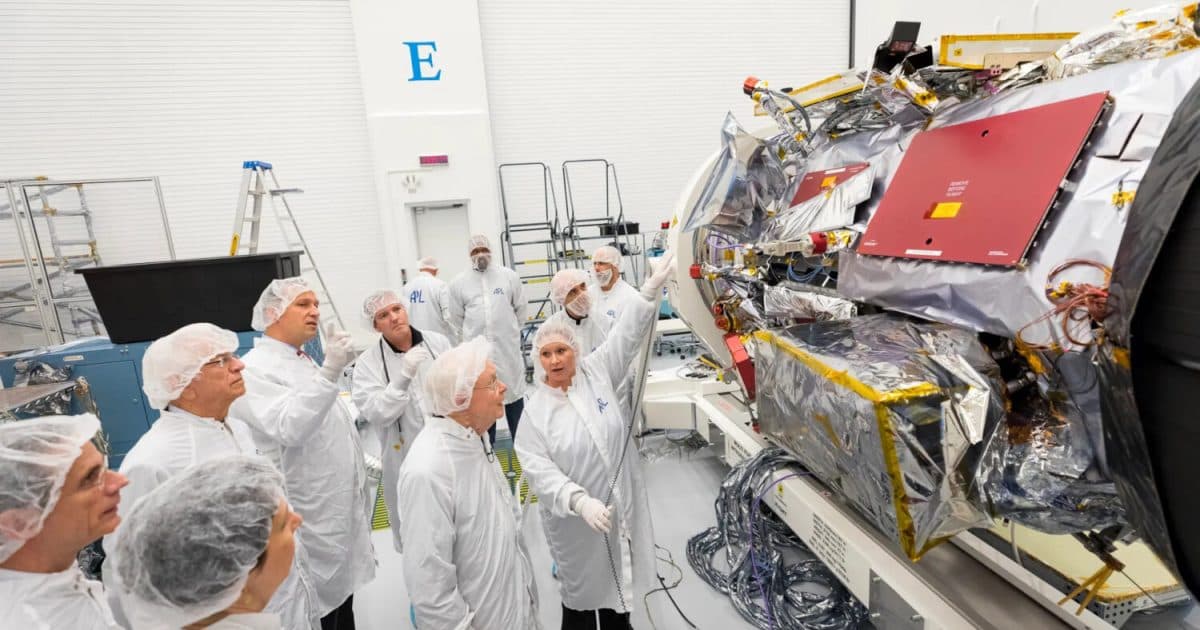
The 2017 launch of the Parker Solar Probe, the first NASA mission named for a living individual, underscored the commercial relevance of Parker’s research. With a budget exceeding $1.5 billion (≈ $1.6 billion USD), the probe’s close‑solar observations provide unprecedented data on magnetic fields and particle flows. This information fuels next‑generation space‑weather services, enabling companies to price insurance for satellite damage and to design more resilient hardware. The mission’s success also signals a cultural shift, where scientific achievement directly translates into market‑driven innovation.
Parker’s broader legacy extends into emerging sectors such as space tourism and lunar infrastructure. Understanding solar wind interactions is essential for planning crewed missions beyond low‑Earth orbit, where exposure to high‑energy particles can jeopardize health and equipment. Consequently, venture capital is increasingly directed toward firms that can translate heliophysics insights into protective technologies. As the commercial space economy expands, Parker’s foundational work continues to shape policy, investment, and the strategic roadmap for humanity’s venture into the solar system.
June 10, 1927: The birth of Eugene Parker
Comments
Want to join the conversation?
Loading comments...