Companies Mentioned
Why It Matters
Methane propulsion could reshape launch economics and sustainability, while the historic missions underscore enduring milestones in planetary science and international crewed spaceflight.
Key Takeaways
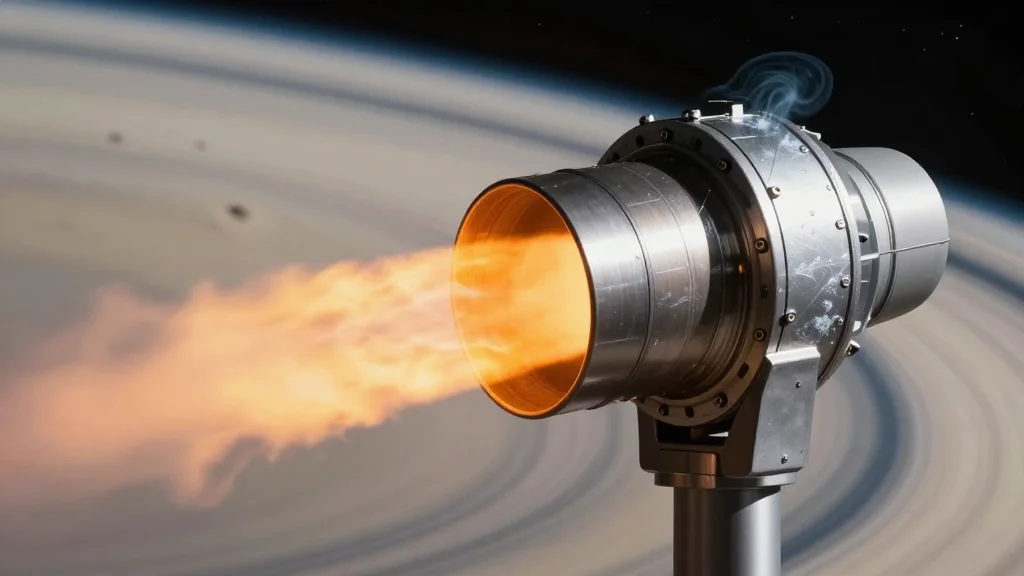
- •Exploration Company’s “Storm” engine delivers 72% Raptor‑3 thrust
- •“Storm” uses methane, aligning with industry shift to greener propellants
- •Cassini’s 2004 Phoebe flyby provided first high‑resolution mosaics
- •Shenzhou 10’s 2013 launch marked China’s longest‑duration mission to Tiangong‑1
- •Multiple historic milestones highlighted in single quick‑links post
Pulse Analysis
The unveiling of the Exploration Company’s methane‑fueled “Storm” engine signals a strategic pivot toward cleaner, more cost‑effective propulsion. Methane’s higher specific impulse and storability make it attractive for reusable launch systems, and achieving 72% of the Raptor‑3’s thrust places “Storm” in direct competition with SpaceX’s flagship engine. Industry observers see this as a catalyst for a broader diversification of launch providers, potentially driving down launch costs and encouraging further investment in methane‑based technologies.
Cassini‑Huygens’ 2004 flyby of Saturn’s irregular moon Phoebe remains a landmark in outer‑planet exploration. The arrival and departure mosaics released from the mission offered the first detailed visual and compositional data of a moon previously known only from low‑resolution images. These observations have informed models of Phoebe’s origin, suggesting it may be a captured Kuiper‑belt object, and have provided context for later missions targeting icy bodies, reinforcing the value of long‑duration orbital assets for opportunistic science.
China’s 2013 Shenzhou 10 mission, launched on a Long March 2F, marked a pivotal step in the nation’s crewed spaceflight program. The two‑week stay aboard Tiangong‑1 demonstrated sustained life‑support capabilities and refined docking procedures that underpinned subsequent modular station construction. This mission not only showcased China’s growing autonomy in human spaceflight but also contributed to the global narrative of expanding access to low‑Earth orbit, setting the stage for the upcoming Tiangong‑space‑station era.
June 11, 2026 Quick space links
Comments
Want to join the conversation?
Loading comments...