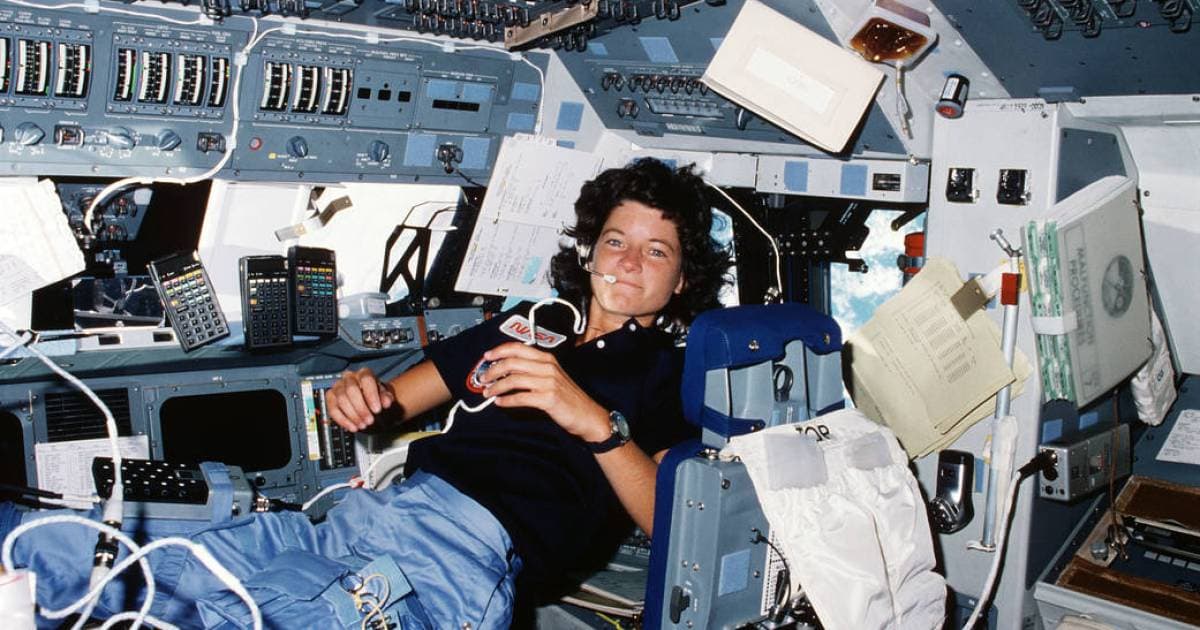
June 18, 1983: Sally Ride Is the First American Woman in Space
Companies Mentioned

NASA
Why It Matters
Ride’s breakthrough shattered a gender barrier in the U.S. space program, paving the way for greater female participation in aerospace and STEM fields. Her legacy continues to influence education initiatives that diversify the talent pipeline for high‑tech industries.
Key Takeaways
- •Sally Ride flew on Challenger June 18, 1983, first American woman astronaut
- •Selected from 8,000 applicants after NASA opened astronaut positions to women
- •Operated shuttle’s robotic arm, deployed satellites, and ran scientific experiments
- •Co‑founded Sally Ride Science in 2001 to promote STEM education for girls
Pulse Analysis
Sally Ride’s historic flight aboard Challenger marked a turning point not only for NASA but for American society. By becoming the first U.S. woman in space, she demonstrated that rigorous scientific training and physical endurance were not gender‑specific, prompting NASA to actively recruit more women and minorities in the years that followed. The mission’s technical achievements—operating the shuttle’s Canadarm, deploying satellites, and executing microgravity experiments—underscored the expanding role of women in complex, high‑risk engineering tasks.
Beyond the mission, Ride leveraged her fame to address the persistent gender gap in science, technology, engineering, and mathematics. In 2001 she co‑founded Sally Ride Science, a nonprofit that creates hands‑on curricula and teacher‑training programs aimed at encouraging girls to pursue STEM careers. The organization’s outreach has reached millions of students, translating Ride’s personal triumph into a scalable model for gender‑inclusive education. Her approach combined authentic scientific storytelling with accessible classroom tools, setting a benchmark for how astronaut ambassadors can drive social change.
Today, as the aerospace industry undergoes rapid commercialization and the Artemis program targets a diverse lunar crew, Ride’s legacy resonates strongly. Companies and agencies cite her as a role model when crafting diversity hiring strategies, and her story is frequently highlighted in recruitment materials to attract talent from underrepresented groups. The continued relevance of her pioneering flight illustrates how a single breakthrough can catalyze systemic shifts, reinforcing the business case for inclusive innovation in high‑technology sectors.
June 18, 1983: Sally Ride is the first American woman in space
Comments
Want to join the conversation?
Loading comments...