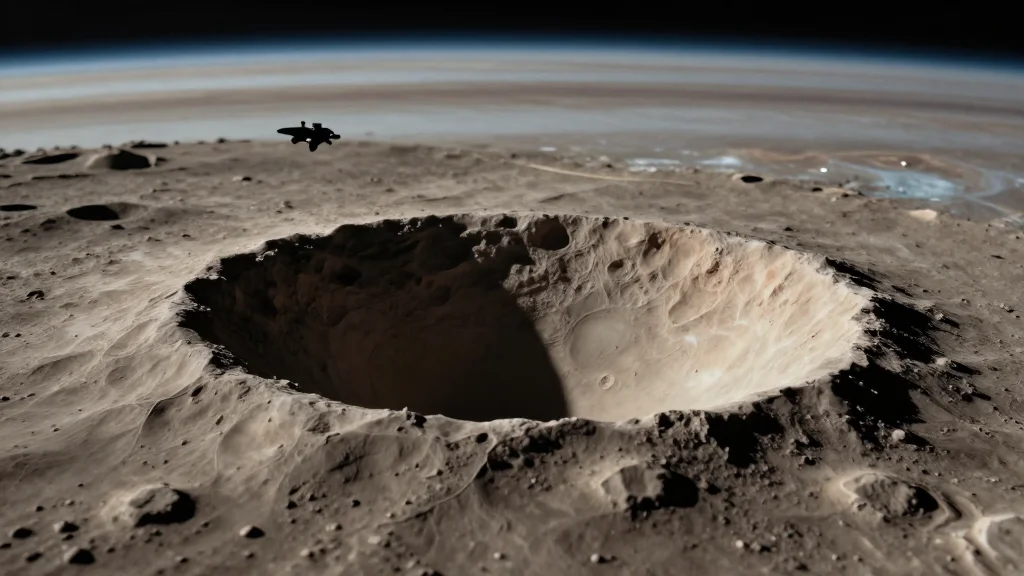
Juno Flies Past the Jupiter Moon Thebe
Companies Mentioned
Why It Matters
The flyby enhances our understanding of Jupiter’s small moons, informing models of the planet’s formation, while Juno’s fuel constraints underscore the urgency of extending or replacing deep‑space assets.
Key Takeaways
- •Juno passed within 3,100 miles of Thebe on May 1, 2026.
- •Image captured by navigation‑focused SRU camera, resulting in fuzzy quality.
- •Both Juno and Galileo images show Thebe’s large Zethus crater.
- •Juno’s fuel reserves are low, threatening mission continuation.
- •Flyby provides rare close‑up data on small inner Jovian moons.
Pulse Analysis
Since its 2016 arrival, Juno has been orbiting Jupiter to map the giant’s magnetic field, gravity and deep atmosphere. While its suite of science instruments has delivered groundbreaking data, the spacecraft also carries a Stellar Reference Unit (SRU) camera designed primarily for precise navigation. Engineers have increasingly turned this modest imaging system toward opportunistic science, leveraging its ability to capture high‑resolution frames during close‑approach maneuvers. The May 1 flyby of Thebe exemplifies this dual‑use strategy, turning a routine navigation pass into a chance to photograph a moon that has rarely been seen up close.
Thebe, a 50 × 72‑mile (80 × 115‑km) irregular satellite, orbits just inside Jupiter’s main ring and has been largely overlooked in favor of larger moons such as Io and Europa. The new SRU image, despite its slight blur and off‑center framing, clearly shows the massive Zethus crater that dominates the moon’s surface, matching the only comparable view captured by Galileo in 2000. By providing an updated visual baseline, the photo helps scientists refine crater‑count dating, assess surface composition, and improve dynamical models of how Jupiter’s inner moons interact with the planet’s magnetosphere and ring material.
Juno’s fuel budget, however, is now a pressing concern. After more than a decade of orbital maneuvers, the spacecraft’s propellant reserves are dwindling, limiting the number of future close‑approach opportunities. The uncertainty surrounding Juno’s operational lifespan adds urgency to extracting maximum scientific value from each pass, and it fuels discussions about extending the mission or launching a dedicated successor to study Jupiter’s lesser‑known satellites. Continued observation of moons like Thebe will be essential for completing the picture of the Jovian system’s formation and evolution.
Juno flies past the Jupiter moon Thebe
Comments
Want to join the conversation?
Loading comments...