Why It Matters
Accurate planetary dimensions are essential for modeling Jupiter’s interior structure and dynamics, directly influencing our understanding of giant‑planet formation across the Solar System and exoplanet studies.
Key Takeaways
- •Jupiter's polar radius measured at 66,842 km, 12 km smaller
- •Equatorial radius now 71,488 km, 4 km less than prior estimates
- •Mean radius revised to 69,886 km, shaving 8 km off textbooks
- •Juno's radio occultation provided 26 new measurements, improving shape accuracy
- •Incorporating zonal wind effects resolves long‑standing interior model discrepancies
Pulse Analysis
The Juno mission’s radio‑occultation technique has finally delivered the high‑resolution data scientists needed to pin down Jupiter’s true shape. By tracking how the spacecraft’s signal bends as it passes behind the planet, researchers extracted 26 independent measurements of atmospheric density and temperature. This method surpasses the six Voyager and Pioneer readings from the 1970s, offering a level of precision that trims a few kilometers off every major radius estimate and confirms that the planet is more oblate than textbooks have long suggested.
Beyond the raw numbers, the new dimensions have immediate implications for Jupiter’s internal modeling. Previous discrepancies between gravity field data and atmospheric observations stemmed partly from neglecting the planet’s intense zonal winds, which can extend thousands of kilometers below the cloud tops. By folding wind‑induced shape deformation into their calculations, scientists achieved a tighter fit between observed gravity harmonics and theoretical density profiles. This alignment improves estimates of core mass, metallic hydrogen distribution, and heat flow, sharpening our picture of how gas giants evolve over billions of years.
The broader impact reaches into comparative planetology and future exploration. More accurate size metrics will refine orbital dynamics calculations for missions like Europa Clipper and JUICE, ensuring precise navigation and flyby planning. Moreover, the revised figures will cascade into educational materials and exoplanet research, where Jupiter serves as a benchmark for interpreting distant gas giants. As the scientific community updates models and textbooks, the Juno findings underscore the value of continuous, high‑fidelity measurements in unraveling the complexities of our Solar System’s largest world.
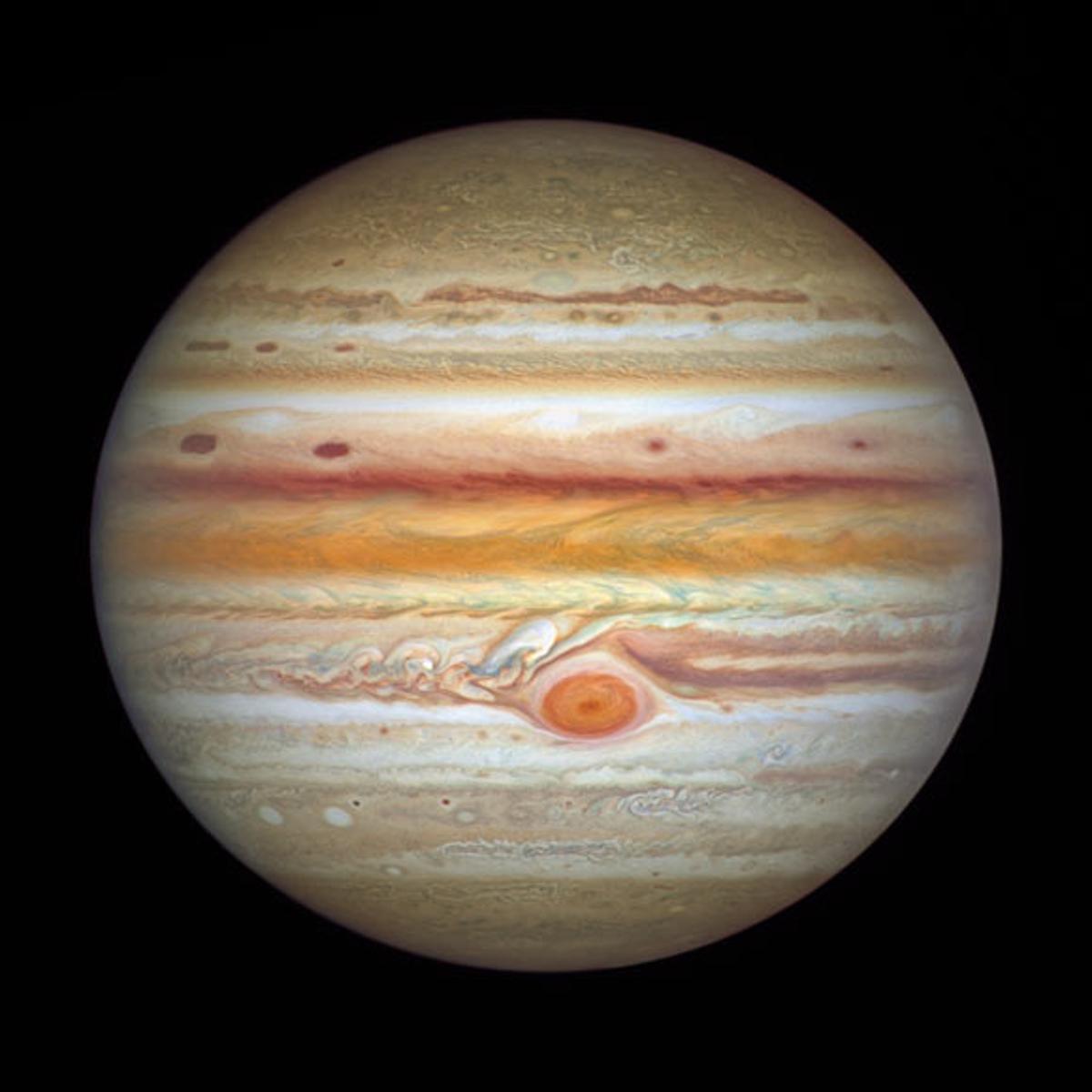
Jupiter is Little Smaller Than We Thought
Comments
Want to join the conversation?
Loading comments...