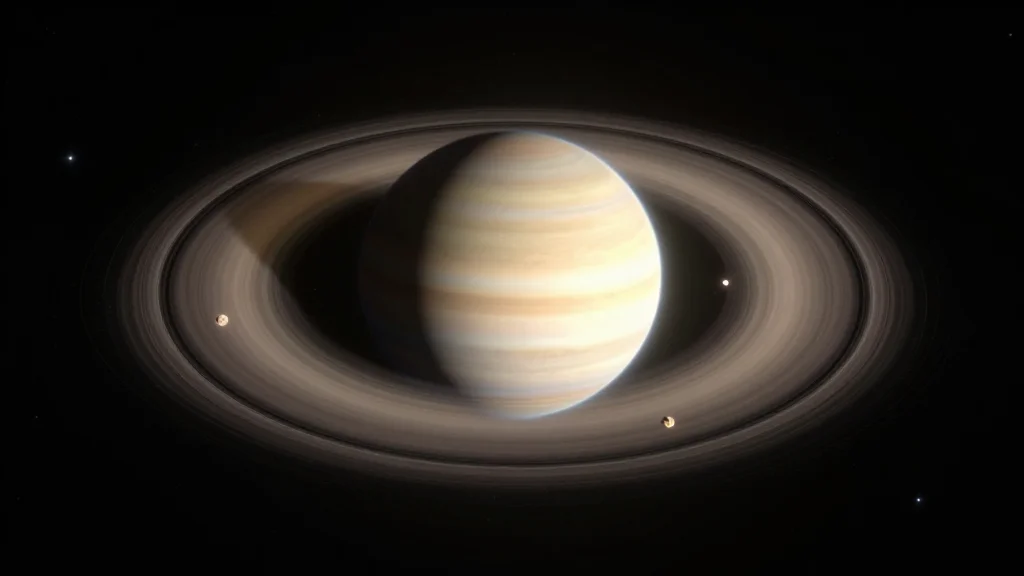
Just Outside Jupiter, One Region May Have Forged Six Meteorite Parent Bodies
Why It Matters
Understanding how a single dust trap produced multiple meteorite types reshapes theories of planet formation and improves models of early solar‑system evolution, with ripple effects for interpreting exoplanetary disks.
Key Takeaways
- •Dust trap beyond Jupiter formed six distinct carbonaceous chondrite parent bodies
- •Simulations reproduced meteorite ages and compositions over a two‑million‑year span
- •High‑pressure gas ring acted as a long‑lived planetesimal breeding ground
- •Jupiter’s gap filtered larger particles, shaping material ratios in the trap
- •Findings support dust traps as primary sites for early solar system planetesimals
Pulse Analysis
The early solar system was a turbulent arena of gas, dust, and emerging planetary cores. Astronomers have long suspected that pressure maxima—so‑called dust traps—could concentrate solid material, but direct evidence linking these zones to specific meteorite families remained elusive. By focusing on the region just beyond Jupiter, where the giant planet carved a gap in the protoplanetary disk, the Max Planck team leveraged high‑resolution hydrodynamic models to track pebble accumulation, collision outcomes, and compositional segregation over millions of years.
Their simulations revealed a two‑phase evolution: an initial surge of fine, crumbly dust followed by a gradual dominance of sturdier, heat‑processed clumps. This shifting balance produced two clearly separated populations of planetesimals, each mirroring the mineralogy and age spread of the six known carbonaceous chondrite groups. Crucially, the model’s output matched laboratory isotope dating and petrographic analyses, confirming that the dust trap acted as a long‑lived, pluripotent factory for diverse meteoritic material. The study therefore provides a concrete mechanistic bridge between astrophysical disk physics and the tangible samples that land on Earth.
Beyond its immediate relevance to solar‑system history, the research offers a template for interpreting observations of distant protoplanetary disks. ALMA and upcoming JWST data frequently reveal ringed structures that may function as analogous dust traps, potentially seeding planet formation in exoplanetary systems. Recognizing that a single pressure bump can yield multiple planetesimal lineages reshapes how scientists model mass distribution, chemical gradients, and the timeline of planet building across the galaxy. Future work will likely explore how variations in giant‑planet placement or disk turbulence alter the efficiency and diversity of such breeding grounds.
Just outside Jupiter, one region may have forged six meteorite parent bodies
Comments
Want to join the conversation?
Loading comments...