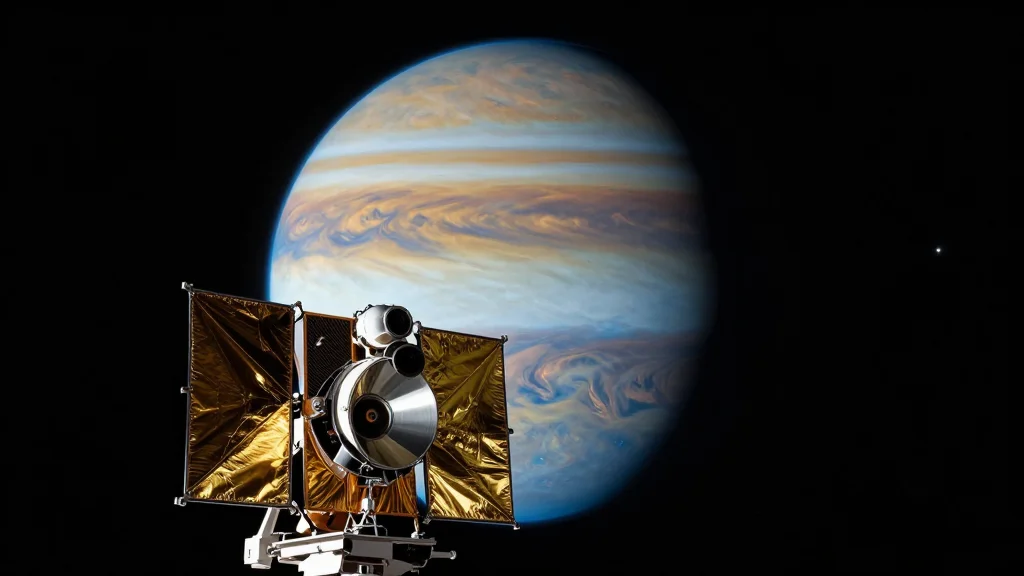
JWST Captures First Exoplanet Daily Weather Cycle, Upending a Decade of Atmospheric Data

Why It Matters
By revealing a daily cloud cycle on WASP‑94Ab, JWST demonstrates that exoplanet atmospheres can be far more heterogeneous than previously assumed. This forces a reassessment of atmospheric retrieval methods that have underpinned much of the field’s progress over the past ten years. Accurate cloud modeling is essential for interpreting molecular signatures, estimating planetary compositions, and constraining formation histories. Moreover, the technique opens a pathway to study weather patterns on a wide variety of worlds, bringing planetary science closer to the level of detail we enjoy for solar‑system planets. The findings also have practical implications for upcoming missions. ARIEL and the Extremely Large Telescope (ELT) will rely on robust atmospheric models to prioritize targets and allocate observing time. If cloud heterogeneity is common, mission planners must incorporate limb‑resolved strategies to avoid systematic biases, ensuring that the next generation of exoplanet science yields reliable insights into habitability and planetary diversity.
Key Takeaways
- •JWST’s NIRISS instrument captured distinct morning‑side cloud and evening‑side water spectra on WASP‑94Ab.
- •Morning‑side magnesium‑silicate clouds detected at 9‑sigma significance; evening‑side water vapor at 10‑sigma.
- •Planet orbits its star every 3.95 days, is tidally locked, and shows a 450 K temperature contrast between limbs.
- •Study suggests a decade of exoplanet atmospheric data may be systematically biased due to unresolved cloud effects.
- •Technique paves the way for limb‑resolved spectroscopy on a broader range of exoplanets, influencing future missions.
Pulse Analysis
The JWST observation of WASP‑94Ab marks a paradigm shift from treating exoplanet atmospheres as globally uniform shells to recognizing them as dynamic, hemispherically distinct systems. Historically, atmospheric retrievals have averaged spectra over an entire planetary disk, a necessity imposed by limited spectral resolution and signal‑to‑noise. This averaging smoothed over cloud heterogeneities, leading to inflated uncertainties and, in some cases, erroneous conclusions about composition and thermal structure. The new limb‑resolved approach not only validates long‑standing suspicions about cloud interference—voiced by experts like David Sing—but also provides a concrete methodology to isolate and quantify those effects.
From a market perspective, the breakthrough underscores the value of JWST’s high‑precision instruments and justifies continued investment in space‑based spectroscopy. It also signals a competitive edge for institutions that can rapidly develop limb‑specific retrieval pipelines, potentially attracting funding for next‑generation telescopes and data‑analysis platforms. Companies offering cloud‑modeling software may see heightened demand as the community seeks to incorporate heterogeneous cloud physics into their models.
Looking ahead, the ability to map weather cycles on exoplanets will likely become a cornerstone of comparative exoplanetology. Researchers will be able to test atmospheric circulation models against real‑world data, refine theories of heat redistribution, and better assess the habitability of temperate worlds where cloud cover can dramatically affect surface conditions. As JWST continues to deliver high‑resolution, time‑resolved spectra, the field is poised to move from static snapshots to dynamic weather maps, fundamentally enriching our understanding of planetary atmospheres beyond the Solar System.
JWST Captures First Exoplanet Daily Weather Cycle, Upending a Decade of Atmospheric Data
Comments
Want to join the conversation?
Loading comments...