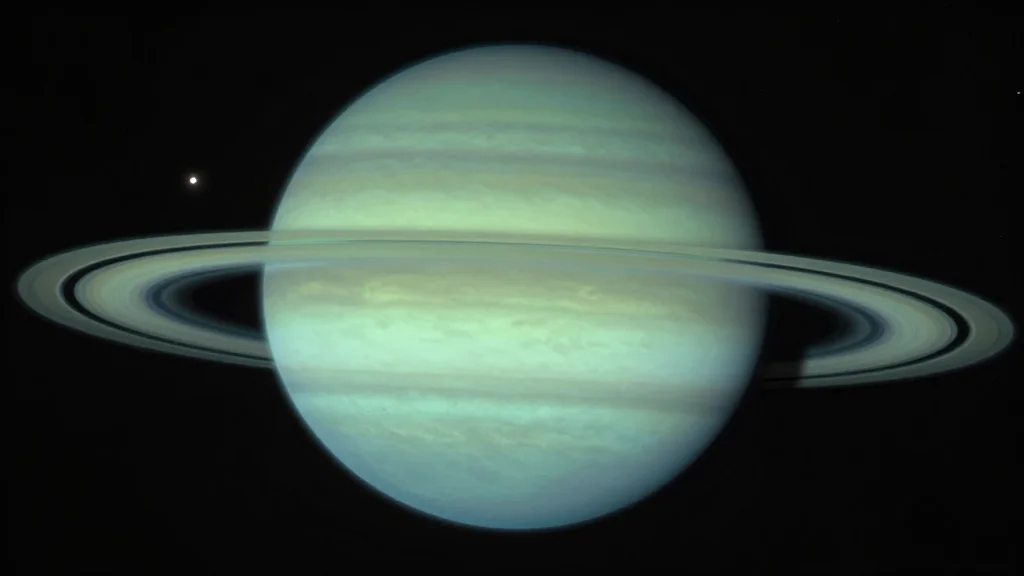
JWST Confirms Methane‑Rich Atmosphere on Temperate Giant Exoplanet TOI‑199b

Why It Matters
The identification of a methane‑rich, temperate giant expands the catalog of exoplanet types that can be studied in detail, bridging a gap that has limited comparative planetology. By confirming that complex chemistry can persist on planets with Earth‑like temperatures, the finding challenges the notion that only Earth‑sized worlds are relevant to habitability discussions. It also provides a concrete target for testing atmospheric models that predict the survival of volatile compounds under moderate stellar irradiation. Beyond scientific curiosity, the discovery informs the design of future missions aimed at characterizing exoplanet atmospheres. Understanding the spectral signatures of methane, ammonia and carbon dioxide in a temperate context will improve retrieval algorithms, making it easier to assess the habitability potential of smaller, rocky planets that may share similar atmospheric processes.
Key Takeaways
- •JWST detected TOI‑199b, a Saturn‑sized exoplanet 330 light‑years away.
- •Surface temperature is approximately 175 °F (80 °C), far cooler than hot Jupiters.
- •Atmospheric analysis reveals methane as the dominant gas, with ammonia and CO₂ present.
- •Study led by Penn State’s Renyu Hu and NASA’s JPL; published May 20 in The Astronomical Journal.
- •First detailed atmospheric characterization of a temperate giant, opening a new class for exoplanet research.
Pulse Analysis
The TOI‑199b discovery marks a watershed moment for exoplanet science, not because it introduces a new habitability candidate, but because it validates a long‑standing theoretical niche: temperate gas giants with rich volatile chemistry. Historically, atmospheric studies have been confined to extremes—ultra‑hot Jupiters where metals vaporize, or cold giants where spectra are muted. JWST’s ability to capture a clear transmission spectrum for a planet in the middle of this temperature range demonstrates the telescope’s maturity and the feasibility of targeting similar worlds.
From a market perspective, the result will likely accelerate investment in next‑generation spectrographs and data‑analysis pipelines tailored to moderate‑temperature atmospheres. Companies developing high‑resolution infrared detectors stand to benefit as demand grows for instruments capable of dissecting subtle molecular signatures. Moreover, the finding could influence the prioritization of observation time on JWST and its successors, shifting some focus away from the most luminous hot Jupiters toward a more diverse portfolio of targets.
Looking ahead, the scientific community will watch how follow‑up observations refine the molecular inventory of TOI‑199b. If water vapor or other biosignature gases are detected, the planet could become a benchmark for comparative studies of giant planet atmospheres, informing models of planetary formation, migration, and potential moon habitability. The broader implication is clear: temperate giants are no longer theoretical curiosities but observable laboratories, and their study will reshape our understanding of planetary systems beyond the solar system.
JWST Confirms Methane‑Rich Atmosphere on Temperate Giant Exoplanet TOI‑199b
Comments
Want to join the conversation?
Loading comments...