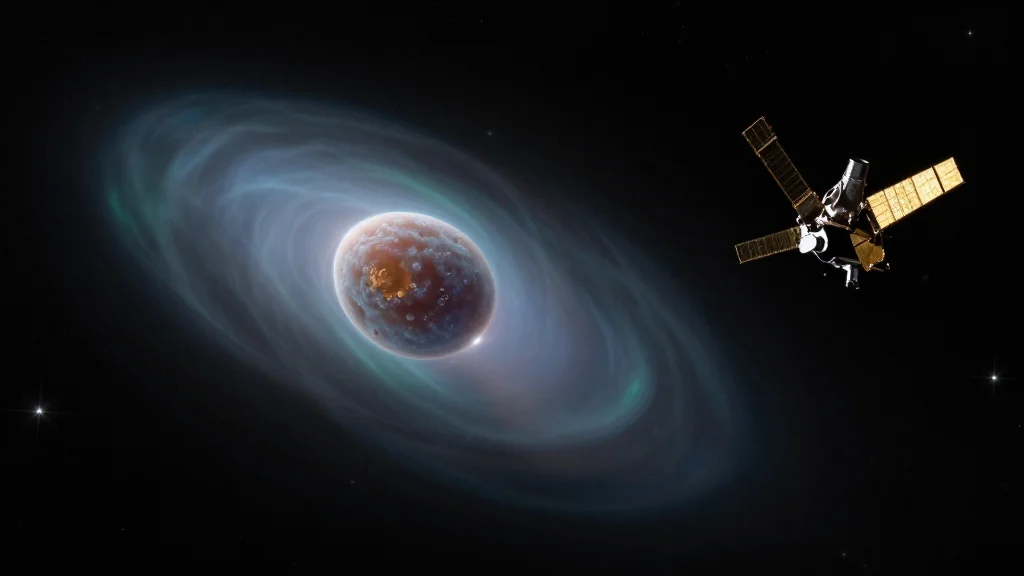
JWST Detects Hidden Methane and High CO₂ in Interstellar Comet 3I/ATLAS

Why It Matters
The detection of buried methane and unusually high carbon‑dioxide in 3I/ATLAS reshapes our understanding of the chemical diversity of material that travels between star systems. It suggests that organic compounds can be preserved in layered interiors, potentially delivering pre‑biotic chemistry to new worlds. Moreover, the volatile profile challenges the long‑standing view that water dominates cometary composition, indicating that interstellar bodies may form under markedly different temperature and pressure regimes. These insights have broader ramifications for planetary formation theories, models of volatile delivery to early Earth‑like planets, and the design of future telescopic surveys aimed at characterizing interstellar objects. By establishing a chemical fingerprint for objects from beyond the Solar System, astronomers can better assess the role such wanderers play in seeding planetary systems with the building blocks of life.
Key Takeaways
- •JWST identified methane in the mid‑infrared spectrum of interstellar comet 3I/ATLAS.
- •Carbon‑dioxide outpaced water vapor, indicating an atypical volatile composition.
- •Methane appears to be trapped beneath a surface crust, releasing only after deep heating.
- •The staggered decline of gases suggests a layered, heterogeneous interior.
- •Findings imply interstellar objects may carry organic precursors distinct from solar‑system comets.
Pulse Analysis
The JWST discovery marks a turning point in how astronomers interpret the chemistry of interstellar visitors. Historically, cometary science has been anchored in the water‑ice paradigm, with water, carbon monoxide, and carbon dioxide as the primary volatiles. 3I/ATLAS flips that script by presenting a methane‑rich, CO₂‑dominant profile, hinting at formation zones where CO₂ ice could condense more readily than water—perhaps in the outer reaches of a protoplanetary disk around a low‑mass star. This chemical fingerprint not only differentiates true interstellar objects from solar‑system interlopers but also expands the inventory of organic molecules that can be exchanged across stellar neighborhoods.
From a broader perspective, the layered structure inferred from the delayed methane release suggests that interstellar comets may preserve a record of their natal environments deep within their interiors. As these bodies traverse the Solar System, they act as time capsules, delivering snapshots of distant planetary formation conditions. If future observations confirm that methane and CO₂ enrichment are common among interstellar objects, it could imply that the galaxy harbors a substantial reservoir of organic‑rich material, potentially influencing the habitability of nascent exoplanets through episodic delivery.
Looking ahead, the scientific community faces a strategic choice: prioritize early‑detection capabilities to catch interstellar objects before they heat up, or develop instruments capable of probing deeper layers remotely. JWST’s success demonstrates the power of mid‑infrared spectroscopy, but the next generation of space telescopes will need to combine rapid response with higher spectral resolution to map volatile stratigraphy in real time. The stakes are high—each new interstellar visitor offers a rare laboratory for testing theories of planetary chemistry, and the data from 3I/ATLAS sets a benchmark for what is possible when cutting‑edge observatories intersect with cosmic wanderers.
JWST Detects Hidden Methane and High CO₂ in Interstellar Comet 3I/ATLAS
Comments
Want to join the conversation?
Loading comments...