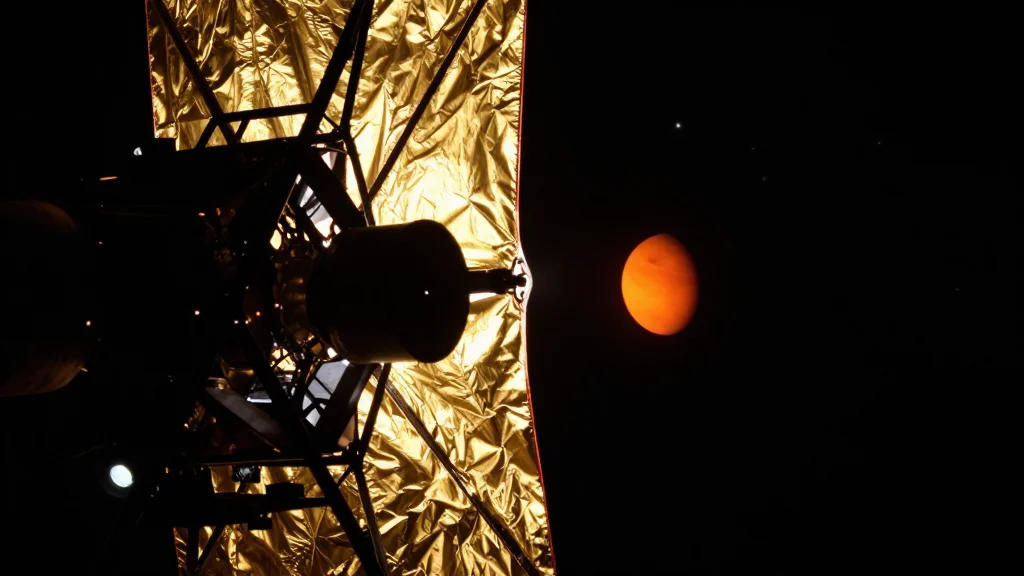
JWST Directly Characterizes Surface of Scorching Super‑Earth LHS 384b

Why It Matters
Directly probing an exoplanet’s surface marks a paradigm shift in the study of worlds beyond our Solar System. Until now, most exoplanet research has focused on atmospheric signatures, leaving the solid surfaces of rocky planets largely speculative. By confirming that JWST can isolate and analyze surface‑derived infrared light, scientists gain a new tool to assess planetary geology, thermal evolution, and potential habitability. This capability also refines theoretical models of planet formation, suggesting that many super‑Earths may follow a Mercury‑like evolutionary path rather than Earth‑like, with implications for the frequency of truly habitable worlds. The breakthrough also demonstrates the power of international collaboration and cutting‑edge instrumentation. The joint effort between the Max Planck Institute, Harvard‑Smithsonian Center for Astrophysics, and other institutions showcases how shared expertise can unlock observations that were previously impossible, setting a precedent for future large‑scale exoplanet surveys.
Key Takeaways
- •JWST’s MIRI instrument directly detected infrared light from LHS 384b’s surface
- •The planet’s dayside temperature is ~725 °C (1,340 °F)
- •Surface composition resembles dark basaltic rock, similar to the Moon or Mercury
- •LHS 384b orbits its star every 11 hours and is tidally locked
- •Findings published in *Nature Astronomy* and open new avenues for exoplanet geology
Pulse Analysis
The JWST surface detection of LHS 384b is more than a scientific curiosity; it signals a turning point for exoplanetary research. Historically, the field has been constrained by the inability to separate a planet’s faint glow from its star’s brilliance, limiting studies to bulk density and atmospheric spectra. JWST’s mid‑infrared sensitivity, combined with sophisticated data‑deconvolution techniques, now lets astronomers peer at the very rocks that make up distant worlds. This capability will likely accelerate the shift from cataloguing exoplanets to characterizing their interiors, a transition akin to moving from a census to a detailed geological survey.
From a market perspective, the success validates the massive investment in JWST and bolsters the case for next‑generation observatories. Investors and space agencies see tangible returns on the $10 billion-plus budget that funded JWST, reinforcing confidence in future flagship missions like the Habitable Worlds Observatory, slated for the 2030s. Moreover, the data provide a benchmark for upcoming missions such as ESA’s Ariel, which will focus on atmospheric chemistry but can now incorporate surface studies into its science cases, expanding its scientific payload.
Looking ahead, the community faces the challenge of scaling this technique to a broader sample of exoplanets, many of which are fainter or orbit more active stars. Advances in high‑contrast imaging, improved detector noise floors, and refined modeling of stellar variability will be essential. If successful, we could soon map the mineralogy of dozens of rocky worlds, turning speculative discussions about alien geology into concrete, comparative planetology. That would not only deepen our understanding of planetary diversity but also sharpen the search for truly Earth‑like environments.
JWST Directly Characterizes Surface of Scorching Super‑Earth LHS 384b
Comments
Want to join the conversation?
Loading comments...