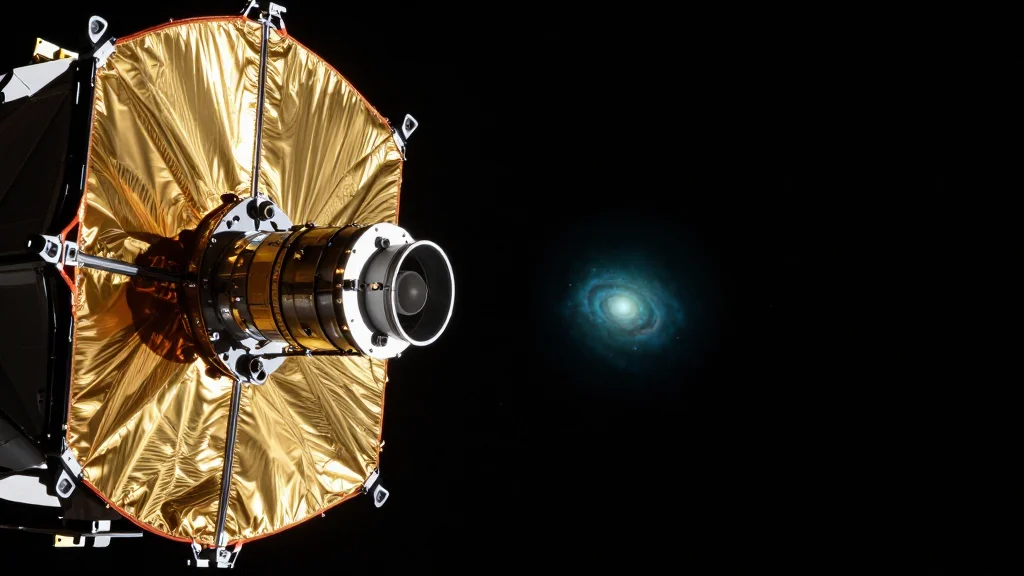
JWST Finds LAP1‑B, Most Chemically Primitive Galaxy Yet, Illuminating First Stars

Why It Matters
LAP1‑B bridges a critical gap between theory and observation in cosmology, offering the first direct chemical fingerprint of the universe’s inaugural stars. By confirming the elemental yields predicted for Population III supernovae, the discovery reshapes models of early galaxy formation, star‑formation efficiency, and the timeline of metal enrichment that set the stage for later generations of stars and planets. Moreover, the result demonstrates JWST’s capability to probe the faintest, most distant objects, reinforcing its role as the premier tool for exploring the cosmic dawn. Beyond astrophysics, understanding the first episodes of element creation informs broader scientific narratives about the origins of the chemical elements essential for life. The data from LAP1‑B will feed into interdisciplinary studies ranging from nuclear physics to planetary science, anchoring the chronology of how the universe evolved from a simple hydrogen‑helium plasma to the chemically diverse cosmos we inhabit today.
Key Takeaways
- •JWST spectroscopically identified LAP1‑B, a galaxy 13 billion light‑years away.
- •Oxygen abundance measured at 1/240th of the Sun, the lowest ever recorded for a star‑forming galaxy.
- •Carbon‑to‑oxygen ratio matches theoretical predictions for Population III enrichment.
- •Stellar mass capped at ~3,300 solar masses, indicating minimal prior star formation.
- •Findings validate long‑standing models of the first supernovae and early chemical evolution.
Pulse Analysis
The LAP1‑B discovery marks a watershed moment for observational cosmology, confirming that JWST can not only detect but also chemically characterize galaxies at the very edge of the observable universe. Historically, the existence of Population III stars has been inferred from indirect signatures—such as metal‑poor halo stars in the Milky Way—but never directly observed. LAP1‑B provides the first concrete spectroscopic evidence that the first generation of massive stars lived, died, and seeded their surroundings with a distinctive elemental mix.
From a competitive standpoint, the result underscores the strategic advantage of space‑based infrared observatories over ground‑based facilities, which are hampered by atmospheric absorption and lower sensitivity at the relevant wavelengths. The 30‑hour integration time and reliance on gravitational lensing illustrate the lengths required to push the frontier, but also hint at a forthcoming wave of discoveries as JWST’s survey programs mature. Future missions like the Nancy Grace Roman Space Telescope will complement JWST by mapping larger sky areas, potentially uncovering more ultra‑primitive systems without the need for lensing.
Looking ahead, the community faces the challenge of translating a single, extraordinary data point into a statistically robust picture of early star formation. Systematic surveys targeting lensing clusters, combined with next‑generation simulations that incorporate the new abundance constraints, will be essential. If additional galaxies with similarly low metallicities are found, they could refine the initial mass function of Population III stars and clarify how quickly the universe transitioned from a metal‑free to a metal‑enriched state. The LAP1‑B breakthrough thus opens a new observational window that promises to reshape our understanding of the first billion years of cosmic history.
JWST Finds LAP1‑B, Most Chemically Primitive Galaxy Yet, Illuminating First Stars
Comments
Want to join the conversation?
Loading comments...