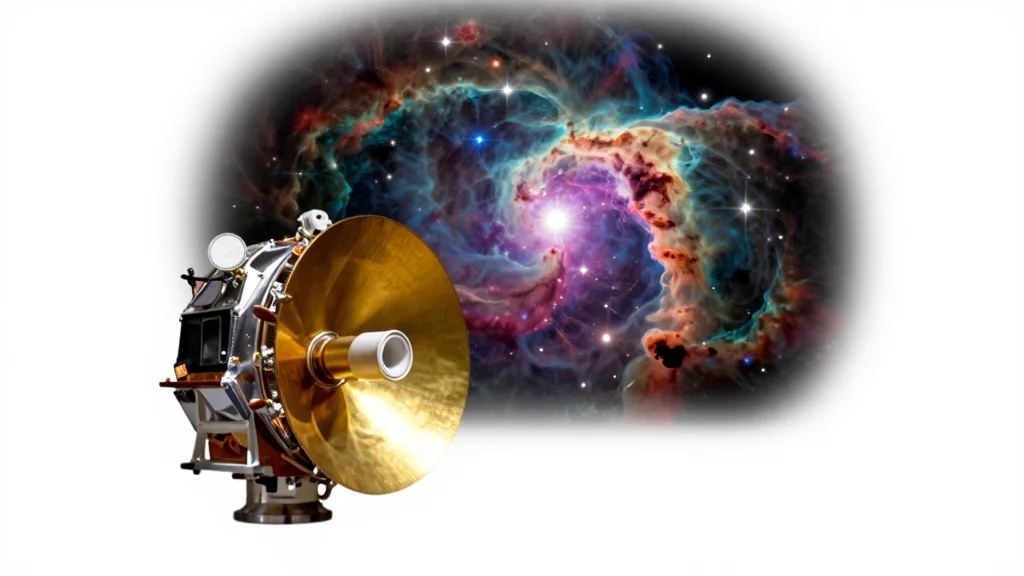
JWST Images Expose Hidden Star‑Forming Regions in W51 Nebula

Why It Matters
Revealing hidden star‑forming regions transforms our grasp of stellar evolution, especially for massive stars that dominate galactic ecosystems. By directly imaging protostars that were previously inferred only through indirect signals, scientists can validate or overturn long‑standing theoretical frameworks about cloud collapse, feedback mechanisms, and the timescales of star birth. The breakthrough also showcases JWST’s unique ability to probe the dusty corners of the universe, promising a new era of discovery that extends from nearby nebulae to the earliest galaxies. Beyond pure science, the results reinforce the value of the $10 billion investment in JWST, demonstrating tangible returns in the form of data that were unattainable with any prior facility. This bolsters the case for continued funding of large‑scale space observatories, which serve as essential tools for answering fundamental questions about our cosmic origins.
Key Takeaways
- •JWST infrared images reveal dozens of previously hidden young stars in the W51 nebula.
- •Stars in W51 began forming within the last million years, far more recent than the Sun’s age.
- •University of Florida’s Adam Ginsburg highlighted JWST’s ability to see through dust.
- •Observations challenge traditional models that assume longer collapse times for massive stars.
- •Future JWST programs will target additional dusty star‑forming regions across the Milky Way.
Pulse Analysis
JWST’s W51 breakthrough marks a pivotal moment for observational astrophysics. For decades, astronomers relied on indirect tracers—radio lines, maser emissions, or scattered light—to infer the presence of nascent stars in heavily obscured clouds. The new images convert speculation into direct evidence, allowing researchers to calibrate those proxies with unprecedented precision. This shift mirrors the transition from the Hubble era, where optical clarity redefined galaxy morphology, to the infrared era, where the hidden scaffolding of star formation is finally exposed.
Historically, the debate over massive star formation has centered on whether turbulence or magnetic fields dominate the collapse process. JWST’s high‑resolution view of filamentary structures and embedded protostars provides the empirical data needed to test competing simulations. Early analyses suggest that turbulence may play a larger role than previously thought, as the filaments appear fragmented in a pattern consistent with turbulent compression rather than smooth magnetic channeling. If subsequent studies confirm this, theoretical models will need to incorporate more chaotic dynamics, reshaping our understanding of how the most luminous stars influence their surroundings.
Looking ahead, the implications extend beyond the Milky Way. By establishing a reliable method to count hidden stars in nearby regions, astronomers can extrapolate star‑formation rates in distant, dust‑enshrouded galaxies observed at high redshift. JWST’s ability to bridge the local and the early universe could tighten constraints on cosmic star‑formation history, a cornerstone of cosmology. In short, the W51 images are not just a pretty picture; they are a data‑rich foundation for the next generation of astrophysical theory and observation.
JWST Images Expose Hidden Star‑Forming Regions in W51 Nebula
Comments
Want to join the conversation?
Loading comments...