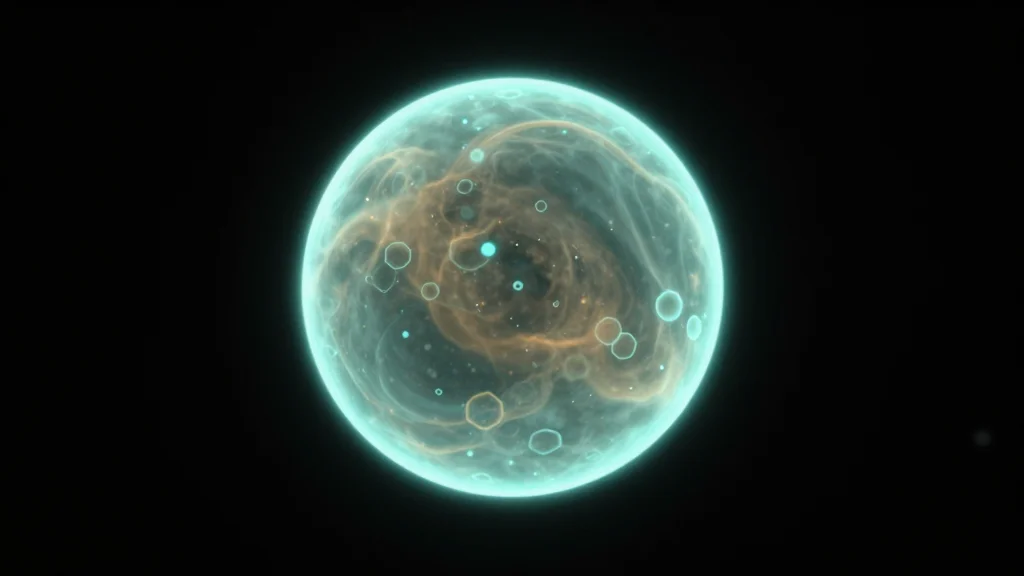
JWST Images Reveal Cosmic “Buckyball” Birthplace in Distant Nebula

Why It Matters
The identification of a specific interstellar region where buckyballs form bridges a gap between laboratory chemistry and cosmic reality. By confirming that fullerenes can assemble in the harsh environments of planetary nebulae, the study provides a tangible pathway for complex carbon molecules to enter the interstellar medium, influencing models of organic synthesis on a galactic scale. This insight is crucial for astrobiology, as it suggests that the building blocks of life may be more widespread than previously thought. Moreover, the findings validate JWST’s capability to not only capture stunning images but also to perform detailed chemical diagnostics across vast distances. The ability to map molecular distributions in three dimensions opens new avenues for studying the life cycles of stars, the evolution of dust, and the chemical enrichment of galaxies, all of which are foundational to our broader understanding of the universe.
Key Takeaways
- •JWST’s MIRI instrument captured nine‑filter infrared images of nebula Tc 1, >10,000 ly away
- •Spectroscopy shows buckyballs (C₆₀) arranged in a thin, spherical shell around the central star
- •The discovery builds on Jan Cami’s 2010 Spitzer detection of fullerenes in the same nebula
- •Findings suggest planetary nebulae can naturally synthesize complex carbon molecules
- •Future JWST cycles will target additional carbon‑rich nebulae to test the universality of the shell structure
Pulse Analysis
The breakthrough underscores a shift from detecting isolated molecules to mapping their spatial context, a capability that will redefine astrochemical surveys. In the past decade, fullerenes were treated as exotic curiosities; now they are emerging as a measurable component of stellar ejecta, implying that carbon chemistry in the late stages of stellar evolution is more efficient than models have assumed. This efficiency could accelerate the enrichment of the interstellar medium with stable carbon cages, potentially influencing the formation rates of larger organic compounds.
Historically, the discovery of buckyballs in the lab earned a Nobel Prize, yet their astrophysical relevance remained speculative. JWST’s high‑resolution spectroscopy finally provides the missing link, allowing scientists to test competing formation theories—top‑down grain fragmentation versus bottom‑up assembly. The outcome will affect how we simulate dust processing in galaxy evolution models, as fullerenes can act as catalysts for further chemical complexity.
Looking ahead, the ability to pinpoint fullerene‑rich zones invites a new class of targeted observations, including time‑domain studies that could watch the shell evolve as the central white dwarf cools. If similar shells are found in other nebulae, it may prompt a reevaluation of the carbon budget in the Milky Way, with implications for the prevalence of pre‑biotic chemistry beyond our solar system.
JWST Images Reveal Cosmic “Buckyball” Birthplace in Distant Nebula
Comments
Want to join the conversation?
Loading comments...