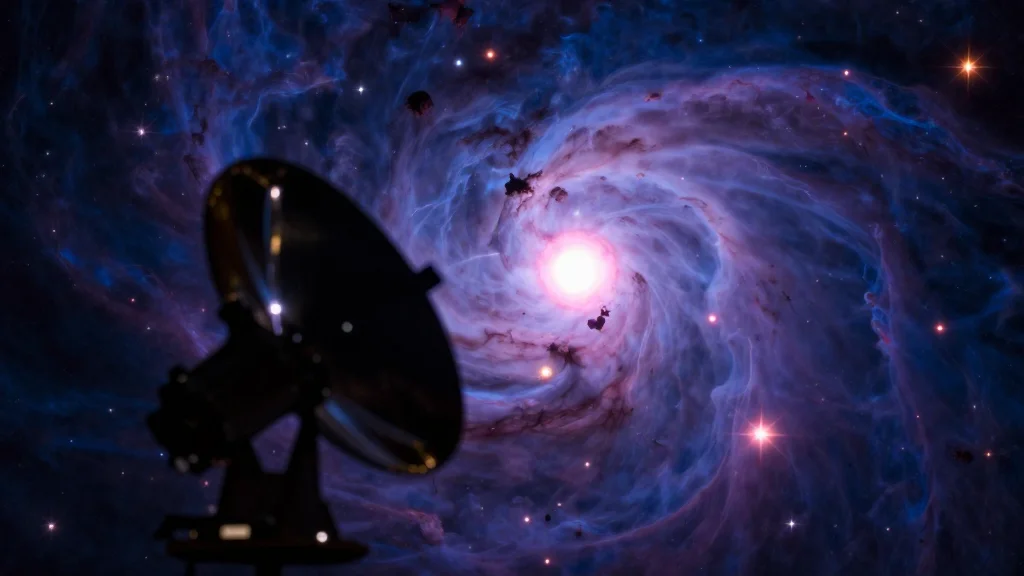
JWST Reveals Thousands of Hidden Massive Stars in W51 Star‑Forming Region

Why It Matters
The ability to directly observe massive stars at the earliest stages of their evolution transforms our grasp of stellar physics. Massive stars drive the chemical enrichment of galaxies, influence star‑formation rates, and seed the interstellar medium with the elements necessary for planet formation. By expanding the known population of such stars, JWST provides critical data that can calibrate theoretical models and improve predictions about galaxy evolution. Furthermore, the synergy between JWST and ALMA demonstrates the power of multi‑wavelength astronomy. Combining infrared and radio observations yields a more complete narrative of star formation, from cold gas clouds to luminous protostars. This approach will inform the design of future observatories and guide the allocation of limited telescope time toward the most scientifically rewarding targets.
Key Takeaways
- •JWST identified thousands of previously hidden massive stars in the W51 region.
- •Infrared imaging pierced dense dust clouds, revealing detailed filamentary structures.
- •ALMA radio data complemented JWST observations, mapping cold molecular gas.
- •Findings challenge existing models of massive star formation in dense environments.
- •Future JWST cycles will target spectral lines to confirm stellar masses and dynamics.
Pulse Analysis
JWST’s latest W51 observations underscore a shift in astrophysical research toward high‑resolution, multi‑modal surveys. Historically, massive star formation was inferred from indirect tracers—radio masers, infrared excesses, or outflow signatures—each offering a fragmented view. The new dataset stitches these fragments together, delivering a holistic snapshot that can validate or overturn long‑standing theoretical frameworks. In practical terms, this means that simulation codes will need to incorporate more nuanced feedback loops, accounting for the rapid emergence of massive stars within turbulent filaments.
The broader scientific community stands to benefit from the methodological template set by the W51 campaign. By pairing JWST’s infrared sensitivity with ALMA’s millimeter precision, researchers can replicate this strategy across other star‑forming complexes, from the Orion Nebula to distant extragalactic nurseries. This could accelerate the refinement of the initial mass function across varying metallicities and galactic environments, a cornerstone for models of cosmic evolution.
Looking forward, the discovery raises expectations for the next generation of space telescopes. The Habitable Worlds Observatory, slated for the 2030s, will inherit JWST’s legacy of infrared excellence but will also need to address the challenges highlighted by the W51 findings—namely, distinguishing stellar mass signatures from dust‑heated emission. The lessons learned here will shape instrument design, observation planning, and data analysis pipelines, ensuring that future missions can build on JWST’s breakthrough and continue to unravel the complexities of star birth.
JWST Reveals Thousands of Hidden Massive Stars in W51 Star‑Forming Region
Comments
Want to join the conversation?
Loading comments...