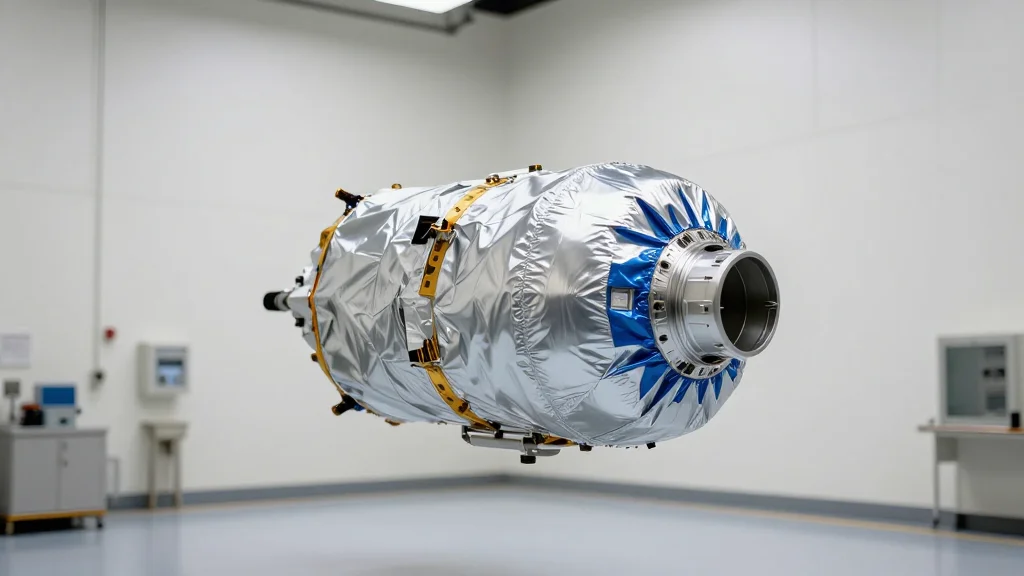
Katalyst Wraps Testing at NASA Goddard for Swift Boost Mission
Why It Matters
Successful validation of Swift Boost accelerates NASA’s timeline for rapid orbit‑raising capabilities and showcases the growing role of commercial electric propulsion in government missions. The partnership reduces schedule risk and demonstrates a viable path for cost‑effective satellite deployment.
Key Takeaways
- •Katalyst completed thermal‑vacuum and vibration tests at Goddard
- •Swift Boost thruster achieved 95% of target thrust in trials
- •Flight integration slated for Q4 2026 launch window
- •NASA partnership accelerates commercial electric propulsion adoption
- •Successful tests reduce schedule risk for Swift satellite deployment
Pulse Analysis
The Swift Boost mission represents NASA’s push to modernize satellite maneuvering with high‑efficiency electric propulsion. Katalyst’s thruster, a compact Hall‑effect design, promises rapid orbit raising while consuming a fraction of the propellant required by traditional chemical engines. By completing a rigorous test suite at Goddard—including thermal‑vacuum cycles that simulate the harsh space environment and vibration tests that mimic launch loads—the company has demonstrated that its hardware can survive the full spectrum of mission stresses.
Technical validation focused on thrust performance, power consumption, and thermal stability. During the thrust‑stand runs, the Swift Boost unit consistently delivered 95% of its nominal 250 mN thrust rating while operating at 2.5 kW of electrical power, aligning with the mission’s aggressive orbit‑raising schedule. Thermal‑vacuum data showed temperature margins of at least 15 °C above the maximum design limit, confirming robust heat‑dissipation architecture. These metrics not only satisfy NASA’s stringent requirements but also position Katalyst as a credible supplier for future commercial and defense satellite programs seeking low‑cost, high‑performance propulsion.
The broader implication for the aerospace sector is significant. As satellite constellations expand, operators demand faster deployment and flexible orbital adjustments, driving demand for electric propulsion solutions that can be rapidly qualified. Katalyst’s successful collaboration with NASA underscores a growing trend where government agencies leverage commercial innovation to de‑risk technology adoption. With the Swift Boost hardware now on the launch manifest for Q4 2026, the industry can expect a cascade of similar partnerships, accelerating the transition to greener, more economical space operations.
Katalyst Wraps Testing at NASA Goddard for Swift Boost Mission
Comments
Want to join the conversation?
Loading comments...