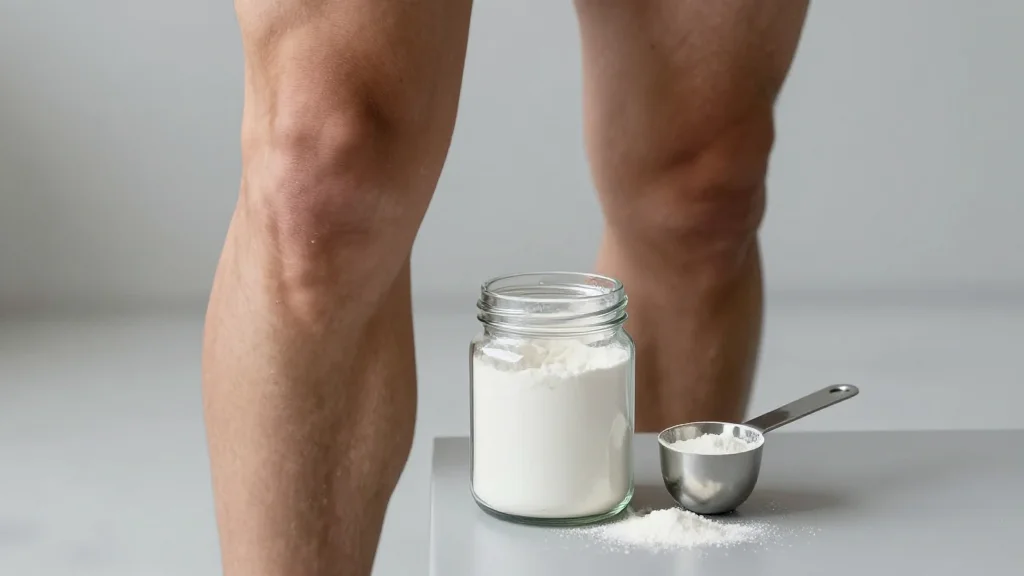
Knee Pain? New Study Shows This Supplement Helps (Not Turmeric)
Why It Matters
Creatine’s ability to boost strength and functional outcomes offers a low‑cost, evidence‑based adjunct for osteoarthritis management, potentially accelerating recovery and reducing fall risk among aging adults.
Key Takeaways
- •Creatine added to PT cut knee pain more than placebo.
- •Strength gains were larger with creatine, boosting functional performance.
- •No improvement seen in joint range of motion or quality‑of‑life scores.
- •Four‑week loading protocol used 20 g then 5 g daily.
- •Creatine may lower fall risk by enhancing muscle strength.
Pulse Analysis
Knee osteoarthritis remains a leading cause of disability, and clinicians rely on exercise‑based rehabilitation to preserve joint function. As the population ages, patients and providers are increasingly exploring nutritional adjuncts that could enhance the efficacy of physical therapy. Creatine, long celebrated for its role in muscle energetics, has emerged as a candidate because it can increase phosphocreatine stores, supporting rapid ATP regeneration during high‑intensity contractions—an essential factor for strengthening the quadriceps, a muscle group critical to knee stability.
The recent randomized controlled trial enrolled 40 adults aged 40‑70 and paired a standard four‑week physical‑therapy regimen with either creatine or placebo. Those receiving creatine experienced statistically significant reductions in pain scores and superior improvements in knee‑function indices, driven largely by greater isometric strength gains. Notably, the supplement also lowered fall risk, likely reflecting enhanced muscular control. However, the study observed no added benefit for joint range of motion or broader quality‑of‑life metrics, underscoring that creatine augments, rather than replaces, mechanical interventions.
For practitioners, the practical takeaway is straightforward: a short loading phase of 20 g daily for one week, followed by a maintenance dose of 3‑5 g, can be safely integrated into existing rehab protocols. This regimen is inexpensive, widely available, and carries a well‑documented safety profile when taken with adequate hydration. As insurers and health systems seek cost‑effective strategies to curb osteoarthritis progression, creatine supplementation could become a standard recommendation alongside exercise, offering patients a tangible boost in strength and functional independence.
Knee Pain? New Study Shows This Supplement Helps (Not Turmeric)
Comments
Want to join the conversation?
Loading comments...