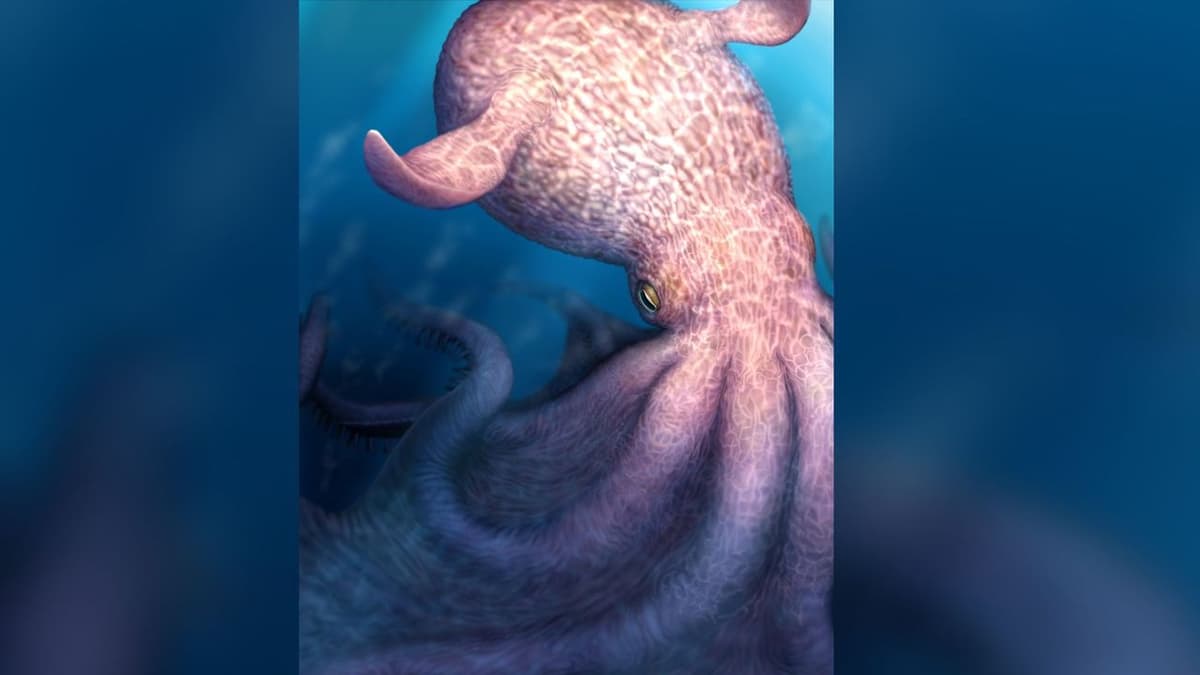
'Kraken' Octopus that Lived at the Time of the Dinosaurs Was a 62-Foot-Long Apex Predator of the Ocean
Why It Matters
If giant octopuses were apex predators, our understanding of Cretaceous marine food webs and evolutionary pressures on prey species must be revised, highlighting the ecological importance of soft‑bodied cephalopods in deep time.
Key Takeaways
- •Fossil jaws suggest octopuses up to 62 ft (19 m) long.
- •Species *N. haggarti* may be largest known invertebrate.
- •Findings push octopus record back 5 M years to 100 M years ago.
- •Wear patterns indicate sophisticated hunting of hard‑shelled prey.
- •Study challenges view that Cretaceous apex predators were only vertebrates.
Pulse Analysis
The new study leverages high‑resolution CT scanning and machine‑learning classification to rescue 27 fossilized octopus jaws that would otherwise remain invisible in the rock record. By comparing jaw dimensions with those of modern finned octopuses, the team reconstructed mantle size and total body length, arriving at a startling maximum of 19 meters for *N. haggarti*. This methodological breakthrough not only expands the known size range of extinct cephalopods but also demonstrates how digital paleontology can fill gaps left by the soft‑tissue nature of these animals.
Ecologically, a 19‑meter octopus would have sat at the pinnacle of the Cretaceous marine hierarchy, competing with iconic vertebrate predators such as mosasaurs and pliosaurs. Its massive, wear‑streaked jaws imply a diet of heavily armored prey, suggesting an arms race that drove the evolution of tougher shells and defensive strategies among ammonites, crustaceans, and early fish. Recognizing an invertebrate apex predator reshapes models of energy flow and trophic dynamics, prompting a re‑evaluation of how predation pressure influenced the diversification of marine life during the age of dinosaurs.
Beyond the immediate fossil find, the research underscores the broader challenge of reconstructing soft‑bodied organisms in deep time. Size estimates remain contingent on modern analogues, and critics note the potential for error when extrapolating from limited jaw samples. Future work combining additional fossil sites, isotopic analysis, and biomechanical modeling could tighten these ranges and perhaps uncover even larger cephalopods. For contemporary marine biology, the discovery offers a long‑term perspective on cephalopod gigantism, informing studies of modern giant squid and the ecological factors that permit such extreme growth.
'Kraken' octopus that lived at the time of the dinosaurs was a 62-foot-long apex predator of the ocean
Comments
Want to join the conversation?
Loading comments...