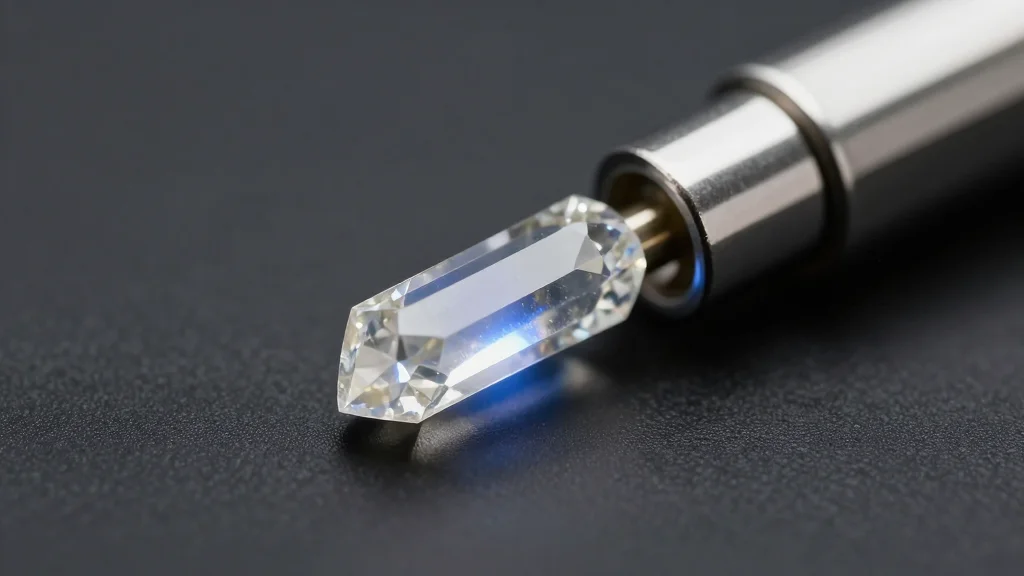
Lab-Grown Diamond Technology Poised to Revolutionize Radiation Dose Measurement
Why It Matters
A unified, ultra‑compact dosimeter removes the calibration gaps between imaging and therapy, improving patient safety and operational efficiency across radiology and oncology. Its portability opens new markets in personal and environmental radiation monitoring.
Key Takeaways
- •Diamond detector 1,250× smaller than air chambers, 13,500× more sensitive.
- •Operates at –100 V, enabling compact, low‑power dosimetry devices.
- •Provides linear response across diagnostic X‑ray and therapy dose ranges.
- •Enables real‑time, spatially resolved dose mapping for oncology treatment planning.
- •Supports wearable personal dosimeters for healthcare workers and environmental monitoring.
Pulse Analysis
Radiation dosimetry has long relied on bulky air‑filled ionization chambers, which trade spatial precision for sensitivity. In diagnostic imaging, especially low‑dose X‑rays, clinicians struggle to obtain accurate, real‑time measurements, while therapeutic settings demand robust, high‑dose monitoring. The material constraints of gas‑based detectors have limited the integration of dose mapping into modern imaging suites, creating a persistent gap in patient safety protocols and treatment verification.
The heteroepitaxial diamond detector sidesteps these limits by leveraging a lab‑grown crystal lattice that acts as a solid‑state ionization medium. Precise atomic‑layer growth yields a high‑purity semiconductor with exceptional charge‑collection efficiency, delivering a 13,500‑fold sensitivity boost at a modest –100 V bias. This performance translates into linear, energy‑independent readings across the full spectrum of clinical radiation, from milligray diagnostic scans to gray‑level therapeutic beams. The compact form factor—over a thousand times smaller than traditional chambers—facilitates integration into existing imaging hardware and paves the way for dense sensor arrays that can generate real‑time dose maps.
Beyond the clinic, the technology’s durability and low power draw make it ideal for wearable dosimeters, offering continuous exposure tracking for interventional radiologists, nuclear plant workers, and first responders. Environmental agencies could deploy networks of these sensors to detect subtle contamination events, enhancing public health surveillance. As manufacturers explore commercial scaling, the diamond‑based dosimeter is poised to set new standards for accuracy, safety, and versatility in radiation measurement, reshaping both medical practice and radiological risk management.
Lab-Grown Diamond Technology Poised to Revolutionize Radiation Dose Measurement
Comments
Want to join the conversation?
Loading comments...