Large Language Model‐Guided Design of Anti‐Swelling Hybrid Dual Network Membranes for Long‐Duration Alkaline Zinc Iron Flow Batteries
Why It Matters
The breakthrough dramatically extends the lifespan and efficiency of alkaline flow batteries, a key technology for cost‑effective, long‑duration grid storage, while showcasing AI‑driven material discovery as a fast‑track to commercial‑ready solutions.
Key Takeaways
- •LLM identified tetramethylethylenediamine as optimal crosslinker
- •Hybrid dual-network membrane cuts swelling by 68%
- •Wet-state hardness reaches 216 MPa, sixfold SPEEK increase
- •Ionic conductivity stays high at 10.7 mS cm⁻¹
- •Battery operates >820 h at 240 mAh cm⁻², 88.9% efficiency
Pulse Analysis
Alkaline flow batteries promise low‑cost, long‑duration energy storage, but their membranes have long been a weak link. Conventional ion‑exchange polymers such as SPEEK or Nafion swell in high‑pH environments, compromising ion selectivity and mechanical integrity. Swelling leads to reduced power density, higher crossover of active species, and eventual membrane failure, limiting the commercial viability of zinc‑iron and other alkaline chemistries. Overcoming this stability‑selectivity trade‑off is essential for scaling grid‑scale storage solutions.
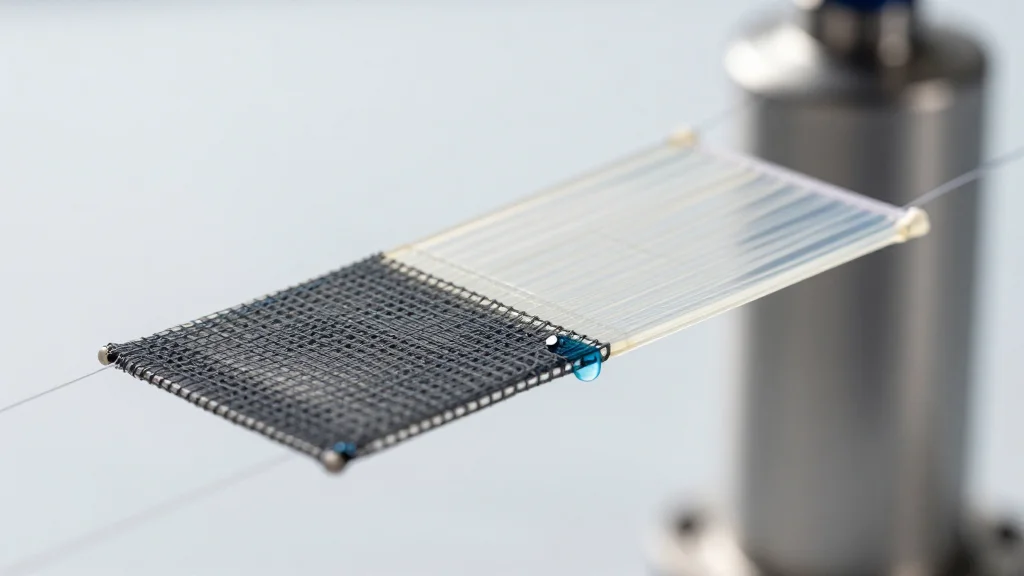
The research team leveraged a large language model to mine a curated database of polymer crosslinkers, rapidly narrowing thousands of candidates to a single, high‑performing molecule: N,N,N′,N′‑tetramethylethylenediamine. By embedding a polysulfone network crosslinked with this amine into the SPEEK matrix, they created a hybrid dual‑network architecture that physically restrains polymer chain motion while preserving conductive pathways. The resulting membrane exhibits a 68% reduction in swelling, a six‑fold increase in wet‑state hardness to 216 MPa, and retains an ionic conductivity of 10.7 mS cm⁻¹—metrics that collectively enable the zinc‑iron flow cell to run over 820 hours at an areal capacity of 240 mAh cm⁻² with 88.9% energy efficiency.
Beyond the immediate performance gains, this work illustrates how AI‑assisted materials design can accelerate the development cycle for critical energy‑tech components. By automating the crosslinker selection process, the LLM reduced experimental iterations, cutting development time and cost. The durable, high‑efficiency membrane could lower the total cost of ownership for flow batteries, making them more competitive against lithium‑ion storage for long‑duration applications. As AI models become more domain‑specific, we can expect a cascade of similar breakthroughs across electrolytes, electrodes, and other battery subsystems, reshaping the roadmap for renewable‑energy integration.
Large Language Model‐Guided Design of Anti‐Swelling Hybrid Dual Network Membranes for Long‐Duration Alkaline Zinc Iron Flow Batteries
Comments
Want to join the conversation?
Loading comments...