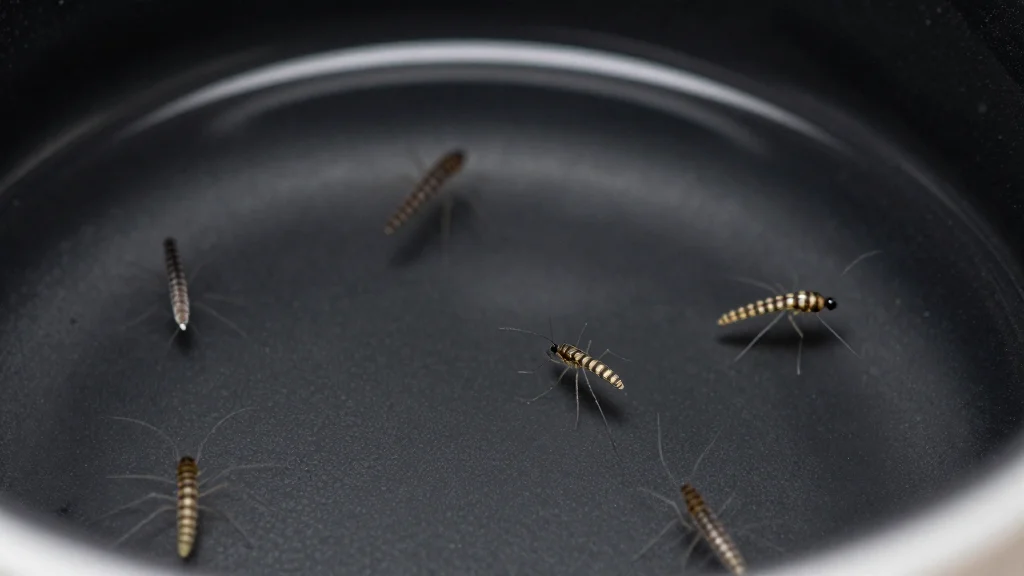
Larval Competition Between the Invasive Anopheles Stephensi and African Native Mosquitoes
Why It Matters
Understanding these competitive interactions informs malaria vector management and predicts how the spread of An. stephensi may reshape disease risk in Africa.
Key Takeaways
- •High larval density prolongs An. stephensi development regardless of food
- •Co‑rearing cuts An. arabiensis emergence by 64%, stephensi by 31%
- •Aedes aegypti reduces An. stephensi adult emergence up to 88%
- •Culex quinquefasciatus shows no significant competition with An. stephensi
Pulse Analysis
The Asian malaria vector Anopheles stephensi has recently established footholds in several African cities, raising alarms among public‑health officials because it thrives in urban water containers where traditional African vectors are less common. Its rapid expansion mirrors that of Aedes aegypti, the dengue and Zika carrier, prompting researchers to probe whether these two invasive species might compete for the same larval habitats. By recreating a range of food supplies and crowding levels in the lab, scientists can isolate the biological drivers that dictate which species dominate a given niche.
The experiments revealed a nuanced hierarchy. When An. stephensi larvae were isolated, abundant food failed to increase adult emergence, yet higher densities slowed their development, indicating density‑dependent stress. In mixed cultures, An. stephensi modestly suppressed the emergence of native malaria vectors—31% lower for itself and up to 64% for An. arabiensis—while the impact on An. gambiae was less pronounced. By contrast, Aedes aegypti exerted a crushing effect on An. stephensi, slashing its adult emergence by as much as 88% across all conditions. Culex quinquefasciatus appeared indifferent, showing no measurable competition.
These findings carry practical weight for malaria control strategies. If An. stephensi can outcompete indigenous vectors in urban settings, it could shift transmission patterns toward densely populated areas, complicating eradication efforts that historically target rural Anopheles species. Conversely, the strong competitive edge of Ae. aegypti suggests that integrated vector‑management programs targeting Aedes habitats may inadvertently curb An. stephensi proliferation as a side effect. Policymakers should therefore consider joint surveillance of both species and explore habitat‑modification tactics that disrupt shared breeding sites, while researchers continue field studies to validate laboratory insights under real‑world ecological pressures.
Larval competition between the invasive Anopheles stephensi and African native mosquitoes
Comments
Want to join the conversation?
Loading comments...