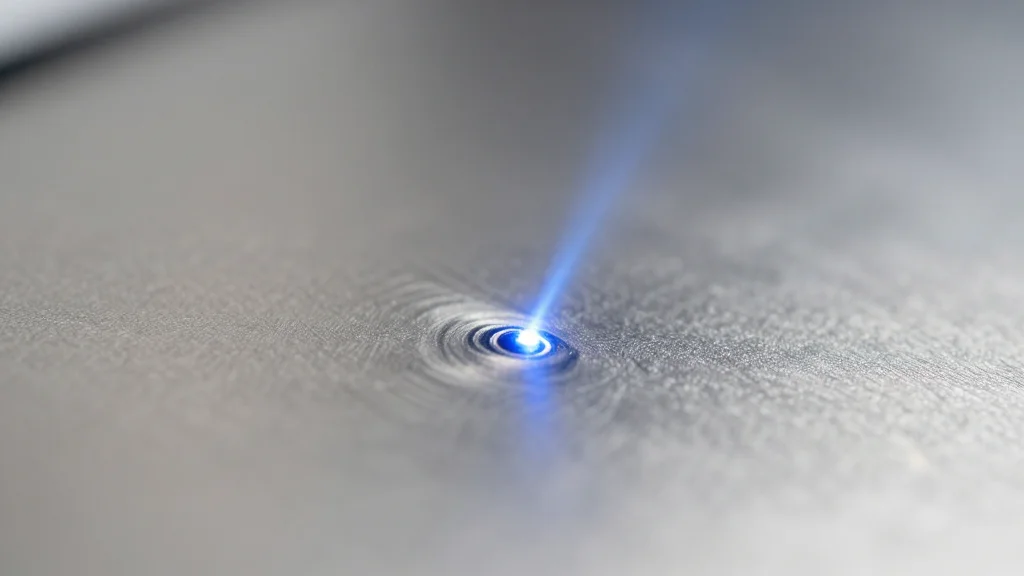
Laser Bursts Flip Nanoscale Magnetic Vortices at Blistering Speeds, Opening a Path to Brain-Like Spintronics
Why It Matters
Ultrafast, controllable vortex switching could accelerate the development of brain‑inspired spintronic processors and multi‑state memory, reshaping data‑storage and computing architectures.
Key Takeaways
- •Femtosecond laser pulses toggle vortex helicity in 200‑300 ps
- •Switching achieved in Ni‑Fe alloy nanodisks with perpendicular field
- •Helicity control ranges from deterministic to stochastic via laser fluence
- •Potential for neuromorphic spintronic chips and multi‑state memory
Pulse Analysis
Spintronics leverages electron spin to store and process information, promising lower power consumption and higher speed than conventional charge‑based electronics. A key obstacle has been the reliable reversal of magnetic vortex helicity, a topological property that defines the clockwise or counter‑clockwise rotation of spins in nanoscale whirlpools. Traditional approaches required large magnetic fields or suffered from structural disruption, limiting scalability for advanced computing applications.
The new study overcomes these limits by employing ultrashort, femtosecond laser bursts to induce rapid photothermal demagnetization, followed by coherent spin precession under a modest out‑of‑plane magnetic field. Conducted on a thin film of 80% nickel and 20% iron, the experiments achieved helicity toggling in just a few hundred picoseconds while preserving the vortex’s geometry. By adjusting laser fluence, researchers could steer the process from fully deterministic switching to stochastic behavior, offering a versatile control knob for device engineers.
These capabilities open a clear route to neuromorphic spintronic architectures that emulate neuronal firing patterns with unprecedented speed and energy efficiency. Multi‑state memory cells, capable of encoding more than binary digits, could also benefit from the stable, fast helicity transitions. As the semiconductor industry seeks alternatives to Moore’s Law, such ultrafast, low‑energy magnetic control mechanisms are likely to attract investment for next‑generation data‑centers and AI hardware, positioning spintronics as a competitive contender in the emerging computing landscape.
Laser bursts flip nanoscale magnetic vortices at blistering speeds, opening a path to brain-like spintronics
Comments
Want to join the conversation?
Loading comments...