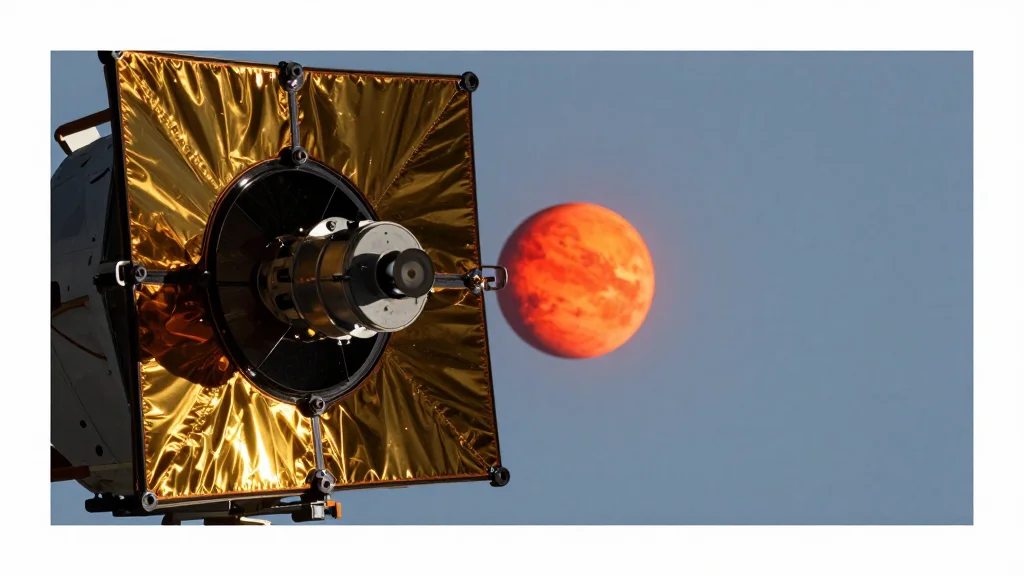
Lava Planet Has Hydrogen-Rich, Active Atmosphere
Why It Matters
A hydrogen‑rich atmosphere on a lava planet challenges conventional models that predict carbon‑oxide‑dominated envelopes, indicating that interior redox states directly influence atmospheric composition. This insight refines theories of planet formation and informs future searches for volatile signatures on ultra‑short‑period worlds.
Key Takeaways
- •JWST detected strong, variable CO emission from 55 Cnc e
- •Atmosphere contains large hydrogen, modest CO₂, dominant CO
- •Outgassing from reduced magma ocean likely drives composition
- •Clouds may intermittently cool the dayside surface
- •Findings reshape models of ultra‑short‑period lava planets
Pulse Analysis
The James Webb Space Telescope’s NIRCam observations have provided the most detailed glimpse yet of a lava‑planet’s atmosphere. By capturing five separate eclipses of 55 Cancri e, researchers identified robust carbon monoxide signatures and an unexpected abundance of hydrogen. This combination points to a reduced interior chemistry, where low oxygen fugacity allows hydrogen to escape from a molten mantle, fundamentally linking a planet’s bulk composition to its atmospheric makeup.
Unlike tidal‑heated bodies such as Io, 55 Cnc e’s volcanism is powered by relentless stellar irradiation, creating a permanent dayside magma ocean. The study’s detection of fluctuating CO emission suggests active outgassing cycles that can generate transient cloud layers, temporarily moderating surface temperatures before being blown away. Similar processes may operate on other ultra‑short‑period worlds like K2‑141 b and L 98‑59 d, highlighting a class of exoplanets where atmospheric dynamics are driven by rapid heat exchange rather than gravitational tides.
These results have broader implications for exoplanet science. A hydrogen‑rich, CO‑dominant envelope challenges existing climate models for rocky planets in extreme environments, prompting revisions to predictions of atmospheric escape and surface chemistry. As JWST continues to survey short‑period super‑Earths, the community can refine interior‑atmosphere coupling theories, improving the selection criteria for future missions targeting potentially habitable worlds. The work underscores the importance of high‑precision eclipse spectroscopy in unraveling the complex interplay between a planet’s interior, its atmosphere, and its host star.
Lava planet has hydrogen-rich, active atmosphere
Comments
Want to join the conversation?
Loading comments...