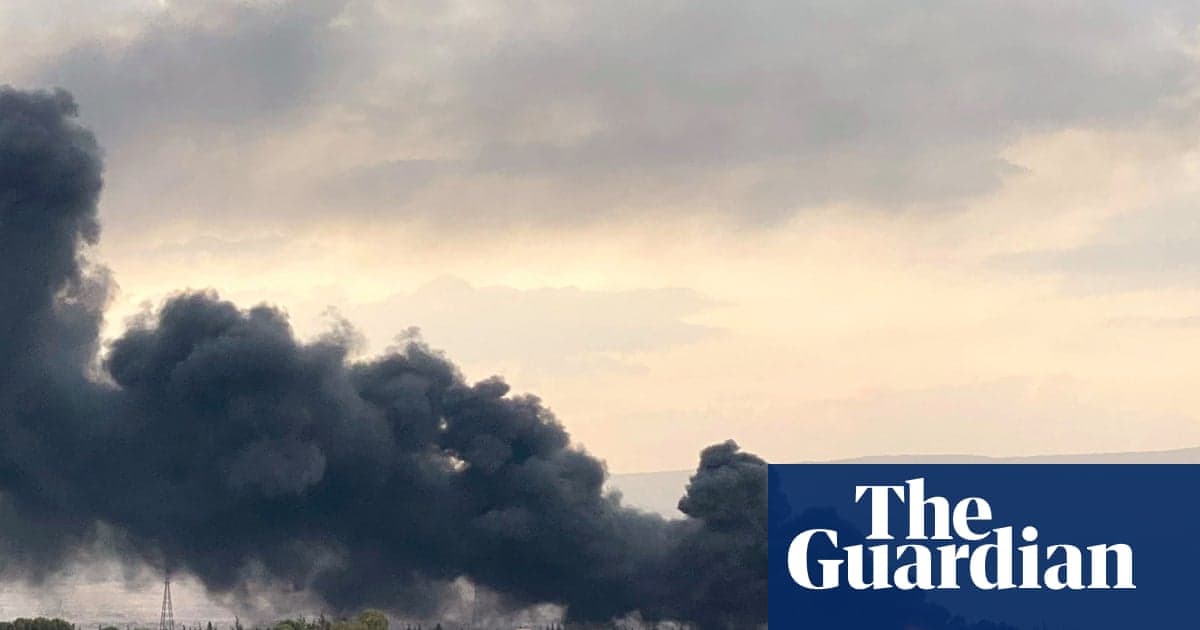
Lebanon Accuses Israel of Committing ‘Ecocide’ in Country Since 2023
Why It Matters
The assessment quantifies the war’s hidden toll on food security, public health and climate resilience, raising the prospect of legal action and prompting donor nations to fund large‑scale ecological restoration.
Key Takeaways
- •5,000 ha of Lebanese forest destroyed, accelerating soil erosion.
- •$118 m in agriculture assets and $586 m in lost production wiped out.
- •2,154 ha of orchards, including 814 ha of olives, devastated.
- •Soil contaminated with phosphorus up to 1,858 ppm; air polluted with toxins.
- •Total environmental damage estimated at $25 bn, prompting calls for international aid.
Pulse Analysis
The term “ecocide” has rarely been applied to modern conflicts, yet Lebanon’s new report frames Israel’s 2023‑24 offensive as a systematic assault on the nation’s natural capital. By cataloguing 5,000 ha of forest loss, the destruction of $118 million in agricultural infrastructure, and $586 million in foregone harvests, the document highlights how warfare can erode carbon sinks, destabilize local climates, and trigger cascading ecological damage. Soil contamination with phosphorus levels reaching 1,858 ppm and pervasive air‑pollution episodes further illustrate the breadth of the environmental crisis, underscoring a hidden cost that far exceeds conventional battlefield metrics.
Beyond the ecological footprint, the report’s $25 billion damage estimate carries profound economic and humanitarian implications. Disrupted food production threatens Lebanon’s already fragile food‑security landscape, while polluted water and air pose immediate public‑health risks. The quantified losses provide a concrete basis for potential legal claims under emerging international norms that treat severe environmental destruction as a war crime. Moreover, the stark figures are likely to galvanize donor governments and multilateral institutions to allocate emergency funds for remediation, re‑planting, and the restoration of critical ecosystem services that underpin rural livelihoods.
Regionally, Lebanon’s findings could set a precedent for how conflict‑affected states document and demand accountability for environmental harm. The report calls for enhanced monitoring capacities, suggesting that satellite imagery and on‑the‑ground assessments become standard tools in post‑conflict recovery. International partnerships focused on “building back better” may emerge, linking climate‑finance mechanisms with reconstruction efforts. As the Middle East grapples with repeated cycles of violence, integrating ecological considerations into peace‑building agendas may prove essential for long‑term stability and resilience.
Lebanon accuses Israel of committing ‘ecocide’ in country since 2023
Comments
Want to join the conversation?
Loading comments...