Leiden’s Sensor-Free Microrobots Move Like Living Organisms
Companies Mentioned
Why It Matters
By embedding intelligence in physical form, these microrobots bypass the size limits of traditional electronics, opening pathways for autonomous medical tools that can operate inside the human body.
Key Takeaways
- •Soft 5 µm segments enable flexible, sensor‑free locomotion
- •Shape‑motion feedback lets robots reroute around obstacles autonomously
- •No onboard electronics reduces size constraints for biomedical use
- •3D‑printed geometry replaces magnetic actuation, simplifying control
Pulse Analysis
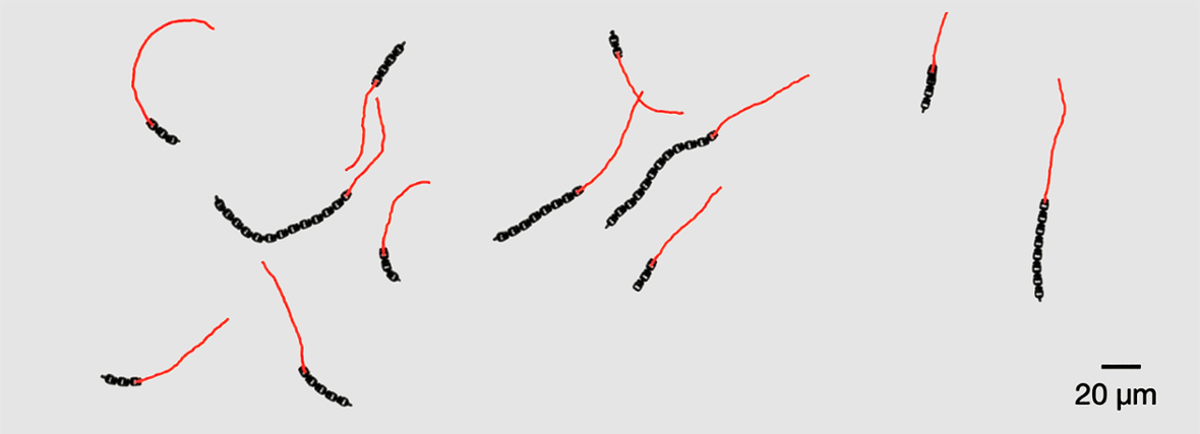
The Leiden breakthrough demonstrates that at the microscale, intelligence can be engineered directly into a robot’s morphology. By leveraging a soft, segmented chain printed with a Nanoscribe two‑photon system, the team eliminated the need for conventional sensors and processors. The electric field merely excites the structure, while the robot’s own deformation creates a feedback loop that steers it through complex environments. This paradigm shift aligns with a growing trend in soft robotics where form and function merge, offering a scalable solution to the miniaturization bottleneck that has hampered micro‑actuation for years.
From a biomedical perspective, the ability to navigate dense, fluidic environments without external guidance is a game‑changer. Microrobots that can autonomously thread through blood vessels, tissue matrices, or narrow cavities could deliver therapeutics with unprecedented precision, reducing systemic side effects. Moreover, their passive sensing through shape changes enables real‑time interaction with biological obstacles, potentially allowing in‑situ diagnostics or micro‑surgical interventions that current catheter‑based tools cannot achieve. The sensor‑free design also simplifies sterilization and biocompatibility considerations, as fewer materials and components are introduced into the body.
The broader robotics community is watching as 3D printing becomes the primary conduit for embedding functionality into tiny machines. Parallel efforts at ETH Zurich and UCLA are exploring multi‑material prints and active metamaterials, yet Leiden’s removal of even magnetic actuation distinguishes its approach. As researchers decode the underlying physics of these self‑shaping swimmers, we can expect a new generation of smart microrobots that rely on geometry rather than electronics, accelerating the timeline for clinical translation. This convergence of materials science, microfabrication, and bio‑inspired design heralds a transformative era for minimally invasive medicine.
Leiden’s Sensor-Free Microrobots Move Like Living Organisms
Comments
Want to join the conversation?
Loading comments...