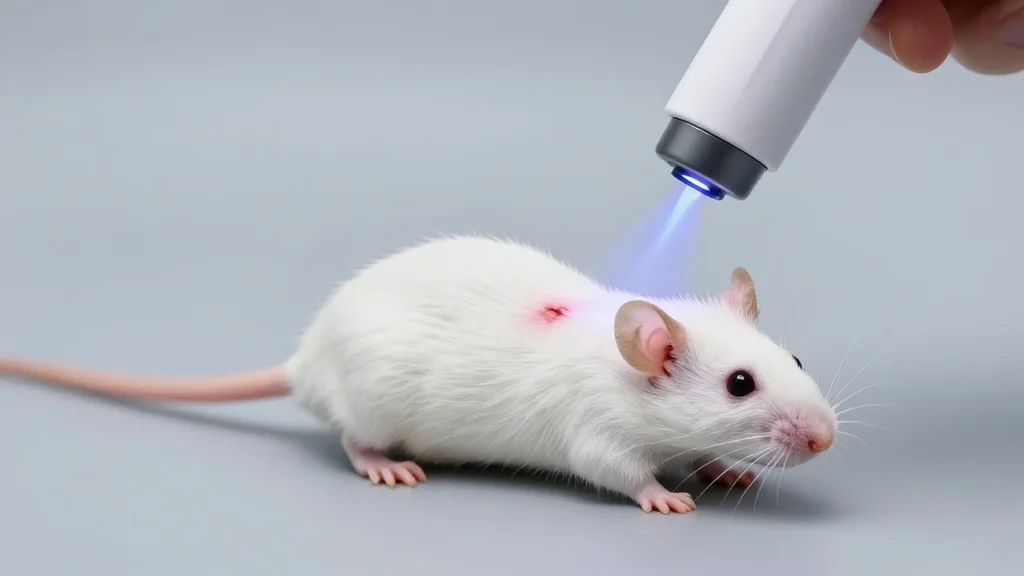
Leishmanicidal Efficacy of Cold Atmospheric Multiple Plasma Jet Against Leishmania Major in a Murine Model: Effects on Parasite Burden, Cytokine Profiles, and Wound Healing
Why It Matters
CAMPJ offers a non‑drug, device‑based solution that sidesteps toxicity and resistance problems of current leishmaniasis drugs, potentially expanding access in endemic regions.
Key Takeaways
- •CAMPJ 15‑min cuts lesion size more than shorter exposures
- •Splenic parasite load drops significantly across all CAMPJ groups
- •IFN‑γ rises, IL‑4 falls, indicating Th1 immune shift
- •Efficacy comparable to daily amphotericin B without systemic toxicity
- •Twice‑weekly plasma treatment simplifies regimen for patients
Pulse Analysis
Cutaneous leishmaniasis remains a public‑health challenge in many tropical regions, largely because existing chemotherapies such as pentavalent antimonials and amphotericin B carry significant toxicity, require prolonged dosing, and face rising parasite resistance. Researchers have therefore turned to physical modalities that can directly inactivate pathogens while modulating host immunity. Cold atmospheric plasma, a partially ionized gas that generates reactive oxygen and nitrogen species, fits this niche by delivering antimicrobial action without penetrating deep tissue, making it an attractive candidate for skin‑localized infections.
In a controlled murine experiment, BALB/c mice infected with Leishmania major received topical CAMPJ treatments of varying durations. Lesion measurements taken weekly revealed a dose‑response relationship: the 15‑minute exposure consistently yielded the smallest ulcerations, outperforming both the 5‑ and 10‑minute groups and matching the lesion reduction seen with daily amphotericin B. Parasite quantification via Leishman‑Donovan Units confirmed a parallel decline in splenic burden across all plasma‑treated cohorts. Immunologically, the longest exposure induced a pronounced Th1 shift, evidenced by elevated IFN‑γ and suppressed IL‑4, a profile associated with effective parasite clearance. These outcomes demonstrate that plasma therapy not only attacks the parasite directly but also re‑educates the immune response.
The implications for clinical translation are significant. A handheld plasma jet can be deployed in low‑resource settings, requires only brief, twice‑weekly applications, and eliminates systemic drug exposure, thereby reducing adverse events and simplifying logistics. Moreover, the technology’s scalability—leveraging existing medical‑grade plasma generators—could accelerate adoption in endemic countries where infrastructure constraints limit conventional drug distribution. Future work should focus on human safety trials, optimal dosing schedules, and integration with existing treatment algorithms, positioning CAMPJ as a potentially disruptive addition to the leishmaniasis therapeutic arsenal.
Leishmanicidal Efficacy of Cold Atmospheric Multiple Plasma Jet against Leishmania major in a Murine Model: Effects on Parasite Burden, Cytokine Profiles, and Wound Healing
Comments
Want to join the conversation?
Loading comments...