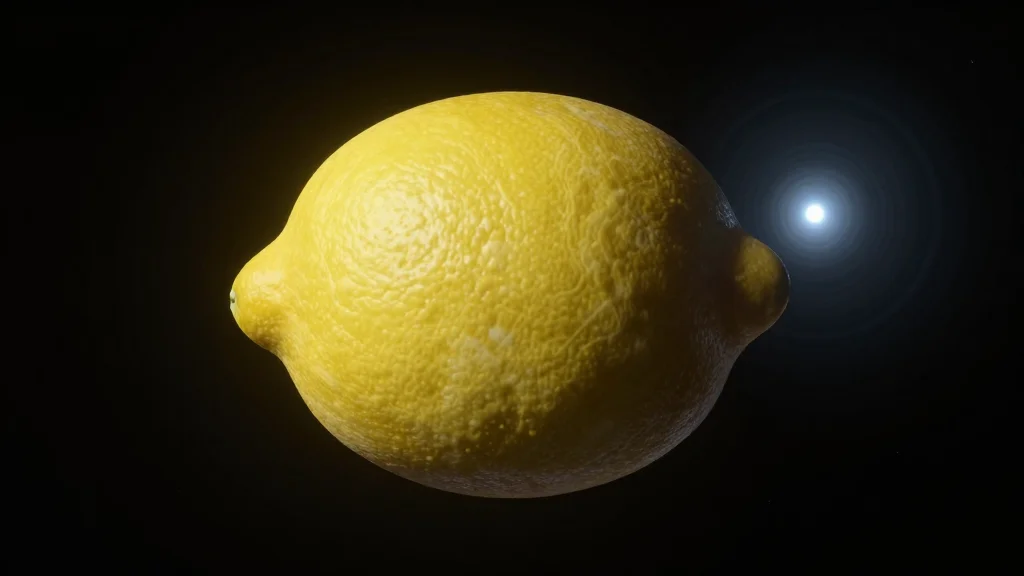
Lemon‑Shaped Exoplanet PSR J2322-2650 B Upends Planet‑Formation Theory

Why It Matters
The detection of a carbon‑rich, lemon‑shaped exoplanet orbiting a pulsar forces astronomers to revisit the fundamental assumptions of planetary formation, which have largely been based on solar‑type stars. By demonstrating that massive planets can survive, and even thrive, in the harsh gravitational and radiation environments of dead stars, the discovery widens the scope of habitability studies and informs the design of future telescopes aimed at characterizing exotic worlds. Moreover, the finding validates JWST’s ability to uncover atmospheric signatures that were previously beyond reach, reinforcing its role as a cornerstone of modern astrophysics. Beyond scientific theory, the result has practical implications for funding agencies and mission planners. Demonstrating that high‑value science can be extracted from observations of pulsar systems may justify allocating more observation time to non‑traditional targets, diversifying the scientific return on investment for large‑scale space observatories.
Key Takeaways
- •JWST identified PSR J2322-2650 b, a Jupiter‑mass exoplanet with a helium‑and‑carbon atmosphere.
- •The planet’s shape is elongated into a lemon form by tidal forces from its pulsar host.
- •Atmospheric composition may include soot clouds and solid carbon crystals, possibly diamonds.
- •Discovery challenges existing planet‑formation models that do not predict such worlds around dead stars.
- •Future JWST cycles and radio observations will refine the planet’s properties and test new formation theories.
Pulse Analysis
The PSR J2322-2650 b discovery arrives at a moment when exoplanet science is transitioning from cataloguing to characterising worlds in detail. Historically, most confirmed exoplanets orbit main‑sequence stars, a bias driven by detection methods like transit photometry and radial velocity. By turning JWST’s spectroscopic eye toward a pulsar system, researchers have opened a new parameter space that could double the diversity of known planetary environments. This shift mirrors the early days of exoplanet discovery when hot Jupiters upended expectations; now, carbon‑rich, tidally deformed giants may become the next paradigm‑shifting class.
From a market perspective, the finding validates the substantial investment in JWST and reinforces the case for next‑generation infrared observatories such as the proposed Habitable Worlds Telescope. Investors and funding bodies are likely to view the result as proof that high‑cost, high‑risk missions can yield transformative science, potentially accelerating approval for future flagship projects. Additionally, the need for sophisticated modeling of carbon‑rich interiors could spur collaborations between astrophysicists, materials scientists, and high‑pressure physicists, creating new interdisciplinary research markets.
Looking ahead, the key question is whether PSR J2322-2650 b is an outlier or the first of a hidden population of exotic planets. If follow‑up observations confirm similar bodies around other neutron stars, the field may experience a rapid expansion of theoretical work, akin to the boom in super‑Earth studies after Kepler’s launch. For now, the lemon‑shaped planet stands as a vivid reminder that planetary formation is a more versatile process than textbooks suggest, and that the universe continues to challenge our most entrenched scientific narratives.
Lemon‑Shaped Exoplanet PSR J2322-2650 b Upends Planet‑Formation Theory
Comments
Want to join the conversation?
Loading comments...