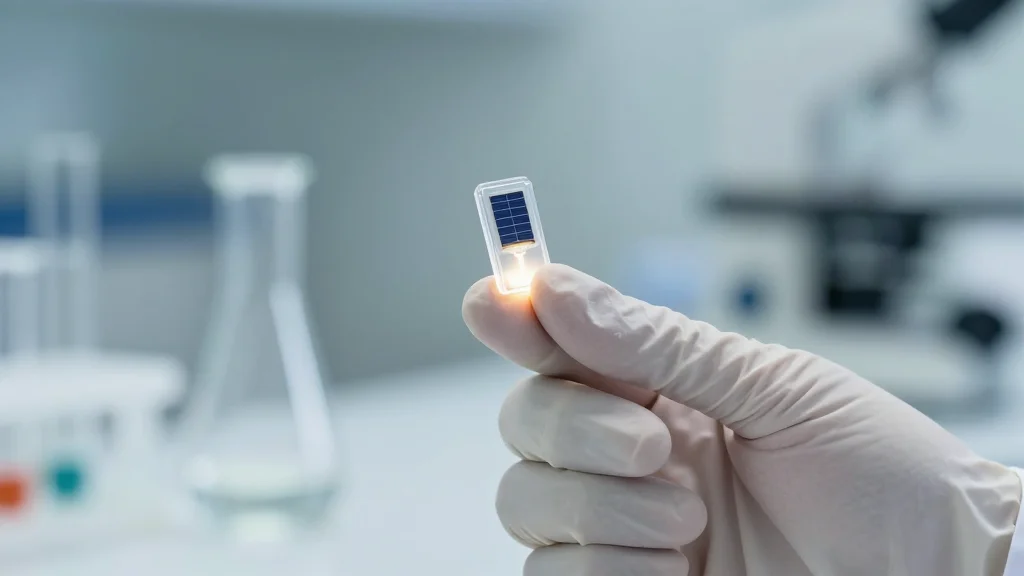
Lewis Acid–Base Coordination‐Driven Interface Passivation Using 3‐Hydroxyflavone for Inverted Perovskite Solar Cells
Why It Matters
The chemistry simultaneously boosts efficiency and long‑term stability, addressing the two main barriers to commercializing perovskite solar technology. Its compatibility with existing manufacturing processes accelerates the transition from lab prototypes to market‑ready modules.
Key Takeaways
- •3‑HF forms Lewis acid–base bonds with Pb2+, reducing interface defects.
- •Small‑area cells reach 26.6% PCE, a record for inverted architecture.
- •14 cm² mini‑modules achieve 22.6% efficiency, showing scalability.
- •Devices retain 98.9% performance after 500 h continuous illumination.
- •Passivation raises ion‑migration barrier and improves electron extraction.
Pulse Analysis
The rapid ascent of perovskite photovoltaics has been hampered by two persistent obstacles: interface recombination and photo‑induced degradation. Conventional passivation layers often rely on simple surface treatments that fail to address the underlying chemical instability of lead‑based perovskites. By leveraging the dual functionality of 3‑hydroxyflavone (3‑HF), researchers introduced a Lewis acid–base coordination scheme in which the carbonyl group competes with intramolecular hydrogen bonds to bind Pb²⁺ ions. This creates a robust interfacial network that suppresses trap states and raises the barrier to ion migration, directly tackling the root causes of loss.
The experimental results underscore the potency of this chemistry. In a 0.09 cm² inverted cell, the 3‑HF layer lifted the power conversion efficiency to a remarkable 26.6%, surpassing most reported values for this architecture. Scaling the process to 14 cm² mini‑modules yielded 22.6% efficiency, a modest drop that demonstrates excellent area‑compatibility. Moreover, continuous 1‑sun illumination for 500 hours left the module at 98.9% of its initial output, indicating that the coordination layer effectively shields the perovskite from photo‑stress. These figures place the technology within striking distance of commercial viability.
From a manufacturing perspective, the 3‑HF treatment is compatible with solution‑based deposition and does not require exotic equipment, easing integration into existing roll‑to‑roll lines. The approach also opens avenues for further molecular engineering: tweaking the flavone scaffold could tailor energy‑level alignment or introduce additional barrier properties. As the industry pushes toward multi‑kilowatt perovskite modules, such chemically stable, high‑efficiency interfaces will be decisive in meeting reliability standards demanded by utility‑scale projects. Ultimately, Lewis acid‑base coordination may become a cornerstone of next‑generation solar‑cell design, bridging the gap between laboratory breakthroughs and market adoption.
Lewis Acid–Base Coordination‐Driven Interface Passivation Using 3‐Hydroxyflavone for Inverted Perovskite Solar Cells
Comments
Want to join the conversation?
Loading comments...