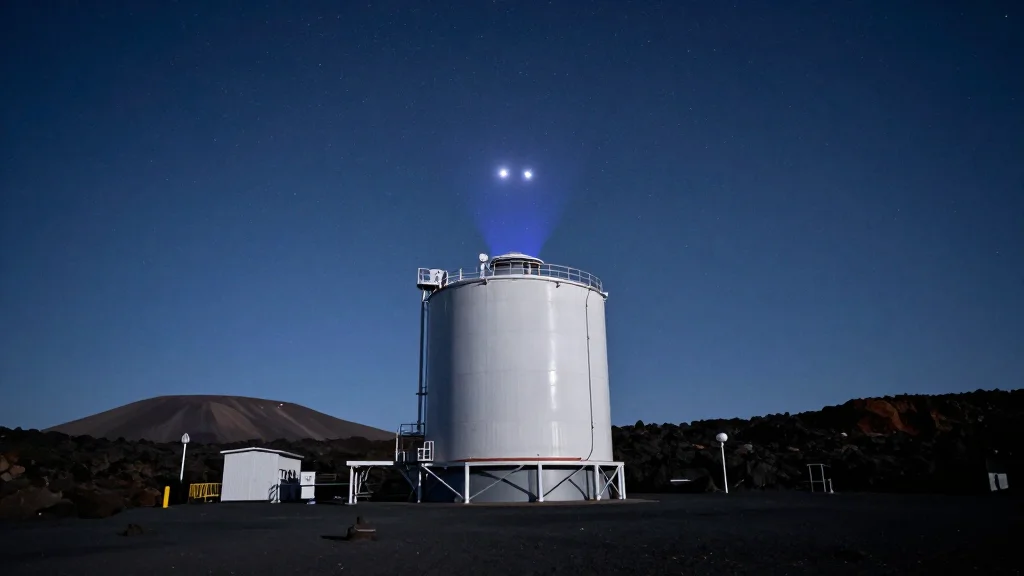
LHAASO Detects Binary Star LS I +61° 303 Emitting Gamma Rays Over 100 TeV

Why It Matters
The detection of >100 TeV gamma rays from LS I +61° 303 expands the roster of known Galactic PeVatrons, suggesting that binary star systems could be a dominant source of the highest‑energy cosmic rays. This challenges long‑standing models that prioritize supernova remnants and forces a reassessment of the energy budget and particle‑acceleration mechanisms operating in our galaxy. Moreover, the observation provides a natural testbed for physics beyond the Standard Model, as particles at these energies probe interactions in regimes inaccessible to terrestrial accelerators. Understanding how binary systems achieve such extreme acceleration will also inform broader astrophysical questions, from the dynamics of stellar winds to the behavior of magnetized plasma near compact objects. The findings could influence the design of future high‑energy observatories and guide theoretical work on cosmic‑ray propagation and source identification.
Key Takeaways
- •LHAASO observed gamma‑ray photons above 100 TeV from LS I +61° 303, extending the spectrum to ~200 TeV.
- •The binary system now qualifies as a Galactic PeVatron, capable of accelerating particles to peta‑electron‑volt energies.
- •Observation challenges the prevailing view that supernova remnants are the primary sources of ultra‑high‑energy cosmic rays.
- •The 26.5‑day orbital period drives dynamic conditions that may enable extreme particle acceleration.
- •Future multi‑wavelength campaigns and next‑gen gamma‑ray telescopes will aim to map the acceleration mechanisms.
Pulse Analysis
The LS I +61° 303 breakthrough underscores a paradigm shift in high‑energy astrophysics. For decades, the community has treated supernova remnants as the default PeVatron candidates, largely because they were the only class with confirmed TeV emission and plausible shock‑acceleration sites. LHAASO’s detection forces a re‑ranking: binary systems, with their compact object and massive companion, now emerge as viable, perhaps even dominant, contributors to the Milky Way’s ultra‑high‑energy particle population.
Historically, gamma‑ray binaries were studied for their periodic emission and relativistic jets, but their role in cosmic‑ray production was speculative. The new data suggest that the interaction zone between the stellar wind and the compact object’s magnetosphere can generate magnetic reconnection events or relativistic shocks powerful enough to push particles into the PeV regime. This aligns with emerging theoretical work that models binary wind collisions as natural particle accelerators, but it also raises questions about the efficiency and frequency of such processes across the galaxy.
Looking ahead, the discovery will likely accelerate investment in wide‑field, high‑altitude observatories capable of catching rare, ultra‑high‑energy events. It also sets a clear agenda for coordinated observations: tracking the orbital modulation of gamma‑ray output, correlating with X‑ray flares, and searching for neutrino counterparts. If binary systems prove to be prolific PeVatrons, they could become key targets for multimessenger astronomy, linking gamma‑ray, neutrino, and gravitational‑wave data streams. The field stands at the cusp of redefining where the most energetic particles in the universe are forged, and LS I +61° 303 may be the first of many such revelations.
LHAASO Detects Binary Star LS I +61° 303 Emitting Gamma Rays Over 100 TeV
Comments
Want to join the conversation?
Loading comments...