Light-Activated Gel Could Impact Wearables, Soft Robotics, and More
Companies Mentioned

Why It Matters
Light‑driven conductivity in a biocompatible gel provides a new, low‑power method to interface electronics with biological systems, accelerating development of soft, adaptive human‑machine devices.
Key Takeaways
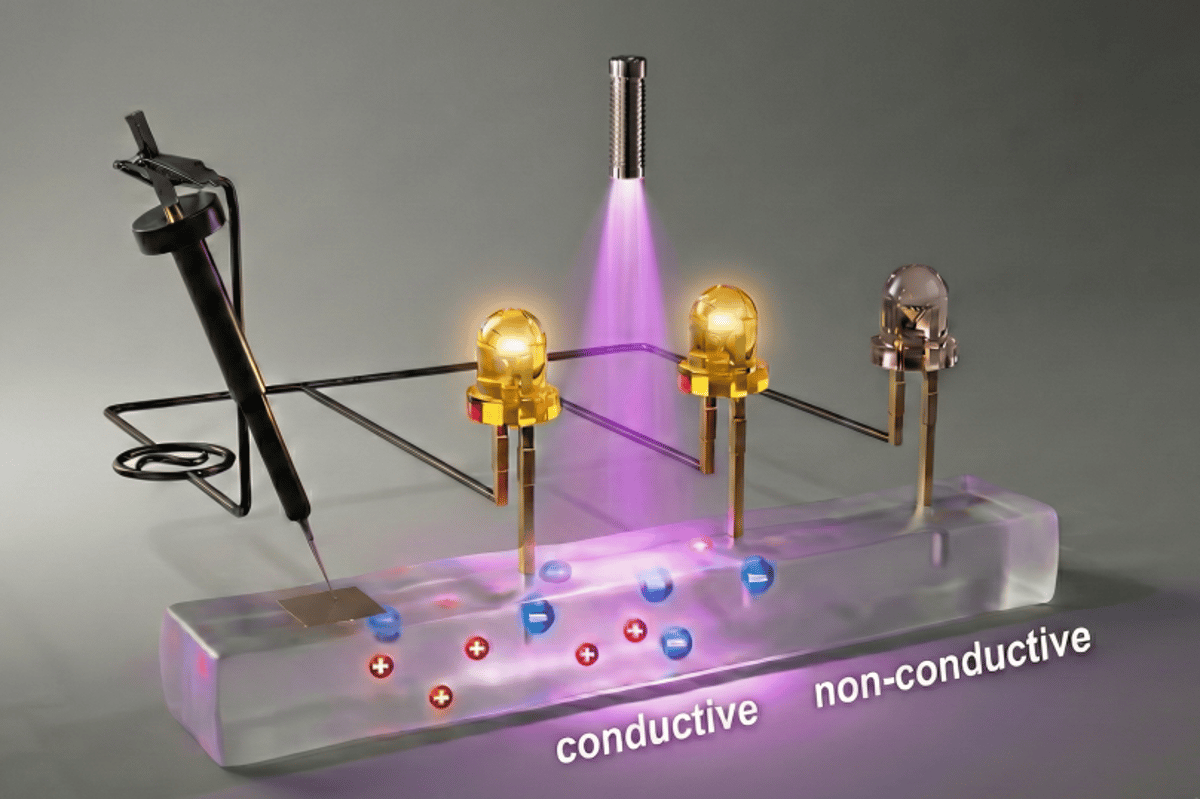
- •Light switches gel conductivity 400×, from insulator to conductor
- •Gel integrates photo‑ion generator powder into polyurethane via swelling
- •Future reversible soft ionotronic material could enable adaptive wearables
- •Potential extensions to heat, magnetic stimuli for soft robotics
- •MIT and Meta Reality Labs co‑authored the Nature Communications paper
Pulse Analysis
Ionotronics—using ions instead of electrons to transmit signals—has long promised seamless integration between electronic devices and the body’s own communication pathways. Traditional ion‑conductive polymers offer high conductivity but lack dynamic control, limiting their usefulness in responsive systems. The MIT breakthrough introduces a photo‑activated mechanism that toggles a soft gel from an insulating state to one that conducts ions 400 times more efficiently, delivering a level of on‑demand conductivity previously unavailable in soft materials. By embedding photo‑ion generator particles into a polyurethane matrix, the researchers created a stretchable platform that can be patterned like conventional circuitry while retaining the pliability required for wearable and implantable applications.
The technical novelty lies in the swelling‑based incorporation of PIG particles, which act as light‑sensitive ion sources. When exposed to illumination, these particles generate a surge of mobile ions, collapsing the material’s internal resistance. Although the current formulation exhibits an irreversible transition, the team anticipates engineering reversible chemistries that would allow repeated switching cycles. Such reversibility would enable real‑time modulation of signal pathways, akin to how neurons adjust synaptic strength, and could be extended to other triggers such as heat or magnetic fields, broadening the design space for soft, multifunctional devices.
From a market perspective, the ability to control ion flow with light unlocks new product categories in soft wearables, prosthetic interfaces, and soft robotics. Light‑controlled actuation consumes minimal power, a critical advantage for battery‑constrained devices that must conform to the human body. Moreover, the collaboration with Meta’s Reality Labs hints at potential integration with augmented‑reality hardware, where seamless, low‑latency bio‑electronic links could enhance user immersion. As investors seek next‑generation bio‑electronics, this soft photo‑ionotronic platform positions MIT and its partners at the forefront of a rapidly expanding field that blends materials science, optics, and biomedical engineering.
Light-activated gel could impact wearables, soft robotics, and more
Comments
Want to join the conversation?
Loading comments...