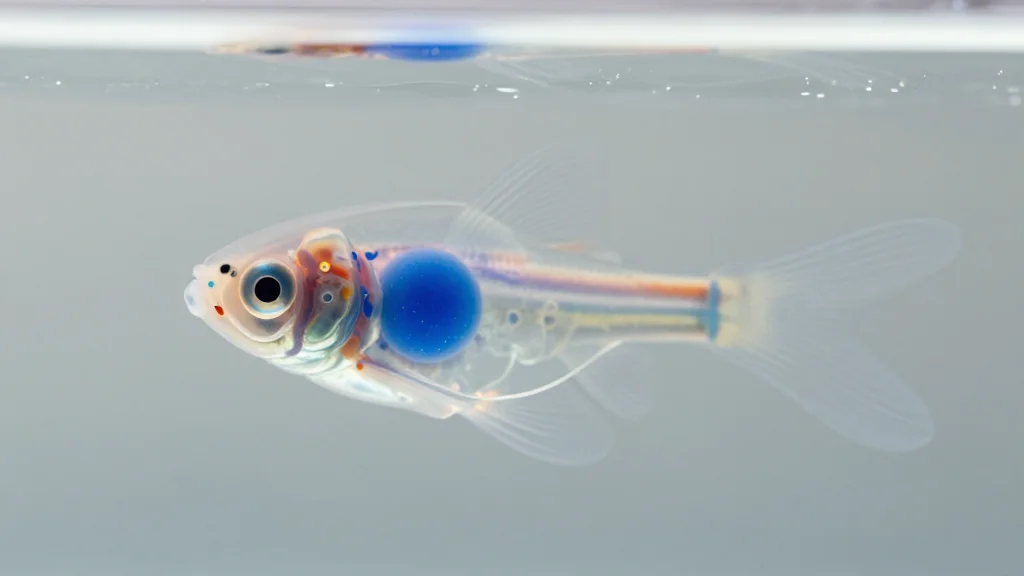
Light-Activated Protein Illuminates when Embryos Can Cope with Disruptions to Cell Division
Why It Matters
The findings clarify how early embryonic cells balance speed and accuracy in division, and they suggest that optochemical control of CENP‑E could enable light‑guided cancer therapies with reduced off‑target effects.
Key Takeaways
- •Pre‑gastrula embryos die quickly when CENP‑E is inhibited
- •Gastrula embryos survive hours of CENP‑E inhibition
- •Spindle assembly checkpoint partially protects gastrula-stage cells
- •Blocking SAC makes gastrula embryos highly lethal under disruption
- •Optochemical control of CENP‑E suggests light‑based cancer therapies
Pulse Analysis
The study, published in Communications Biology, demonstrates how a light‑activated protein can be used as an optochemical switch to transiently block CENP‑E, a key motor that aligns chromosomes during mitosis. By shining specific wavelengths on zebrafish embryos at defined developmental windows, the team could precisely time the disruption and observe immediate phenotypic outcomes. This approach offers a powerful alternative to genetic knockouts, allowing researchers to probe dynamic processes in vivo without permanent alterations.
Results showed a stark contrast between the pre‑gastrula and gastrula stages. In the single‑layered pre‑gastrula, even a single disrupted mitotic cycle led to catastrophic failure, underscoring the fragility of early cleavage divisions. Once the embryo formed a multilayered gastrula, the spindle assembly checkpoint (SAC) provided a safety net, delaying division until chromosomes achieved partial alignment and permitting survival despite prolonged CENP‑E inhibition. When the SAC was chemically disabled, gastrula embryos lost this resilience, confirming the checkpoint’s pivotal, albeit incomplete, role in early vertebrate development.
Beyond basic biology, the work points to translational opportunities. CENP‑E is already recognized as a potential anticancer target, and the ability to modulate its activity with light could pave the way for spatially confined therapies that spare healthy tissue. Optogenetic drug delivery, combined with the partial SAC observed in embryonic cells, may allow clinicians to fine‑tune mitotic inhibition in tumors, reducing systemic toxicity. Future research will likely explore similar light‑controlled strategies in mammalian models and assess how checkpoint modulation can be leveraged for precision oncology.
Light-activated protein illuminates when embryos can cope with disruptions to cell division
Comments
Want to join the conversation?
Loading comments...