Why It Matters
The ability to modulate crystal structure with light opens a new class of switchable photonic materials, potentially accelerating development of low‑power, optically controlled electronics and sensing technologies.
Key Takeaways
- •Light induces reversible lattice distortion in halide perovskites.
- •Photostriction magnitude varies with composition and illumination intensity.
- •Effect absent in traditional semiconductors like silicon or GaAs.
- •Tunable response enables light‑controlled sensors and actuators.
- •DARPA and NSF fund research for switchable photonic devices.
Pulse Analysis
The recent UC Davis study adds a transformative layer to the already vibrant field of halide perovskites, materials celebrated for their high‑efficiency solar performance. By revealing that light can directly reshape the crystal lattice—a reversible photostriction effect—researchers have identified a mechanism that transcends conventional charge‑carrier dynamics. This structural agility, absent in silicon or GaAs, positions perovskites as true "smart" materials capable of mechanical actuation purely through optical stimuli, expanding their utility beyond photovoltaics into adaptive optics and reconfigurable circuitry.
From a technical standpoint, the photostriction response is highly tunable. Adjusting the perovskite’s halide composition shifts its bandgap, allowing precise control over which photon energies trigger lattice deformation. Moreover, the magnitude of distortion scales with illumination intensity, offering a quasi‑analog “dimmer‑switch” behavior rather than a binary on/off state. Such granularity enables engineers to design devices where light intensity modulates mechanical displacement, opening pathways for ultra‑low‑power micro‑actuators, wavelength‑selective sensors, and dynamically reconfigurable photonic circuits that can adapt in real time to changing environmental conditions.
The broader market implications are significant. With DARPA and the National Science Foundation backing the research, the pathway from laboratory discovery to commercial application is already being paved. Industries ranging from aerospace to consumer electronics could leverage light‑driven actuation to reduce wiring complexity and improve device longevity. However, challenges remain, including long‑term material stability under repeated cycling and integration with existing semiconductor manufacturing processes. Continued interdisciplinary collaboration will be essential to translate this photostriction phenomenon into scalable, market‑ready technologies.
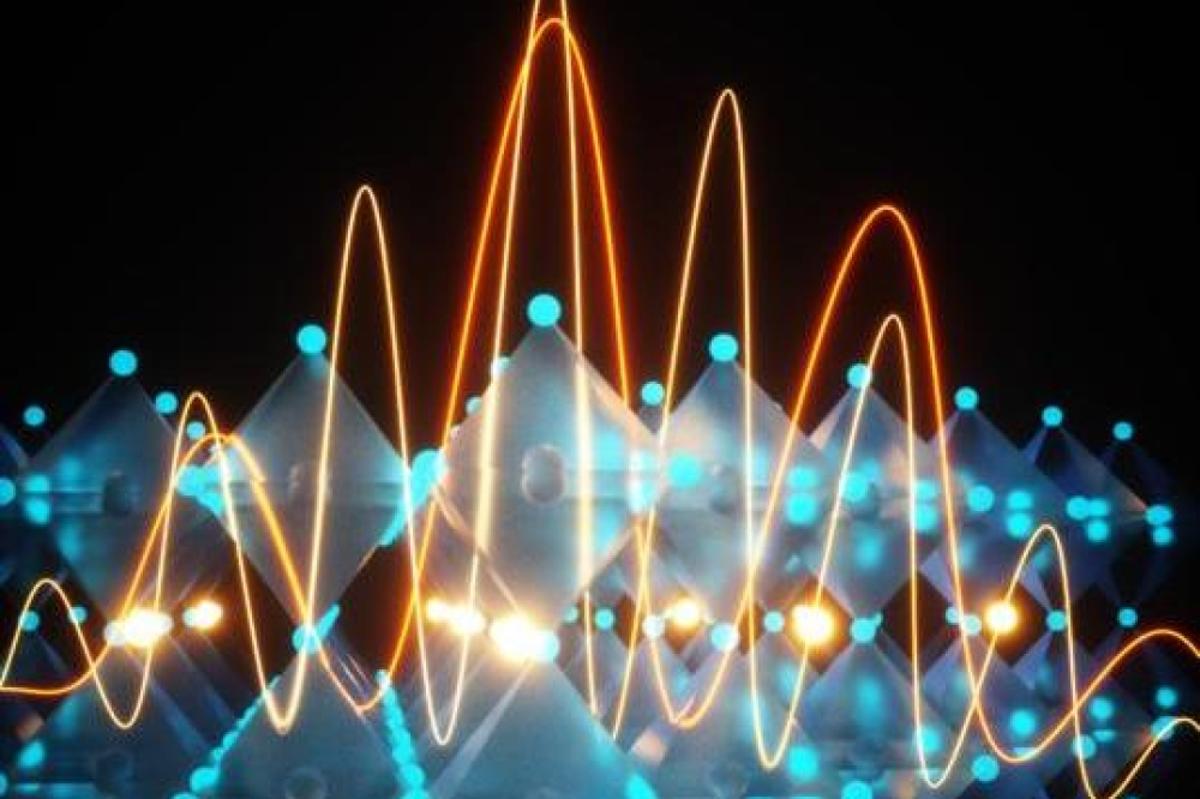
Light bends perovskite crystal lattice
Comments
Want to join the conversation?
Loading comments...