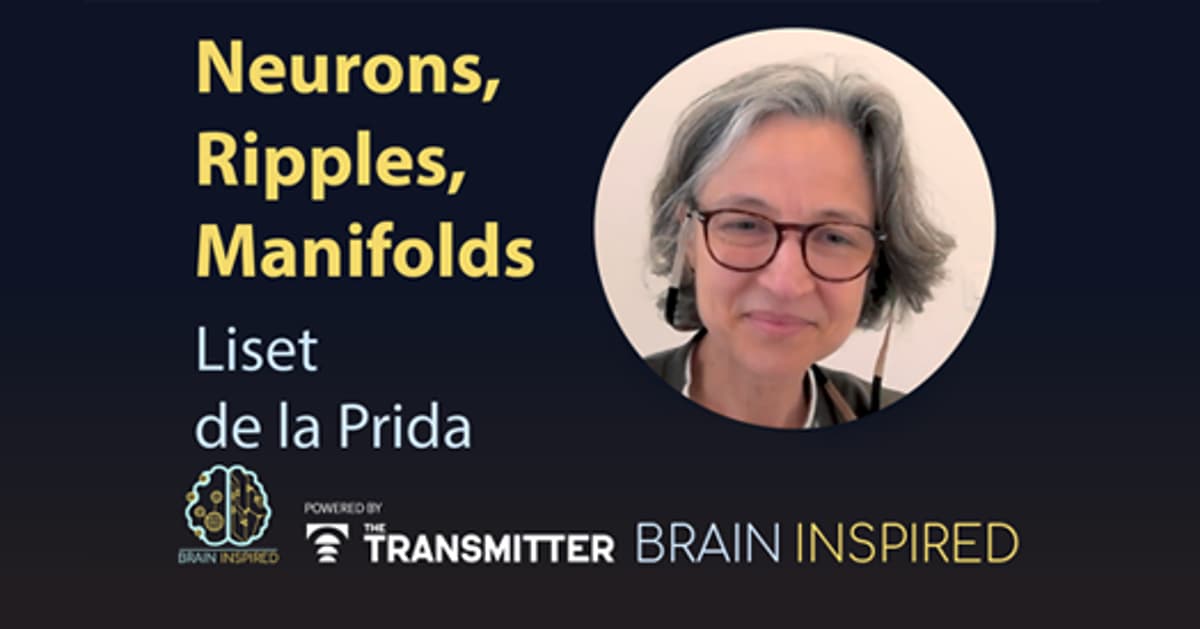
Liset De La Prida Explains How Neuron Subtypes May Control the Activity of Large Neural Populations, From Manifolds to Ripples
Why It Matters
Linking neuron subtypes to population‑level dynamics provides a mechanistic framework for understanding cognition and could accelerate neuromorphic AI and therapeutic strategies for neurological disorders.
Key Takeaways
- •Neuron subtypes shape hippocampal sharp wave ripple properties.
- •Cell-type specific activity defines low-dimensional neural manifolds.
- •Findings link microcircuit diversity to large-scale brain computation.
- •Insights may guide neuromorphic AI and disease modeling.
Pulse Analysis
The discovery that specific hippocampal neuron classes sculpt sharp‑wave ripples reframes how neuroscientists view large‑scale brain activity. Traditionally, manifold theory has treated neural populations as homogeneous ensembles, overlooking the heterogeneity of individual cells. De la Prida’s experiments, which combine high‑resolution electrophysiology with cell‑type tagging, demonstrate that the geometry of neural manifolds is directly contingent on the firing patterns of distinct neuronal subtypes. This insight clarifies why certain ripple events correlate with memory replay while others do not, anchoring abstract mathematical models in concrete biological mechanisms.
Beyond basic science, the implications for translational research are profound. By pinpointing which cell types drive particular manifold configurations, researchers can target those populations with optogenetic or pharmacological tools to modulate cognitive processes. Such precision could lead to novel interventions for disorders characterized by disrupted population dynamics, including epilepsy, schizophrenia, and Alzheimer’s disease. Moreover, the cell‑type‑dependent manifold framework offers a blueprint for constructing more faithful neuromorphic architectures that emulate the brain’s efficient, low‑dimensional coding strategies.
In the broader AI landscape, these findings encourage a shift from purely algorithmic approaches toward biologically grounded designs. Incorporating neuron‑type diversity into artificial networks may enhance robustness, adaptability, and energy efficiency—key attributes of next‑generation intelligent systems. As the field converges on integrating cellular specificity with systems‑level computation, de la Prida’s work stands as a pivotal reference point for both neuroscientists and technologists seeking to decode and replicate the brain’s intricate information processing.
Liset de la Prida explains how neuron subtypes may control the activity of large neural populations, from manifolds to ripples
Comments
Want to join the conversation?
Loading comments...