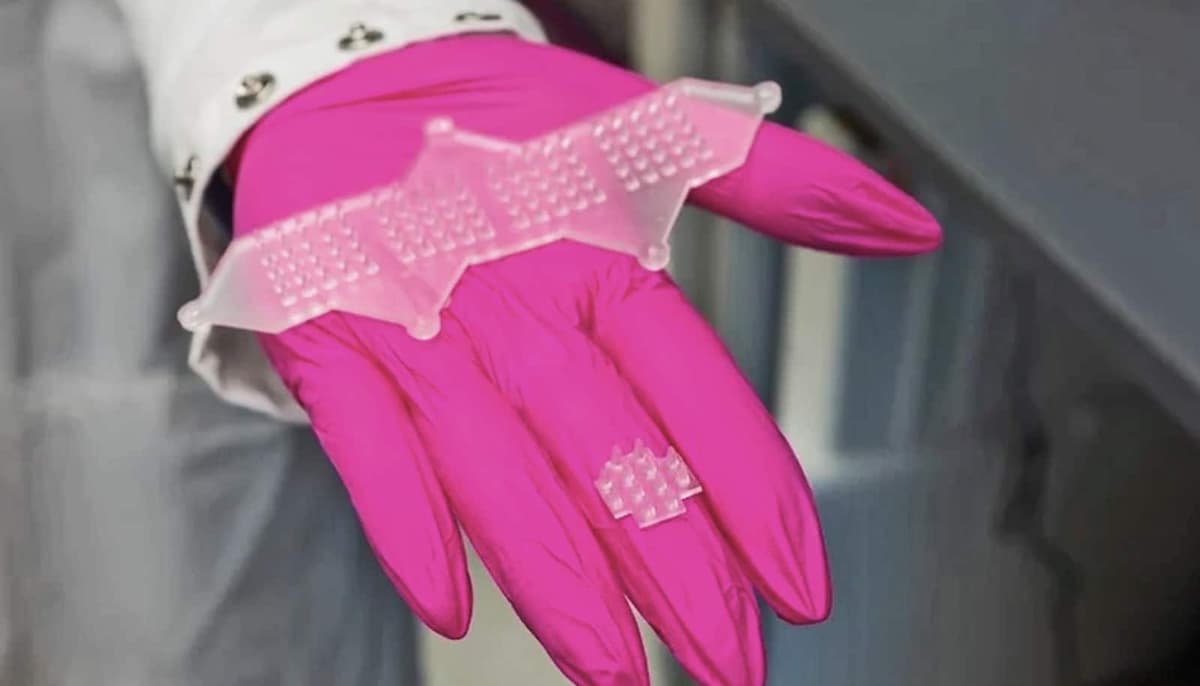
Living Bandage Speeds up Healing
Why It Matters
By delivering sustained, localized cytokine signals, the bandage could dramatically reduce healing times for chronic and acute wounds, lowering healthcare costs and improving patient outcomes. Its adaptable platform also opens new avenues for site-specific protein therapies across multiple diseases.
Key Takeaways
- •Engineered cell patch continuously secretes IL-10, IL-12, TGF-β.
- •Preclinical mouse and pig studies showed faster wound closure.
- •Hydrogel matrix protects cells while allowing nutrient and protein exchange.
- •Platform is modular, enabling custom cytokine or growth-factor cocktails.
- •DARPA funding underscores defense interest in rapid tissue repair technologies.
Pulse Analysis
Chronic wounds—such as diabetic ulcers and pressure injuries—cost the U.S. healthcare system billions annually and often resist conventional treatments because delivering immune‑modulating signals over time is difficult. Traditional cytokine therapies degrade quickly and disperse away from the wound, limiting efficacy. Rice University’s “living bandage” reframes the problem by embedding engineered cells that act as on‑site factories, continuously secreting IL‑10, IL‑12 and TGF‑β directly where tissue repair is needed. This cell‑based approach sidesteps rapid degradation and creates a sustained therapeutic microenvironment.
The technology hinges on a hydrogel matrix that shields the ARPE‑19 cells from host immunity while permitting nutrients and secreted proteins to diffuse outward. In mouse and porcine excisional wound models, the patch accelerated closure rates and triggered gene expression patterns linked to regeneration, confirming functional benefits beyond simple moisture coverage. Because the encapsulated cells can be re‑programmed, the platform is inherently modular—researchers can swap cytokine cocktails or add growth factors, and future iterations may incorporate optogenetic switches for real‑time dosage control. Funding from DARPA highlights strategic interest in rapid tissue repair for both civilian and military applications.
If translated to the clinic, the living bandage could reshape wound‑care markets, offering a premium alternative to dressings, negative‑pressure therapy, and topical growth‑factor gels. Its ability to reduce healing time may lower hospitalization rates, decrease infection risk, and cut overall treatment costs. Commercial hurdles include scaling cell manufacturing, ensuring long‑term safety, and navigating regulatory pathways for combination biologic‑device products. Nonetheless, the convergence of bioengineering, synthetic biology, and advanced materials positions this innovation at the forefront of next‑generation regenerative therapies.
Living bandage speeds up healing
Comments
Want to join the conversation?
Loading comments...