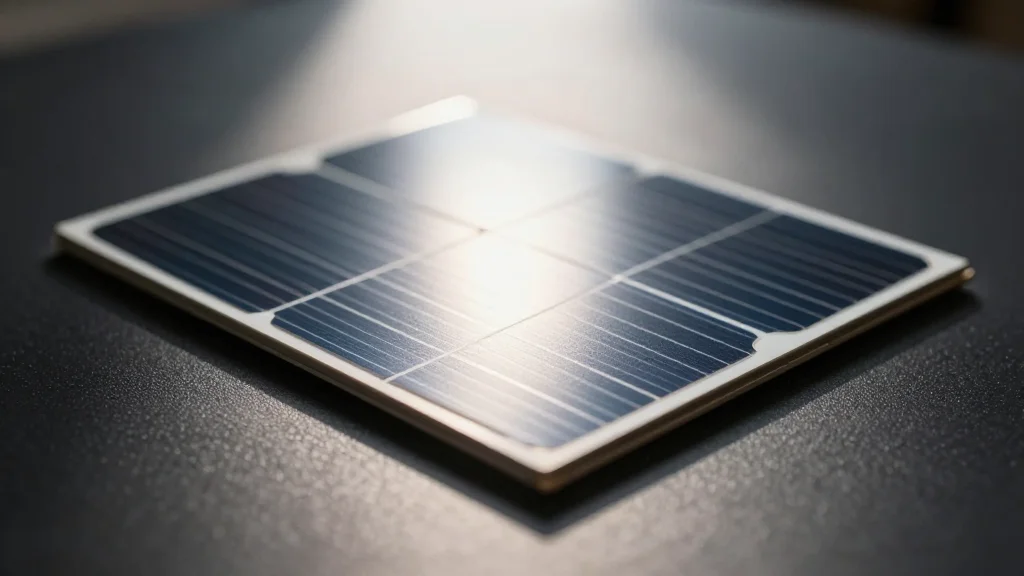
LONGi Sets New World Record 28.13% Efficiency for Silicon Solar Cells

Companies Mentioned
Why It Matters
The new 28.13% cell efficiency narrows the gap to the theoretical maximum for single‑junction silicon, suggesting that further incremental gains could soon become routine rather than exceptional. Higher cell and module efficiencies translate directly into lower levelized cost of electricity (LCOE) for solar power, accelerating the transition to zero‑carbon energy systems. Moreover, LONGi’s ability to move from record‑setting labs to mass‑produced 25%+ modules demonstrates that ultra‑high‑efficiency technology is no longer a niche, but a commercially viable option for utilities and developers worldwide. For the broader science community, the breakthrough validates advanced passivation and crystallization techniques that could be adapted to other semiconductor platforms. It also reinforces the importance of international certification bodies—ISFH in Germany and NLR in the United States—in providing independent verification that underpins investor confidence and policy support for next‑generation renewable technologies.
Key Takeaways
- •LONGi's HIBC cell achieved a certified 28.13% efficiency, the highest for crystalline silicon.
- •Modules based on the same technology reached a record 26.4% efficiency, certified by NLR.
- •The achievement follows LONGi's previous 28.04% cell record set in January 2026.
- •EcoLife series modules, using HIBC cells, are mass‑produced at 25% efficiency, topping TaiyangNews rankings.
- •LONGi plans to push module efficiencies beyond 27% and expand its integrated solar‑plus‑storage offerings.
Pulse Analysis
LONGi’s record‑setting efficiencies are more than a headline; they reshape the competitive dynamics of the photovoltaic market. Historically, silicon‑based solar cells have hovered in the low‑20s for commercial modules, with incremental gains requiring costly process overhauls. LONGi’s HIBC architecture, however, leverages incremental innovations—iPET and LIC—that can be integrated into existing production lines, reducing the capital barrier for other manufacturers. This could force rivals to either license LONGi’s technology or accelerate their own R&D, potentially leading to a wave of patent activity and strategic alliances.
From a macro‑economic perspective, the efficiency jump directly lowers the land and balance‑of‑system costs for large‑scale solar farms. A 1% efficiency gain can reduce the required panel area by roughly the same percentage, translating into significant savings on land acquisition, mounting structures, and installation labor. As governments worldwide tighten renewable‑energy targets, the cost advantage of ultra‑high‑efficiency silicon could tip the balance in favor of solar over competing renewables such as wind or emerging perovskite technologies, at least in the near term.
Looking forward, the real test will be LONGi’s ability to sustain yield and reliability at scale. The company’s claim of “high efficiency, high energy yield, aesthetic versatility, and certified safety and reliability” will be scrutinized as the EcoLife series rolls out to utility customers. If LONGi can demonstrate long‑term degradation rates comparable to current best‑in‑class modules, the industry may see a rapid shift toward 25%+ silicon panels as the new standard, accelerating the global energy transition and cementing China’s leadership in solar technology.
LONGi Sets New World Record 28.13% Efficiency for Silicon Solar Cells
Comments
Want to join the conversation?
Loading comments...