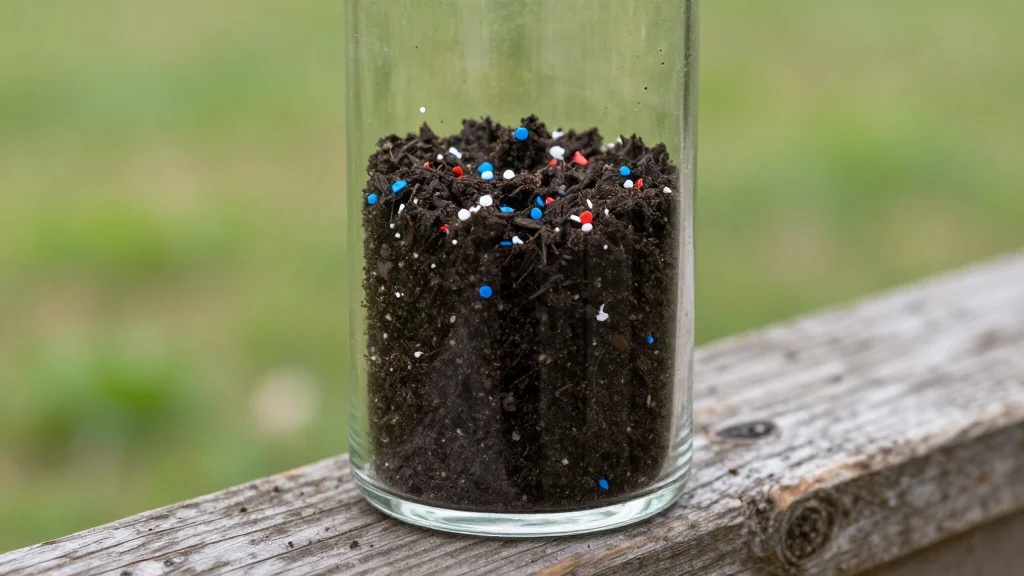
Low-Cost Method Could Standardize Microplastic Extraction From Soils Worldwide
Why It Matters
Standardizing microplastic extraction will enable reliable assessments of soil contamination, informing food‑security policies and remediation strategies globally.
Key Takeaways
- •Method recovers over 92% of six common microplastics.
- •Costs about A$5.47 (~$3.60) per sample, enabling low‑budget labs.
- •Combines organic digestion and density separation for fast processing.
- •Provides a reproducible framework for global soil microplastic standards.
- •Supports studies in low‑socioeconomic regions and food‑security research.
Pulse Analysis
Microplastic contamination in agricultural soils has emerged as a silent threat to crop yields, groundwater quality, and ultimately human health. While marine microplastic monitoring has matured, soil analysis lags behind due to the absence of a universally accepted extraction protocol. Researchers have struggled with variable recovery rates, costly reagents, and labor‑intensive procedures, limiting large‑scale surveys and cross‑regional comparisons. The new UNE approach addresses these gaps by integrating a multi‑criteria decision framework that balances analytical performance with economic and environmental considerations, paving the way for consistent data collection across diverse ecosystems.
The UNE technique leverages a two‑step process: first, a gentle organic‑matter digestion that breaks down soil matrices without degrading plastic polymers, followed by a density‑based separation that isolates particles for spectroscopic verification. Achieving more than 92% recovery across polyethylene, polypropylene, polystyrene, polyvinyl chloride, polyester and nylon, the method rivals laboratory‑grade protocols while slashing per‑sample costs to roughly A$5.47 (≈$3.60 USD). Its low reagent footprint further reduces ecological impact, making it attractive for institutions with limited funding or strict sustainability mandates. By publishing a transparent decision‑analysis model, the team invites replication and iterative improvement, accelerating the move toward an internationally recognized standard.
Adoption of this standardized method could transform agricultural policy and market dynamics. Reliable microplastic inventories will enable regulators to set evidence‑based limits, incentivize manufacturers to develop biodegradable mulches, and guide farmers toward best‑practice soil management. Moreover, the cost‑effectiveness opens doors for large‑scale monitoring programs in emerging economies, where soil health directly ties to food security. As the method rolls out to field studies in Sri Lanka and beyond, it is poised to generate the robust datasets needed for risk assessments, remediation technologies, and future innovations in sustainable agriculture.
Low-cost method could standardize microplastic extraction from soils worldwide
Comments
Want to join the conversation?
Loading comments...