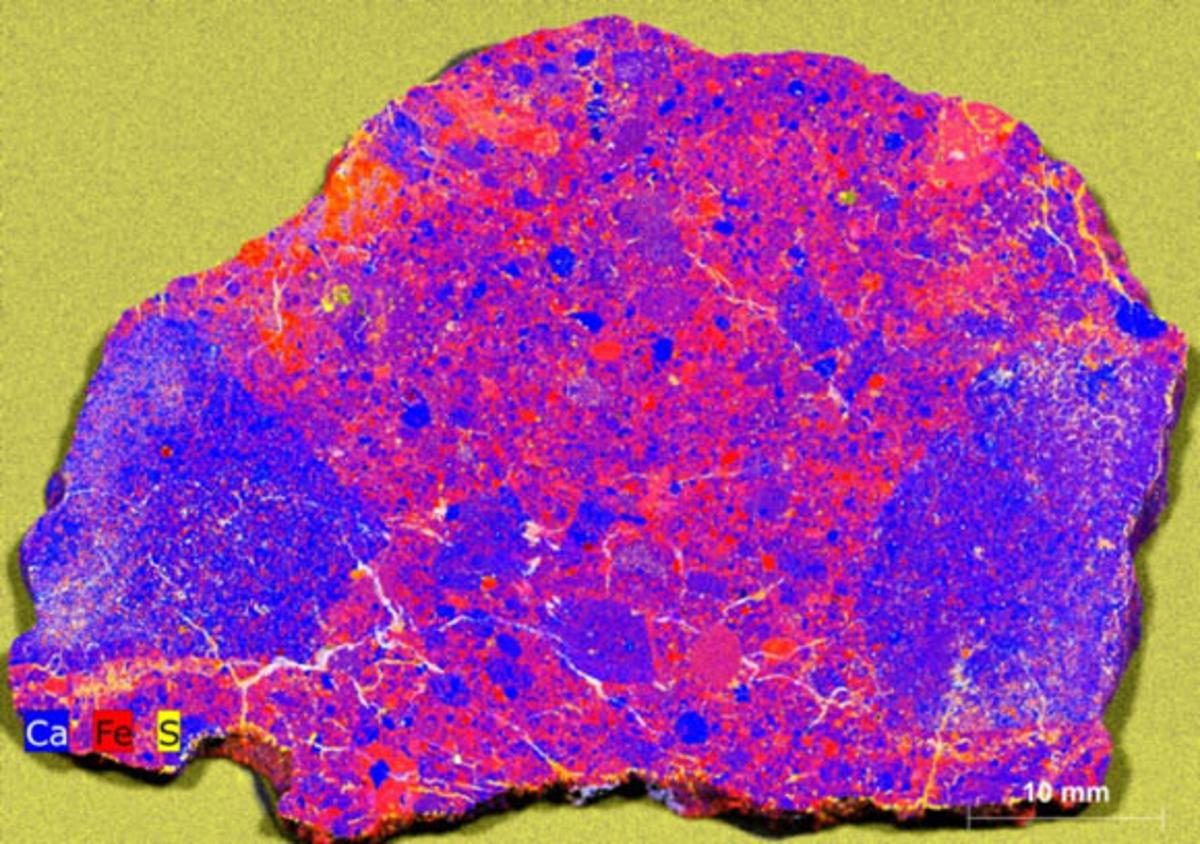
Lunar Meteorite Preserves Evidence of Colossal Asteroid Strike
Why It Matters
The discovery links simultaneous impact histories across the Moon, Earth and Vesta, sharpening models of early Solar System dynamics and the role of massive collisions in shaping planetary habitability.
Key Takeaways
- •NWA 12593 records three distinct impacts spanning 3.5 Ga
- •First impact created cubic zirconia, indicating ultra‑high temperatures
- •Second impact produced breccia, mixing diverse lunar fragments
- •Third impact ejected the fragment toward Earth
- •Impact timeline matches events on Earth and asteroid Vesta
Pulse Analysis
Lunar meteorites like Northwest Africa 12593 are time capsules that survive Earth’s active geology, preserving snapshots of the Moon’s earliest surface processes. Because the Moon lacks plate tectonics and atmospheric erosion, impact melt sheets and exotic minerals can remain intact for billions of years. In NWA 12593, researchers detected cubic zirconia—a high‑temperature phase that would normally recrystallize or dissolve—signaling a colossal impact that liquefied a swath of lunar crust around 3.5 billion years ago. This finding not only confirms the intensity of the so‑called Late Heavy Bombardment but also provides a mineralogical benchmark for calibrating impact‑heat models across planetary bodies.
The meteorite’s layered record continues with a breccia formed by a secondary impact that shattered the original melt sheet, mixing clasts of varied composition into a concrete‑like matrix. Such brecciation is a hallmark of sequential collisions, illustrating how the early inner Solar System experienced a cascade of events rather than isolated strikes. The final ejection of the fragment toward Earth ties the Moon’s impact chronology to Earth’s own geological record and to Vesta, where similar‑aged cratering has been documented. This three‑body alignment is exceptionally rare, offering a cross‑planetary validation point for dynamical simulations of asteroid belt disruption and planetary migration.
For scientists probing the origins of life, the timing is crucial: life’s earliest fossil evidence on Earth appears around the same epoch. Understanding the cadence of catastrophic impacts helps assess whether such events could have sterilized nascent ecosystems or, conversely, delivered essential volatiles and energy. The NWA 12593 study thus informs both planetary defense strategies and the broader narrative of how violent early Solar System conditions set the stage for habitability. Future missions targeting lunar samples and high‑resolution crater dating will build on this benchmark, refining our picture of how early bombardment shaped the trajectories of Earth, the Moon, and neighboring asteroids.
Lunar Meteorite Preserves Evidence of Colossal Asteroid Strike
Comments
Want to join the conversation?
Loading comments...