Why It Matters
Understanding these unique muscle structures can improve medical treatment, rehabilitation, and conservation strategies for penguins, while shedding light on evolutionary adaptations to marine environments.
Key Takeaways
- •Supracoracoideus muscle is significantly enlarged in macaroni penguins
- •New hindlimb muscle, adductor tibialis, aids leg tucking and balance
- •Muscle adaptations boost propulsion in water 700× denser than air
- •Findings explain the penguin’s distinctive waddling gait
- •Research may improve rehab and veterinary treatment for captive penguins
Pulse Analysis
Penguins abandoned aerial flight millions of years ago, repurposing their forelimbs into powerful flippers. The recent anatomical study shows that the supracoracoideus—a muscle that lifts the wing in flying birds—is dramatically enlarged in the macaroni penguin, delivering the extra thrust needed to cut through water that is roughly 700 times denser than air. This hypertrophy not only amplifies the up‑stroke and down‑stroke forces but also creates a distinctive underwater “flight” stroke, a hallmark of efficient marine locomotion among flightless birds. Equally intriguing is the identification of a previously undocumented hind‑limb muscle, dubbed the adductor tibialis.
By pulling the legs inward, this muscle helps the bird maintain a streamlined profile during swimming and stabilizes the narrow stance required for the iconic waddle on land. The mechanism mirrors the way dolphins and whales use core musculature to reduce drag, suggesting convergent evolution across unrelated marine taxa. Such a dual‑purpose adaptation underscores the fine‑tuned balance between aquatic speed and terrestrial stability.
Beyond academic curiosity, the findings have tangible benefits for wildlife management. Veterinarians and rehabilitation specialists can now target these specific muscle groups when treating injuries, designing physiotherapy protocols, or assessing the fitness of captive colonies. Moreover, understanding the biomechanical limits of macaroni penguins aids conservationists in predicting how climate‑driven changes in prey distribution might stress their swimming efficiency. As the species faces shrinking breeding islands, any edge in locomotor performance could translate into higher foraging success and, ultimately, population resilience.
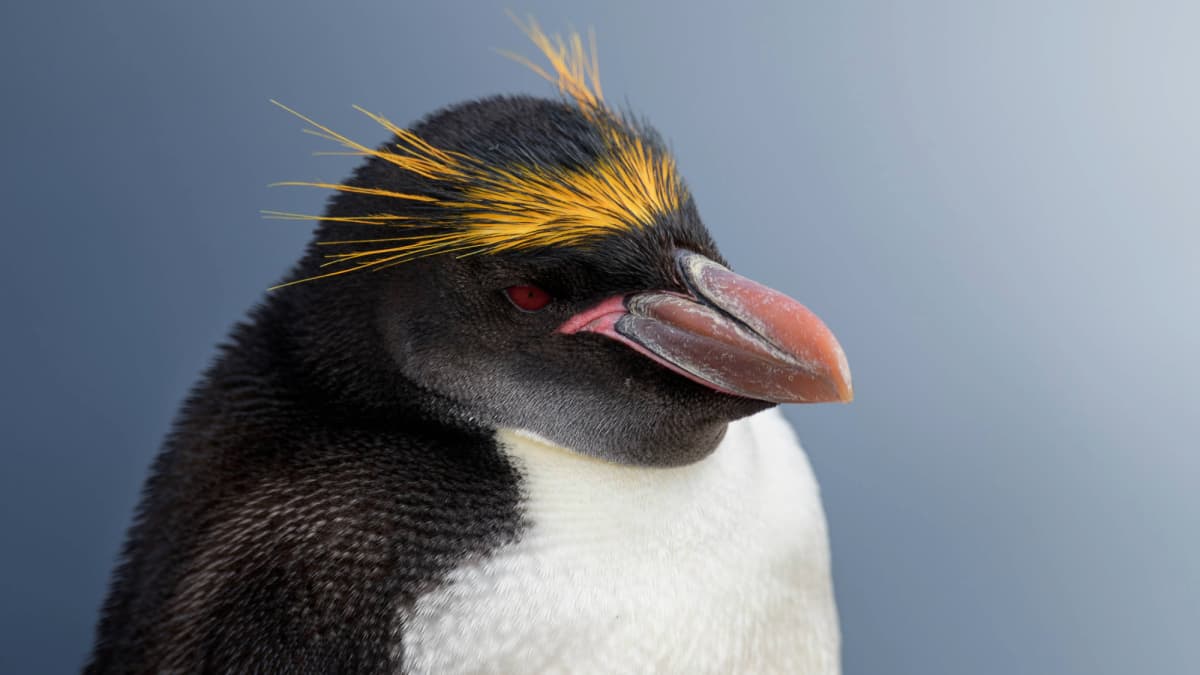
Macaroni penguins are surprisingly buff
Comments
Want to join the conversation?
Loading comments...