Machine Learning Based on Body Composition Radiomics for Predicting Early Recurrence in Colorectal Cancer: A Multicenter Study
Why It Matters
The model adds host‑systemic insight to traditional tumor‑centric staging, enabling more precise post‑operative surveillance and personalized treatment for colorectal cancer patients.
Key Takeaways
- •Random Forest model achieved AUCs 0.81 (training) and 0.75‑0.78 (tests).
- •IMAT and skeletal muscle radiomics features drove 89% of predictive power.
- •Integrated radiomics‑clinical model outperformed pTNM staging in decision‑curve analysis.
- •High‑risk patients showed threefold shorter recurrence‑free survival.
- •Study used 917 CRC patients from three centers, validated externally.
Pulse Analysis
Colorectal cancer remains a leading cause of cancer death, and early recurrence within two years after curative surgery dramatically reduces survival. Traditional risk assessment relies on pathological TNM staging, which captures tumor size and nodal involvement but ignores the patient’s metabolic and inflammatory milieu. Recent research highlights that body‑composition metrics—such as muscle quality and visceral fat—reflect systemic conditions that can foster tumor regrowth, making them attractive targets for non‑invasive prognostic tools.
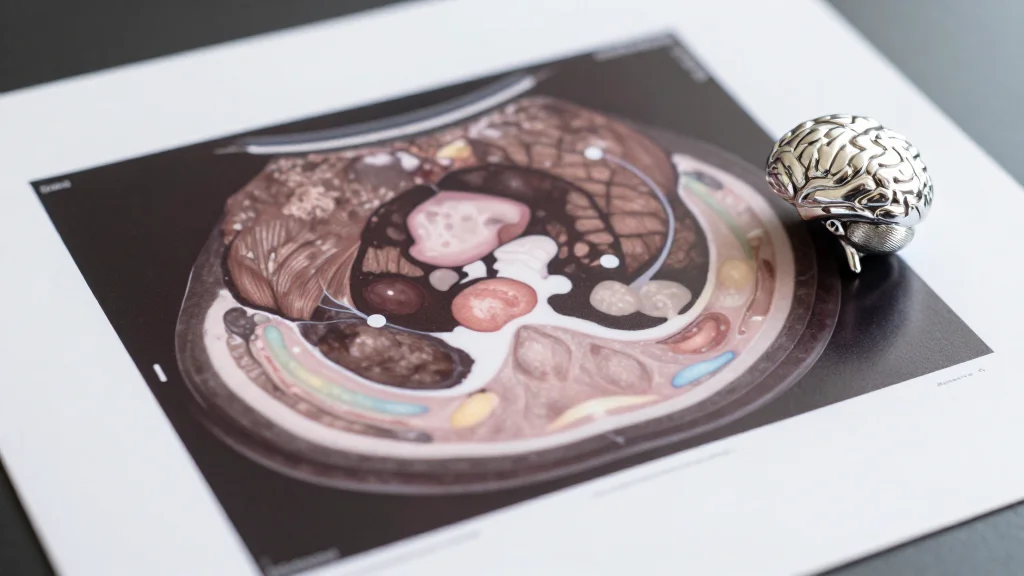
In this study, researchers leveraged routine pre‑operative CT scans to extract nearly 2,000 radiomic features from four abdominal compartments at the L3 vertebral level. After rigorous feature reduction using LASSO and Boruta, an 11‑feature signature was fed into eight machine‑learning algorithms. The Random Forest classifier emerged as the most robust, maintaining AUCs above 0.75 across two independent external cohorts. SHAP interpretability revealed that intermuscular adipose tissue and skeletal muscle texture contributed nearly 90% of the model’s predictive signal, suggesting that myosteatosis and ectopic fat deposition are key drivers of early recurrence.
Clinically, the integrated radiomics‑clinical model delivers a clearer risk stratification than pTNM alone, allowing oncologists to identify high‑risk patients who may benefit from intensified surveillance, adjuvant therapy escalation, or pre‑habilitation programs aimed at improving muscle quality. While the retrospective design and need for semi‑automated segmentation limit immediate rollout, the approach demonstrates how existing imaging data can be repurposed to capture host‑related biology, paving the way for more personalized colorectal cancer care. Future work should focus on automating segmentation, validating the model in diverse populations, and exploring longitudinal body‑composition changes as dynamic biomarkers.
Machine learning based on body composition radiomics for predicting early recurrence in colorectal cancer: a multicenter study
Comments
Want to join the conversation?
Loading comments...